Strategic Dimensions of Tehran-Moscow Relations

2021/05/03 | interview, Politics, Top News

Strategic Council Online - Russian Foreign Minister Sergei Lavrov visited Iran on April 13 and met with senior Iranian officials. The content of Lavrov’s visit was to discuss strengthening of bilateral relations between Iran and Russia and paving the way for strategizing these relations. Seyed Reza Mirtaher – Analyst of international affairs

Those relationships are now important in several ways; first, deepening relations between the two countries and possibly concluding a strategic document, similar to the one that Iran recently signed with China. In fact, those documents serve as a roadmap to chart the future of the two countries’ relations in various fields of trade, economy, culture, politics, diplomacy, military and security, and based on this roadmap, the two countries can conclude various agreements.

Another issue in this regard was the expression of solidarity between Iran and Russia in the field of countering unilateralism and promoting multilateralism. In any case, the Biden administration, while claiming to have distanced itself from the Trump administration’s unilateralist approach, is in practice pursuing a course of action against both Iran and Russia. In particular, the Biden administration has entered into a kind of confrontation with Russia on several fronts and is trying to put pressure on Moscow, both through the imposition of sanctions, through various acts of psychological warfare and even military threats.

In the case of Iran, in practice, the Biden administration still pursues the same policy of maximum pressure; therefore, it can be said that Tehran and Moscow have a common position in the field of countering US measures and actions.

Another issue concerns the level of joint actions of Iran and Russia in dealing with and resolving regional crises. However, although the two countries previously experienced the field of such cooperation in resolving the Syrian crisis, and the two sides were able to change the military equation in favor of the legitimate Syrian government.

In addition, there is the issue of the Yemeni crisis, which is of interest to both countries. Opposition of Tehran and Moscow with the escalation of Western military presence, led by the United States in the Persian Gulf, and the creation of insecurity are also common concerns.

In general, it seems that Iran and Russia have now entered into a united front in this regard, given the growing rift and conflict between Moscow and Washington and Europe’s cooperation with Biden. Meanwhile, we must not forget that the more the atmosphere of discord between the United States and Russia increases, the more the Russians will pay attention to Iran; because the Islamic Republic of Iran is one of the opponents of the US domination and the presence of this country and its allies in the region. This is an important advantage for the Russians in working closely with a country that opposes US hegemonic policies in the region.

In addition to these issues, it should be noted that after the Supreme Leader’s letter to the Russian President Vladimir Putin and Putin’s reciprocal response to that letter, it seems that the quality of relations between the two countries is improving and it can be expected that in the near future, especially in the military field cooperation between the two countries will be promoted to a high level.

Also, after the conclusion of Iran-China Strategic Cooperation Document, or the 25-year document, we are witnessing negative reactions from the United States and the Zionist regime, which indicate that they are afraid of Iran’s approach to the East and consider it contrary to their interests and domination. Naturally, they have the same approach to the rapprochement between Iran and Russia, and they are dissatisfied with this.

At the same time, we should not forget that Russia, especially since 2015, has been cooperating well in the field of supporting Iran in international forums and institutions and has prevented the adoption of anti-Iranian resolutions in the UN Security Council.

Meanwhile, Russia’s move alongside China in 2020 in strongly opposing the US claims regarding extension of Iran’s arms embargo is remarkable. At present, the Kremlin’s position is to support Iran’s position on the Joint Comprehensive Plan of Action (JCPOA), and Russian officials have repeatedly emphasized the US fault over the current situation of the JCPOA and Washington’s breach of the covenant, and the legitimacy of Tehran’s actions and such positions have paved the way for stronger regional and international cooperation between Iran and Russia.


0 Comments

Submit a Comment

Your email address will not be published. Required fields are marked *

LATEST CONTENT

China’s Rejection of US Sanctions; Strengthening Iran’s Geopolitical Leverage

SCFR Online – Opinion: Concurrent with the official commencement of the United States’ economic war against our country, focusing on sanctions instruments, isolation, and economic pressure, what has now become increasingly important is the lack of alignment of other major global powers, especially China, with this policy.

The Makkah Pact; Reasons for its Formation and Challenges Ahead

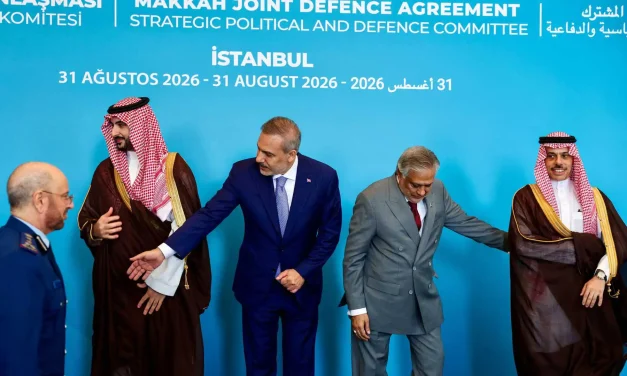
SCFR Online – Opinion: The Makkah Pact, signed between Saudi Arabia, Pakistan, and Turkey under the motto “an attack on one is an attack on all,” is viewed by some analysts less as a full-fledged military coalition and more as an attempt to reduce security dependence on an external power and to establish a regional security mechanism.

Implications of the US-Saudi Nuclear Agreement

SCFR Online – Opinion: The new US-Saudi nuclear agreement, despite legal and political ambiguities, could alter previous non-proliferation standards in West Asia and intensify nuclear competition, ushering it into a new phase.

An Analysis of Recent Turkey-Israeli Regime Tensions

SCFR Online – Opinion: Recent developments in Syria indicate an intensification of strategic rivalry between Turkey and the Israeli regime, but mutual considerations and the role of the United States have limited the likelihood of direct war.

Loading

Últimas publicaciones

China’s Rejection of US Sanctions; Strengthening Iran’s Geopolitical Leverage

SCFR Online – Opinion: Concurrent with the official commencement of the United States’ economic war against our country, focusing on sanctions instruments, isolation, and economic pressure, what has now become increasingly important is the lack of alignment of other major global powers, especially China, with this policy.

The Makkah Pact; Reasons for its Formation and Challenges Ahead

SCFR Online – Opinion: The Makkah Pact, signed between Saudi Arabia, Pakistan, and Turkey under the motto “an attack on one is an attack on all,” is viewed by some analysts less as a full-fledged military coalition and more as an attempt to reduce security dependence on an external power and to establish a regional security mechanism.

Implications of the US-Saudi Nuclear Agreement

SCFR Online – Opinion: The new US-Saudi nuclear agreement, despite legal and political ambiguities, could alter previous non-proliferation standards in West Asia and intensify nuclear competition, ushering it into a new phase.

An Analysis of Recent Turkey-Israeli Regime Tensions

SCFR Online – Opinion: Recent developments in Syria indicate an intensification of strategic rivalry between Turkey and the Israeli regime, but mutual considerations and the role of the United States have limited the likelihood of direct war.

Loading

DERNIER CONTENU

China’s Rejection of US Sanctions; Strengthening Iran’s Geopolitical Leverage

SCFR Online – Opinion: Concurrent with the official commencement of the United States’ economic war against our country, focusing on sanctions instruments, isolation, and economic pressure, what has now become increasingly important is the lack of alignment of other major global powers, especially China, with this policy.

The Makkah Pact; Reasons for its Formation and Challenges Ahead

SCFR Online – Opinion: The Makkah Pact, signed between Saudi Arabia, Pakistan, and Turkey under the motto “an attack on one is an attack on all,” is viewed by some analysts less as a full-fledged military coalition and more as an attempt to reduce security dependence on an external power and to establish a regional security mechanism.

Implications of the US-Saudi Nuclear Agreement

SCFR Online – Opinion: The new US-Saudi nuclear agreement, despite legal and political ambiguities, could alter previous non-proliferation standards in West Asia and intensify nuclear competition, ushering it into a new phase.

An Analysis of Recent Turkey-Israeli Regime Tensions

SCFR Online – Opinion: Recent developments in Syria indicate an intensification of strategic rivalry between Turkey and the Israeli regime, but mutual considerations and the role of the United States have limited the likelihood of direct war.

Loading

DERNIER CONTENU

China’s Rejection of US Sanctions; Strengthening Iran’s Geopolitical Leverage

SCFR Online – Opinion: Concurrent with the official commencement of the United States’ economic war against our country, focusing on sanctions instruments, isolation, and economic pressure, what has now become increasingly important is the lack of alignment of other major global powers, especially China, with this policy.

The Makkah Pact; Reasons for its Formation and Challenges Ahead

SCFR Online – Opinion: The Makkah Pact, signed between Saudi Arabia, Pakistan, and Turkey under the motto “an attack on one is an attack on all,” is viewed by some analysts less as a full-fledged military coalition and more as an attempt to reduce security dependence on an external power and to establish a regional security mechanism.

Implications of the US-Saudi Nuclear Agreement

SCFR Online – Opinion: The new US-Saudi nuclear agreement, despite legal and political ambiguities, could alter previous non-proliferation standards in West Asia and intensify nuclear competition, ushering it into a new phase.

An Analysis of Recent Turkey-Israeli Regime Tensions

SCFR Online – Opinion: Recent developments in Syria indicate an intensification of strategic rivalry between Turkey and the Israeli regime, but mutual considerations and the role of the United States have limited the likelihood of direct war.

Loading

DERNIER CONTENU

China’s Rejection of US Sanctions; Strengthening Iran’s Geopolitical Leverage

SCFR Online – Opinion: Concurrent with the official commencement of the United States’ economic war against our country, focusing on sanctions instruments, isolation, and economic pressure, what has now become increasingly important is the lack of alignment of other major global powers, especially China, with this policy.

The Makkah Pact; Reasons for its Formation and Challenges Ahead

SCFR Online – Opinion: The Makkah Pact, signed between Saudi Arabia, Pakistan, and Turkey under the motto “an attack on one is an attack on all,” is viewed by some analysts less as a full-fledged military coalition and more as an attempt to reduce security dependence on an external power and to establish a regional security mechanism.

Implications of the US-Saudi Nuclear Agreement

SCFR Online – Opinion: The new US-Saudi nuclear agreement, despite legal and political ambiguities, could alter previous non-proliferation standards in West Asia and intensify nuclear competition, ushering it into a new phase.

An Analysis of Recent Turkey-Israeli Regime Tensions

SCFR Online – Opinion: Recent developments in Syria indicate an intensification of strategic rivalry between Turkey and the Israeli regime, but mutual considerations and the role of the United States have limited the likelihood of direct war.

Loading