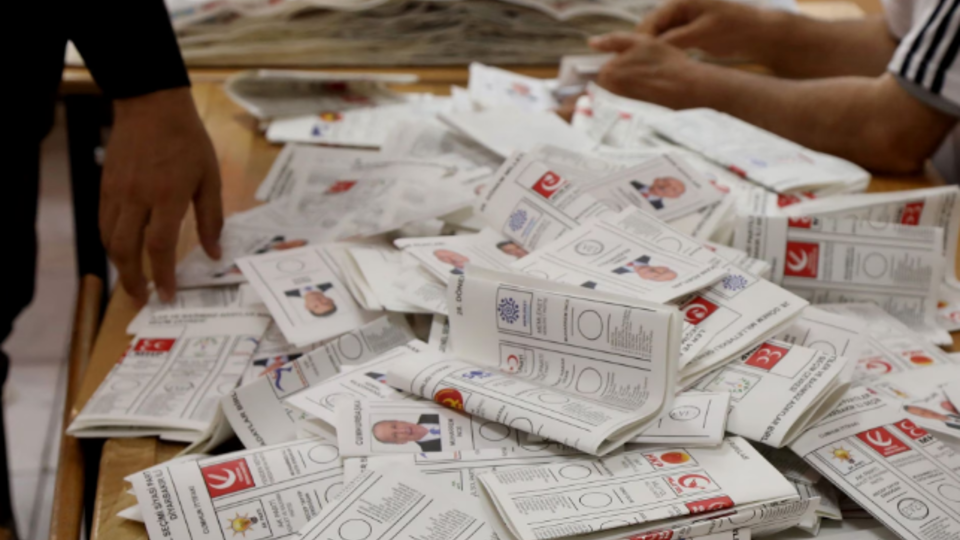
An Analysis of the Recent Elections in Turkey

2024/04/07 | Note, Politics, Top News

Strategic Council Online—Opinion: Turkey's March 31 local elections, which ended with the opposition's victory and Erdogan's party's defeat, is considered an important "decisive point" in the future of Turkey's domestic and foreign policy developments. It determines the fate of several important political issues, in addition to the election of mayors and local managers for the next five years. Hamid Khosayand - expert on regional issues

Turkey’s local elections, for some reasons, enjoy high importance and implications that are parallel to each other, the most important of which are discussed below:


One: While the ruling Justice and Development Party was seeking to complete its victory in the previous two presidential and parliamentary elections, the opposition and critical forces were trying to compensate for their defeat in the last two elections by winning the municipal elections. This issue caused the two parties to enter the elections with concern about their possible humiliation. For the same reason, they used all the political, economic, social, etc., possibilities and took advantage of every opportunity to win the race.


Two: The local elections have a “serious effect” on Erdogan and the Justice and Development Party’s political future. On March 9, 2024, addressing the Turkish Youth Foundation, Erdogan spoke for the first time about “leaving the power” and emphasized that the municipal elections would be his “last” election.

Erdogan said in that speech: “I will continue my work without interruption. For me, this is the end. With the powers given to me by the law, this election is my last election.”

According to Erdoğan, it is clear that the victory in the elections, especially in Istanbul, which is in the hands of the opposition, plays an effective role in the “survival” of Erdoğan and his party.

Three: Ankara, the political capital, and Istanbul, the business and economic center of Turkey, are two sensitive, vital, and pivotal regions of the elections. Istanbul especially has a prominent role in this election.

The municipality of Istanbul, which was under the control of Justice and Development for 25 years, has been in the hands of the opposition since 2019, which has dealt a significant blow to Erdogan, who started his political career there in 1994.

Therefore, Erdogan’s main focus in the election was on Istanbul. For this purpose, although he appeared as a competitor and election candidate, he chose Murat Korum, the 47-year-old former minister of urban development and environment, to compete with the current mayor, Akram Imamoglu, the most powerful politician of the People’s Republican Party.

Four: The debate on the construction of the “New Istanbul Canal Megaproject,” which connects the Black Sea to the Sea of Marmara, the Aegean Sea, and the Mediterranean Sea through a waterway, is another issue that augmented the importance of the local elections. The said project has an economic value of tens of billions of dollars.

If we look at the elections from the perspective of the artificial canal of Istanbul, the victory of the Justice and Development Party in Istanbul could leave Erdogan’s hands open in two critical areas:

  1. The use of this city’s economic and commercial capacities and opportunities, including the Istanbul Canal, to improve the economic situation and, as a result, boost the internal credibility and prestige that economic problems have tarnished.
  2. Facilitate the process of introducing a new constitution that would allow Erdogan to remain in power for another term after his term ends in 2028.

Therefore, due to Istanbul’s special status in the economy and trade, Turkey’s domestic and foreign policy, and the special view of European businessmen and investors towards this city, each of the two rival currents tried to win the local elections in this city so that they could somehow shape their future and consolidate and stabilize Turkey’s politics and power.

It is worth mentioning that in the past weeks, representatives of Europe’s investment companies and financial institutions traveled to Turkey, and while meeting with several political analysts, journalists, academics, and economic activists, they were looking for a realistic answer to the question on the defeat or victory of each side. In particular, Imamoglu and her friends in Istanbul, Ankara, and other cities will impact the future of their investment in Turkey.

And last but not least is that unlike the previous rounds, the local elections have been the focus of political, media, and especially public opinion since a few months ago to the extent that it was referred to as a “referendum” inside Turkey. Because the elections went beyond the framework of municipal competition and practically turned into a big political referendum at the national level, which is important even for regional and Western countries.

Therefore, the municipal elections in Türkey should not be viewed only as a local election. Although the elections are local, they have important strategic consequences that can ensure the survival of the Justice and Development Party in power or, on the contrary, weaken Erdogan and strengthen the rival faction.


0 Comments

LATEST CONTENT

Consequences of Declining Trust in the Judiciary in Europe

SCFRonline – Opinion: The increase in public distrust of the French judicial system, which in recent surveys has reached approximately two-thirds of citizens, should be analyzed within a framework broader than temporary dissatisfaction or an emotional reaction to a particular criminal case.

Iran’s Potential Levers of Power

SCFRonline– Opinion: Iran’s geopolitical power is not limited solely to oil and the Strait of Hormuz; the unintended emergence of disruptions in the future global food and energy security chains can also demonstrate Iran’s strategic importance.

The Inseparability of the Lebanese Front from the Axis of Resistance

SCFR Online–Opinion: By providing an extensive network of social, healthcare, educational, and post-war reconstruction services, Hezbollah has established a strong social base for itself among Lebanon’s Shiites and Sunnis, and even beyond that, among other segments of Lebanese society, including Christians. Hezbollah has never been an external actor imposed upon Lebanon; rather, it is a phenomenon fundamentally born out of the occupation and crimes of the Zionist regime and itself influenced by popular resistance.

The Increasing Efforts of the Zionist Regime to Redefine Borders and the Regional Order and Its Consequences

SCFR Online– Opinion: Security and military developments in the region over recent months indicate that the ongoing crises and wars in Gaza, southern Lebanon, and parts of Syrian territory encompass broader dimensions of geopolitical and geostrategic transformations. In this context, the increased military presence and control of the Zionist regime over parts of the territories of these areas, along with proposals regarding the creation of buffer zones or even the expansion of security borders, have raised serious questions about the future of the regional order and its consequences for the countries of West Asia.

Loading

Últimas publicaciones

Consequences of Declining Trust in the Judiciary in Europe

SCFRonline – Opinion: The increase in public distrust of the French judicial system, which in recent surveys has reached approximately two-thirds of citizens, should be analyzed within a framework broader than temporary dissatisfaction or an emotional reaction to a particular criminal case.

Iran’s Potential Levers of Power

SCFRonline– Opinion: Iran’s geopolitical power is not limited solely to oil and the Strait of Hormuz; the unintended emergence of disruptions in the future global food and energy security chains can also demonstrate Iran’s strategic importance.

The Inseparability of the Lebanese Front from the Axis of Resistance

SCFR Online–Opinion: By providing an extensive network of social, healthcare, educational, and post-war reconstruction services, Hezbollah has established a strong social base for itself among Lebanon’s Shiites and Sunnis, and even beyond that, among other segments of Lebanese society, including Christians. Hezbollah has never been an external actor imposed upon Lebanon; rather, it is a phenomenon fundamentally born out of the occupation and crimes of the Zionist regime and itself influenced by popular resistance.

The Increasing Efforts of the Zionist Regime to Redefine Borders and the Regional Order and Its Consequences

SCFR Online– Opinion: Security and military developments in the region over recent months indicate that the ongoing crises and wars in Gaza, southern Lebanon, and parts of Syrian territory encompass broader dimensions of geopolitical and geostrategic transformations. In this context, the increased military presence and control of the Zionist regime over parts of the territories of these areas, along with proposals regarding the creation of buffer zones or even the expansion of security borders, have raised serious questions about the future of the regional order and its consequences for the countries of West Asia.

Loading

DERNIER CONTENU

Consequences of Declining Trust in the Judiciary in Europe

SCFRonline – Opinion: The increase in public distrust of the French judicial system, which in recent surveys has reached approximately two-thirds of citizens, should be analyzed within a framework broader than temporary dissatisfaction or an emotional reaction to a particular criminal case.

Iran’s Potential Levers of Power

SCFRonline– Opinion: Iran’s geopolitical power is not limited solely to oil and the Strait of Hormuz; the unintended emergence of disruptions in the future global food and energy security chains can also demonstrate Iran’s strategic importance.

The Inseparability of the Lebanese Front from the Axis of Resistance

SCFR Online–Opinion: By providing an extensive network of social, healthcare, educational, and post-war reconstruction services, Hezbollah has established a strong social base for itself among Lebanon’s Shiites and Sunnis, and even beyond that, among other segments of Lebanese society, including Christians. Hezbollah has never been an external actor imposed upon Lebanon; rather, it is a phenomenon fundamentally born out of the occupation and crimes of the Zionist regime and itself influenced by popular resistance.

The Increasing Efforts of the Zionist Regime to Redefine Borders and the Regional Order and Its Consequences

SCFR Online– Opinion: Security and military developments in the region over recent months indicate that the ongoing crises and wars in Gaza, southern Lebanon, and parts of Syrian territory encompass broader dimensions of geopolitical and geostrategic transformations. In this context, the increased military presence and control of the Zionist regime over parts of the territories of these areas, along with proposals regarding the creation of buffer zones or even the expansion of security borders, have raised serious questions about the future of the regional order and its consequences for the countries of West Asia.

Loading

DERNIER CONTENU

Consequences of Declining Trust in the Judiciary in Europe

SCFRonline – Opinion: The increase in public distrust of the French judicial system, which in recent surveys has reached approximately two-thirds of citizens, should be analyzed within a framework broader than temporary dissatisfaction or an emotional reaction to a particular criminal case.

Iran’s Potential Levers of Power

SCFRonline– Opinion: Iran’s geopolitical power is not limited solely to oil and the Strait of Hormuz; the unintended emergence of disruptions in the future global food and energy security chains can also demonstrate Iran’s strategic importance.

The Inseparability of the Lebanese Front from the Axis of Resistance

SCFR Online–Opinion: By providing an extensive network of social, healthcare, educational, and post-war reconstruction services, Hezbollah has established a strong social base for itself among Lebanon’s Shiites and Sunnis, and even beyond that, among other segments of Lebanese society, including Christians. Hezbollah has never been an external actor imposed upon Lebanon; rather, it is a phenomenon fundamentally born out of the occupation and crimes of the Zionist regime and itself influenced by popular resistance.

The Increasing Efforts of the Zionist Regime to Redefine Borders and the Regional Order and Its Consequences

SCFR Online– Opinion: Security and military developments in the region over recent months indicate that the ongoing crises and wars in Gaza, southern Lebanon, and parts of Syrian territory encompass broader dimensions of geopolitical and geostrategic transformations. In this context, the increased military presence and control of the Zionist regime over parts of the territories of these areas, along with proposals regarding the creation of buffer zones or even the expansion of security borders, have raised serious questions about the future of the regional order and its consequences for the countries of West Asia.

Loading

DERNIER CONTENU

Consequences of Declining Trust in the Judiciary in Europe

SCFRonline – Opinion: The increase in public distrust of the French judicial system, which in recent surveys has reached approximately two-thirds of citizens, should be analyzed within a framework broader than temporary dissatisfaction or an emotional reaction to a particular criminal case.

Iran’s Potential Levers of Power

SCFRonline– Opinion: Iran’s geopolitical power is not limited solely to oil and the Strait of Hormuz; the unintended emergence of disruptions in the future global food and energy security chains can also demonstrate Iran’s strategic importance.

The Inseparability of the Lebanese Front from the Axis of Resistance

SCFR Online–Opinion: By providing an extensive network of social, healthcare, educational, and post-war reconstruction services, Hezbollah has established a strong social base for itself among Lebanon’s Shiites and Sunnis, and even beyond that, among other segments of Lebanese society, including Christians. Hezbollah has never been an external actor imposed upon Lebanon; rather, it is a phenomenon fundamentally born out of the occupation and crimes of the Zionist regime and itself influenced by popular resistance.

The Increasing Efforts of the Zionist Regime to Redefine Borders and the Regional Order and Its Consequences

SCFR Online– Opinion: Security and military developments in the region over recent months indicate that the ongoing crises and wars in Gaza, southern Lebanon, and parts of Syrian territory encompass broader dimensions of geopolitical and geostrategic transformations. In this context, the increased military presence and control of the Zionist regime over parts of the territories of these areas, along with proposals regarding the creation of buffer zones or even the expansion of security borders, have raised serious questions about the future of the regional order and its consequences for the countries of West Asia.

Loading



