Analysis of the Consequences and Opportunities of the Canadian General Election

2025/05/08 | interview, Politics, Top News

Strategic Council Online – Interview: A former Iranian diplomat said: Although Donald Trump’s territorial claims will not be a serious threat to the new Canadian government, the tariff war could burden the Canadian economy and the new government.

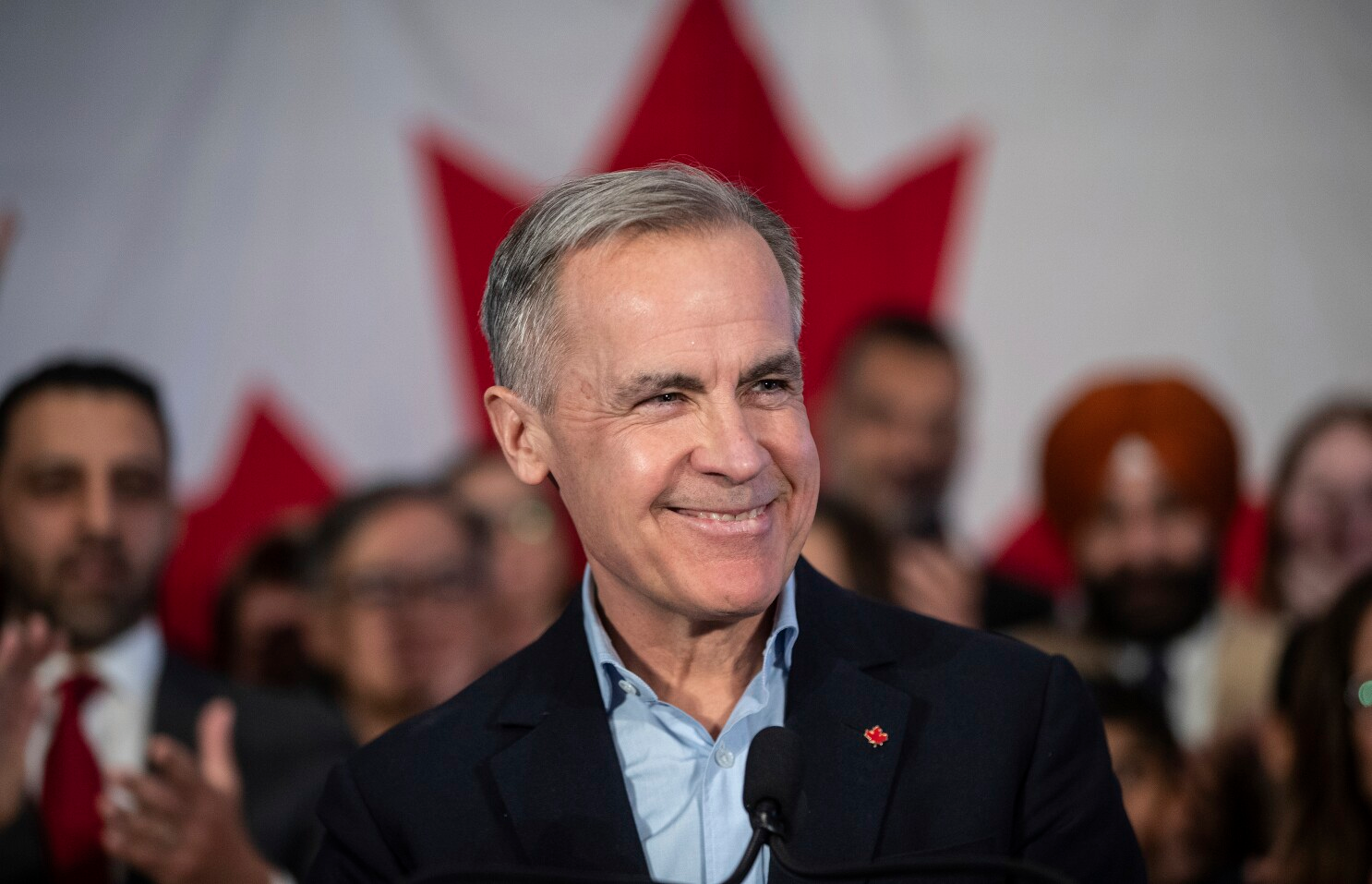
In an interview with the Strategic Council on Foreign Relations website, Seyyed Vahid Karimi stated: The Liberal Party of Canada, led by Mark Carney, retained power in the general election on April 28, 2025, winning 167 out of 343 seats in the House of Commons, but did not achieve an absolute majority. This fragile victory occurred at a time when US President Donald Trump had strained relations between the two countries by threatening to impose heavy tariffs and making controversial statements about the annexation of Canada. The Liberals needed to win 172 out of 343 seats in the House of Commons to gain a majority that would allow them to govern without the support of small parties. In his victory speech in Ottawa, Carney acknowledged that “our old relationship with the United States, a relationship built on increasing integration, is over.” He added, “The global free trade system that America founded, the system that Canada has relied on since World War II, the system that, while not perfect, brought decades of prosperity, is now over.” The Canadian prime minister said, “The months ahead will be difficult and require sacrifice.”


US territorial claims: a real threat or a tool for pressure?

Karimi considered Donald Trump’s claim that Canada would become the “51st state” of the United States, devoid of practical support and part of the US president’s sensationalist tactics. He stated: “Canada, with its long history of political independence and its status as a member of the Commonwealth, has a strong national identity and sovereignty. This claim is more of a political pressure and attention-grabbing claim and is unlikely to lead to practical action.”

He pointed to the firm response of Mark Carney, the new Canadian Prime Minister, who declared in his victory speech in Ottawa: “America wants our resources, water, and land, but this will never happen.” The former diplomat of our country in New York considered this stance a sign of Carney’s strategy to strengthen nationalism and attract domestic and international support. He added: “With his recent trip to Europe and meeting with British and French officials, Carney has attracted the support of the Commonwealth and the European Union to counter American pressure.”

Citing Trump’s political record, Karimi stated: “He often uses major threats to gain diplomatic or economic concessions, but domestic and international constraints, such as opposition from the US Congress or the reaction of NATO allies, prevent these threats from being implemented. He concluded, “This claim, although provoking tension, will not become a real challenge to the territorial integrity of this country, given Carney’s response and the support of Canada’s allies.” However, the analyst also noted that “Canada is not an independent country anymore, but is under Britain’s political and diplomatic protection.”


Tariff War: Canada’s Economic Challenge and Strategic Responses


Karimi discussed the tariff war’s impact on the Canadian economy, describing it as one of the biggest challenges for the Liberal government. He stated: “As of March 2025, the US government has imposed 25% tariffs on Canadian steel, aluminum, and automobiles, which has put a heavy burden on the Canadian economy.”

Referring to Canada’s 75% dependence on the US for foreign trade, he considered these tariffs a lose-lose equation that increases the cost of living for Canadians and threatens the country’s economic growth.

According to the former diplomat of the Islamic Republic of Iran in New York, “The Carney government has responded to this challenge with two strategies; first, imposing reciprocal tariffs on $42 billion of American goods, which represents an aggressive approach to defending Canadian interests; and second, diversifying trading partners by strengthening the free trade agreement with the European Union (CETA) and negotiations with Asian countries such as Japan and India.” Of course, he considered these measures a positive step, but insufficient to compensate for the losses fully, adding: “The Canadian economy continues to face high inflation, a housing crisis, and public discontent, which make it difficult to implement these policies.”

Emphasizing Carney’s experience as a former governor of the Bank of Canada and the Bank of England, Karimi stated: “Carney can guide the Canadian economy by managing global financial crises, such as the 2008 crisis and Brexit.” However, he warned that Carney’s minority government, with only 167 seats, will need the support of smaller parties like the New Democrats to advance these strategies, which will increase political fragility. He added: “Failure to manage this challenge could lead to the strengthening of the Conservatives led by Pierre Pouliore in the next election.”


Iran-Canada Relations: Opportunities and Challenges

Karimi also discussed the prospects for Iran-Canada relations under the new Liberal government, stating that the victory of Mark Carney and the Liberals in the Canadian elections will not bring about a significant change in these relations. He said, “Bilateral relations are influenced by the macro policies of the Islamic Republic of Iran and Canada’s domestic priorities, especially reducing tensions with the United States.” Vahid Karimi pointed to Carney’s focus on reviving the economy and managing relations with Washington, which has sidelined Iran-related issues.

The former diplomat considered one of the obstacles to improving relations to be the approach of Iranians living in Canada. He stated: “The 400,000-member Iranian community in Canada could have acted as a bridge to enhance relations.” Karimi suggested that “initiatives such as conciliatory messages from Iran or more constructive engagement with this community could pave the way for improving relations in the future.”


0 Comments

LATEST CONTENT

Consequences of Declining Trust in the Judiciary in Europe

SCFRonline – Opinion: The increase in public distrust of the French judicial system, which in recent surveys has reached approximately two-thirds of citizens, should be analyzed within a framework broader than temporary dissatisfaction or an emotional reaction to a particular criminal case.

Iran’s Potential Levers of Power

SCFRonline– Opinion: Iran’s geopolitical power is not limited solely to oil and the Strait of Hormuz; the unintended emergence of disruptions in the future global food and energy security chains can also demonstrate Iran’s strategic importance.

The Inseparability of the Lebanese Front from the Axis of Resistance

SCFR Online–Opinion: By providing an extensive network of social, healthcare, educational, and post-war reconstruction services, Hezbollah has established a strong social base for itself among Lebanon’s Shiites and Sunnis, and even beyond that, among other segments of Lebanese society, including Christians. Hezbollah has never been an external actor imposed upon Lebanon; rather, it is a phenomenon fundamentally born out of the occupation and crimes of the Zionist regime and itself influenced by popular resistance.

The Increasing Efforts of the Zionist Regime to Redefine Borders and the Regional Order and Its Consequences

SCFR Online– Opinion: Security and military developments in the region over recent months indicate that the ongoing crises and wars in Gaza, southern Lebanon, and parts of Syrian territory encompass broader dimensions of geopolitical and geostrategic transformations. In this context, the increased military presence and control of the Zionist regime over parts of the territories of these areas, along with proposals regarding the creation of buffer zones or even the expansion of security borders, have raised serious questions about the future of the regional order and its consequences for the countries of West Asia.

Loading

Últimas publicaciones

Consequences of Declining Trust in the Judiciary in Europe

SCFRonline – Opinion: The increase in public distrust of the French judicial system, which in recent surveys has reached approximately two-thirds of citizens, should be analyzed within a framework broader than temporary dissatisfaction or an emotional reaction to a particular criminal case.

Iran’s Potential Levers of Power

SCFRonline– Opinion: Iran’s geopolitical power is not limited solely to oil and the Strait of Hormuz; the unintended emergence of disruptions in the future global food and energy security chains can also demonstrate Iran’s strategic importance.

The Inseparability of the Lebanese Front from the Axis of Resistance

SCFR Online–Opinion: By providing an extensive network of social, healthcare, educational, and post-war reconstruction services, Hezbollah has established a strong social base for itself among Lebanon’s Shiites and Sunnis, and even beyond that, among other segments of Lebanese society, including Christians. Hezbollah has never been an external actor imposed upon Lebanon; rather, it is a phenomenon fundamentally born out of the occupation and crimes of the Zionist regime and itself influenced by popular resistance.

The Increasing Efforts of the Zionist Regime to Redefine Borders and the Regional Order and Its Consequences

SCFR Online– Opinion: Security and military developments in the region over recent months indicate that the ongoing crises and wars in Gaza, southern Lebanon, and parts of Syrian territory encompass broader dimensions of geopolitical and geostrategic transformations. In this context, the increased military presence and control of the Zionist regime over parts of the territories of these areas, along with proposals regarding the creation of buffer zones or even the expansion of security borders, have raised serious questions about the future of the regional order and its consequences for the countries of West Asia.

Loading

DERNIER CONTENU

Consequences of Declining Trust in the Judiciary in Europe

SCFRonline – Opinion: The increase in public distrust of the French judicial system, which in recent surveys has reached approximately two-thirds of citizens, should be analyzed within a framework broader than temporary dissatisfaction or an emotional reaction to a particular criminal case.

Iran’s Potential Levers of Power

SCFRonline– Opinion: Iran’s geopolitical power is not limited solely to oil and the Strait of Hormuz; the unintended emergence of disruptions in the future global food and energy security chains can also demonstrate Iran’s strategic importance.

The Inseparability of the Lebanese Front from the Axis of Resistance

SCFR Online–Opinion: By providing an extensive network of social, healthcare, educational, and post-war reconstruction services, Hezbollah has established a strong social base for itself among Lebanon’s Shiites and Sunnis, and even beyond that, among other segments of Lebanese society, including Christians. Hezbollah has never been an external actor imposed upon Lebanon; rather, it is a phenomenon fundamentally born out of the occupation and crimes of the Zionist regime and itself influenced by popular resistance.

The Increasing Efforts of the Zionist Regime to Redefine Borders and the Regional Order and Its Consequences

SCFR Online– Opinion: Security and military developments in the region over recent months indicate that the ongoing crises and wars in Gaza, southern Lebanon, and parts of Syrian territory encompass broader dimensions of geopolitical and geostrategic transformations. In this context, the increased military presence and control of the Zionist regime over parts of the territories of these areas, along with proposals regarding the creation of buffer zones or even the expansion of security borders, have raised serious questions about the future of the regional order and its consequences for the countries of West Asia.

Loading

DERNIER CONTENU

Consequences of Declining Trust in the Judiciary in Europe

SCFRonline – Opinion: The increase in public distrust of the French judicial system, which in recent surveys has reached approximately two-thirds of citizens, should be analyzed within a framework broader than temporary dissatisfaction or an emotional reaction to a particular criminal case.

Iran’s Potential Levers of Power

SCFRonline– Opinion: Iran’s geopolitical power is not limited solely to oil and the Strait of Hormuz; the unintended emergence of disruptions in the future global food and energy security chains can also demonstrate Iran’s strategic importance.

The Inseparability of the Lebanese Front from the Axis of Resistance

SCFR Online–Opinion: By providing an extensive network of social, healthcare, educational, and post-war reconstruction services, Hezbollah has established a strong social base for itself among Lebanon’s Shiites and Sunnis, and even beyond that, among other segments of Lebanese society, including Christians. Hezbollah has never been an external actor imposed upon Lebanon; rather, it is a phenomenon fundamentally born out of the occupation and crimes of the Zionist regime and itself influenced by popular resistance.

The Increasing Efforts of the Zionist Regime to Redefine Borders and the Regional Order and Its Consequences

SCFR Online– Opinion: Security and military developments in the region over recent months indicate that the ongoing crises and wars in Gaza, southern Lebanon, and parts of Syrian territory encompass broader dimensions of geopolitical and geostrategic transformations. In this context, the increased military presence and control of the Zionist regime over parts of the territories of these areas, along with proposals regarding the creation of buffer zones or even the expansion of security borders, have raised serious questions about the future of the regional order and its consequences for the countries of West Asia.

Loading

DERNIER CONTENU

Consequences of Declining Trust in the Judiciary in Europe

SCFRonline – Opinion: The increase in public distrust of the French judicial system, which in recent surveys has reached approximately two-thirds of citizens, should be analyzed within a framework broader than temporary dissatisfaction or an emotional reaction to a particular criminal case.

Iran’s Potential Levers of Power

SCFRonline– Opinion: Iran’s geopolitical power is not limited solely to oil and the Strait of Hormuz; the unintended emergence of disruptions in the future global food and energy security chains can also demonstrate Iran’s strategic importance.

The Inseparability of the Lebanese Front from the Axis of Resistance

SCFR Online–Opinion: By providing an extensive network of social, healthcare, educational, and post-war reconstruction services, Hezbollah has established a strong social base for itself among Lebanon’s Shiites and Sunnis, and even beyond that, among other segments of Lebanese society, including Christians. Hezbollah has never been an external actor imposed upon Lebanon; rather, it is a phenomenon fundamentally born out of the occupation and crimes of the Zionist regime and itself influenced by popular resistance.

The Increasing Efforts of the Zionist Regime to Redefine Borders and the Regional Order and Its Consequences

SCFR Online– Opinion: Security and military developments in the region over recent months indicate that the ongoing crises and wars in Gaza, southern Lebanon, and parts of Syrian territory encompass broader dimensions of geopolitical and geostrategic transformations. In this context, the increased military presence and control of the Zionist regime over parts of the territories of these areas, along with proposals regarding the creation of buffer zones or even the expansion of security borders, have raised serious questions about the future of the regional order and its consequences for the countries of West Asia.

Loading