جدیدترین مطالب

Analysis of the Recognition of the Armenian Genocide by the Zionist Regime

SCFR Online – Opinion: At a time when the West Asia region, particularly in recent months, has been undergoing the most complex political and security developments of the past half-century, the sudden decision by the cabinet of the Zionist regime to recognize the Armenian genocide committed by Turkey, which has faced strong condemnation and opposition from Ankara and Baku, raises questions.

Lebanon Peace Agreement; Consolidation of Occupation

SCFR Online – Opinion: The Washington trilateral agreement, by linking the end of occupation to political and security conditions, does not establish a sustainable peace; rather, it consolidates the occupation.

China’s Effort to Recreate a New Global Order

SCFRonline – Opinion: Unlike classical powers, Beijing pursues its preferred order not through territorial occupation, but through technology, capital, standard-setting, and digital governance.

Loading

Trump

Differences in the Perspectives of Europe and America Regarding the Tariff War against China and India

Differences in the Perspectives of Europe and America Regarding the Tariff War against China and India

Strategic Council Online – Interview: A strategic affairs expert stated that recently, the United States has asked its allies in the G7 and its partners in the European Union to impose a new round of “significant tariffs” on China and India for purchasing Russian oil. Trump’s tariff demands reveal a clear gap in strategy between Washington and Brussels. While the Trump administration prefers to weaken the Kremlin’s economy by imposing tariffs on third countries, Europe seeks official sanctions against Moscow’s trade and financial partners.

The Challenge Between Europe and America Over Greenland

The Challenge Between Europe and America Over Greenland

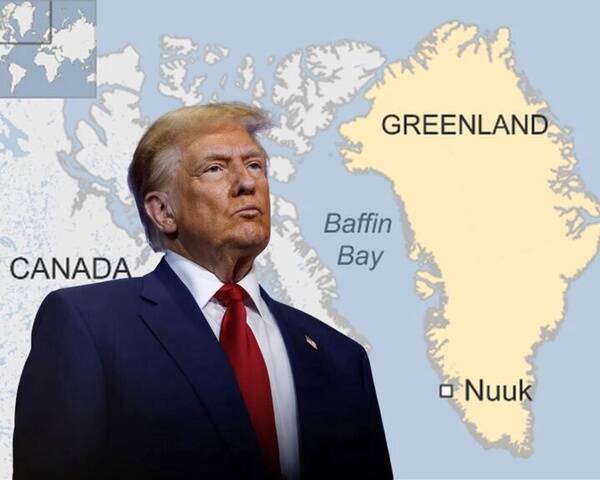
Strategic Council Online – Interview: An international affairs expert, referring to the ongoing dispute between Europe and America over Greenland, stated that Europe’s policy is based on increasing political, diplomatic, and even economic support for Denmark and Greenland, and it certainly will not move towards escalating tensions with America.

U.S. Economic Recession and Its Domestic and Global Consequences

U.S. Economic Recession and Its Domestic and Global Consequences

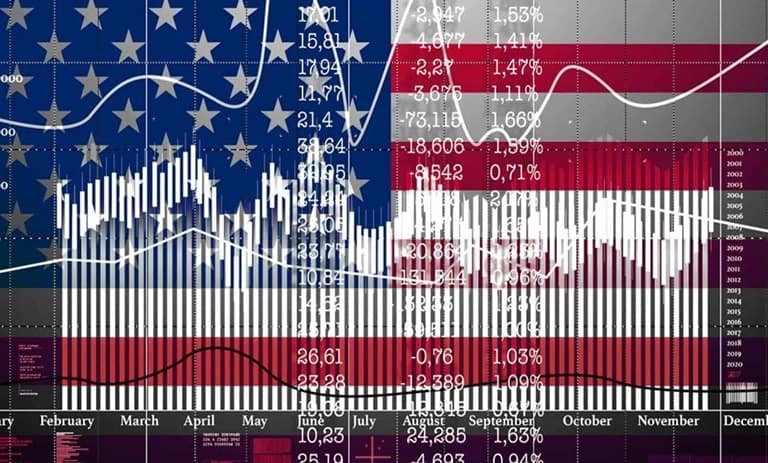
Strategic Council Online – Interview: An analyst of U.S. affairs stated that while Donald Trump promised to revive the U.S. economy and restore the country’s industrial glory upon his return to the White House, the latest economic data indicate otherwise. The unemployment rate, which was 3.8% at the beginning of the new administration, has now risen to 4.3%, and factories and construction companies have laid off thousands of workers. Even revised statistics show that in June of this year alone, 13,000 jobs were lost. These developments highlight the gap between Trump’s campaign promises and the economic reality in the U.S.. This divide has overshadowed not only domestic politics but also the country’s economic and geopolitical future.
At the same time, Trump is attempting to shift pressures outward by leveraging geopolitical tools; an example is his threat to the European Union following the fines imposed on Google, an action many observers see as an effort to shift the agenda from domestic recession to external challenges. The question is whether these policies can pull the U.S. economy out of recession or if their consequences will ultimately spill over into the global economy.

India-US Relations: Strategic Distance or Tactical?

India-US Relations: Strategic Distance or Tactical?

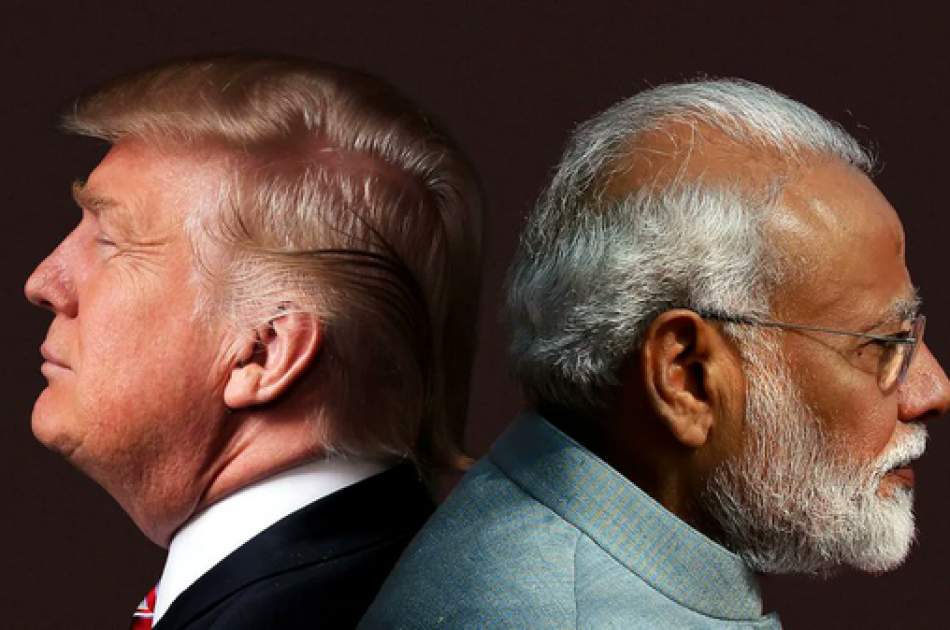
Strategic Council Online – Interview: A former Iranian diplomat stated that India will keep its differences with the United States limited and at the bilateral level, and will not join any power bloc against other powers.

America’s Aggressive Commercial Strategy and Imposing a Trade Agreement on the EU

America’s Aggressive Commercial Strategy and Imposing a Trade Agreement on the EU

Strategic Council Online – Interview: An international affairs analyst stated that the recent trade agreement between the United States and the European Union, signed on July 28, 2025, in Scotland, appears to have averted a full-scale tariff war. However, this agreement, shaped by Donald Trump’s pressures and threats to raise tariffs by up to 30%, reflects U.S. economic dominance over Europe more than it signifies mutual cooperation. The European Union’s commitment to purchasing $750 billion worth of energy and investing $600 billion in the U.S., along with accepting a 15% tariff on most European exports, raises serious questions about Europe’s economic independence and its implications for the global economy. Does this agreement mean stability for European trade, or does it represent a strategic surrender to the United States that will deepen existing rifts in the global order?

Objectives and Messages of China’s Military Drill Concurrent with the SCO Summit

Objectives and Messages of China’s Military Drill Concurrent with the SCO Summit

Strategic Council Online – Interview: A senior analyst on Chinese affairs stated that China’s major military drill on September 3, coinciding with the 80th anniversary of the end of World War II, is far more than a simple military event; it carries immense importance in today’s geopolitical equations. The presence of Vladimir Putin, Masoud Pezeshkian, and Kim Jong-un alongside Xi Jinping not only reflects the convergence of non-Western powers against pressure from the United States and NATO but also demonstrates Beijing’s efforts to consolidate its position as a decisive player in the global order. Among the 26 foreign leaders participating in this parade, none of the Western leaders are present except for Robert Fico, the Prime Minister of Slovakia. Also attending are Alexander Lukashenko, President of Belarus; Prabowo Subianto, President of Indonesia; Aleksandar Vučić, President of Serbia; and Woo Won-sik, Speaker of South Korea’s National Assembly. Li Junhua, Under-Secretary-General of the UN, will also be present on behalf of the organization.
This drill—considered one of the largest military maneuvers in China’s modern history—focuses on showcasing the latest defensive and offensive technologies, including hypersonic weapon systems and advanced communication networks whose capabilities could alter the balance of power in East Asia and even globally. This event is not merely a show of military force but also serves as a tool of deterrence and diplomacy. Under growing economic and diplomatic pressure, China is demonstrating through such drills that it possesses the ability to manage crises and reshape regional equations. In fact, Beijing is seizing this opportunity both to reassure its allies and to warn its rivals that East Asia is no longer under American dominance.

Venezuela Crisis and US Interventionist Strategy in Latin America

Venezuela Crisis and US Interventionist Strategy in Latin America

Strategic Council Online – Interview: A senior Latin American affairs analyst stated that the Trump administration’s view of South America is fundamentally defined by ideological pessimism and hostility towards socialist systems. Just as the United States pursued a policy of regime change in Cuba, Nicaragua, and Chile over the past decades, it is following the same approach in Venezuela.

Trump and the Humiliation of Europe in the Ukraine Crisis

Trump and the Humiliation of Europe in the Ukraine Crisis

Strategic Council Online – Interview: A senior international affairs analyst stated that Trump’s deal-oriented and authoritarian diplomacy, disregarding the complexities of a multipolar world, is doomed to failure. Lasting peace in Ukraine will only be possible through cooperation with Europe and respect for international law. Donald Trump, the President of the United States, with a deal-oriented approach aimed at quickly ending the war in Ukraine, has increased pressure on Europe to accept primary responsibility for that country’s security guarantees. According to a Politico report, senior Pentagon officials, in meetings with European defense ministers, emphasized that the U.S. would play a minimal role in this regard, with the main burden falling on Europe. This approach, evident at the August 18 meeting in Washington with European leaders and Volodymyr Zelenskyy, highlights a deep rift in transatlantic relations. Europe, concerned about the diminishing U.S. commitments to NATO and the fragility of the peace, is seeking security independence and strengthening its own diplomacy.

France’s Parliament Concerned About the EU’s Catastrophic Strategic Dependence on America

France’s Parliament Concerned About the EU’s Catastrophic Strategic Dependence on America

Strategic Council Online – Interview: A senior international affairs analyst stated that the current geopolitical situation has created an unprecedented space for strategic changes in Europe, adding that the recommendation letter from France’s parliament is essentially a strategic response to these conditions. The release of the French parliament’s 153-page report—dubbed by Arnaud Bertrand (French journalist) as “the most prominent geopolitical document of the century”—has sparked a wave of debate and reactions in global political and intellectual circles. This document describes the European Union’s strategic dependence on the United States as a catastrophic failure and, through 50 practical recommendations, proposes a new path to escape Atlanticist hegemony and move towards equal partnership with China. If the contents and recommendations of this document are taken seriously in Europe, the consequences will extend beyond the geography of the Green Continent and directly impact relations among emerging powers, financial markets, and even international security equations. Furthermore, the document goes beyond “defense independence” to address “economic and monetary independence”—an area hitherto under the shadow of the US dollar and Washington’s policies. From this perspective, the present moment may mark the beginning of a new chapter in international politics, where Europe defines itself as an independent actor in the future multipolar order.

Alaska: Deal-Making Stage or Geopolitical Minefield?

Alaska: Deal-Making Stage or Geopolitical Minefield?

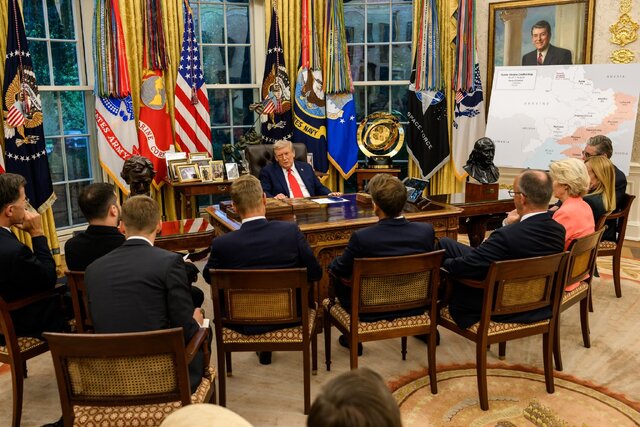
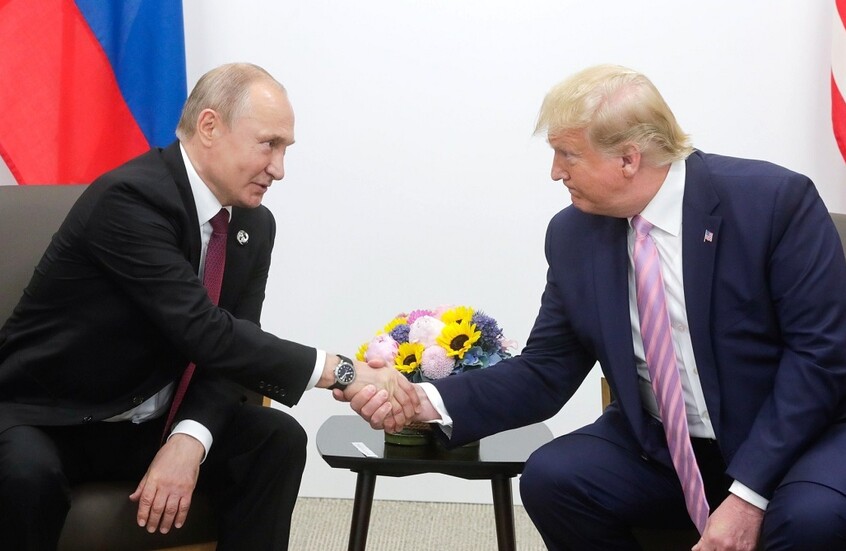
Strategic Council Online – Interview: A senior international affairs analyst stated: “The final week of summer 2025 marks a sensitive test for international relations and the future of the Ukraine war. The meeting between Donald Trump and Vladimir Putin in Alaska was merely seven months after Trump’s return to the White House, as the Ukraine war rages on relentlessly.” Volodymyr Zelenskyy, Ukraine’s president, has preemptively rejected Trump’s proposed peace plan—likely based on territorial concessions to Russia—warning that any agreement without Kyiv’s presence and consent would be a “dead solution.” Observers view the clash of interests among Moscow, Washington, Kyiv, and Europe as the intersection of four conflicting logics: Washington’s deal-driven logic, Moscow’s consolidationist logic, and Kyiv’s and Europe’s survivalist logic. While scenarios range from a minimal agreement to tacit Putin-Trump collusion solidifying current frontlines, each carries profound implications for European security and global power balances. Zelenskyy’s absence from Alaska could heighten risks of a deal that not only weakens Ukraine’s position but also undermines the legitimacy of fundamental international law.

أحدث الوظائف

Analysis of the Recognition of the Armenian Genocide by the Zionist Regime

SCFR Online – Opinion: At a time when the West Asia region, particularly in recent months, has been undergoing the most complex political and security developments of the past half-century, the sudden decision by the cabinet of the Zionist regime to recognize the Armenian genocide committed by Turkey, which has faced strong condemnation and opposition from Ankara and Baku, raises questions.

Lebanon Peace Agreement; Consolidation of Occupation

SCFR Online – Opinion: The Washington trilateral agreement, by linking the end of occupation to political and security conditions, does not establish a sustainable peace; rather, it consolidates the occupation.

China’s Effort to Recreate a New Global Order

SCFRonline – Opinion: Unlike classical powers, Beijing pursues its preferred order not through territorial occupation, but through technology, capital, standard-setting, and digital governance.

Loading

Trump

Differences in the Perspectives of Europe and America Regarding the Tariff War against China and India

Differences in the Perspectives of Europe and America Regarding the Tariff War against China and India

Strategic Council Online – Interview: A strategic affairs expert stated that recently, the United States has asked its allies in the G7 and its partners in the European Union to impose a new round of “significant tariffs” on China and India for purchasing Russian oil. Trump’s tariff demands reveal a clear gap in strategy between Washington and Brussels. While the Trump administration prefers to weaken the Kremlin’s economy by imposing tariffs on third countries, Europe seeks official sanctions against Moscow’s trade and financial partners.

The Challenge Between Europe and America Over Greenland

The Challenge Between Europe and America Over Greenland

Strategic Council Online – Interview: An international affairs expert, referring to the ongoing dispute between Europe and America over Greenland, stated that Europe’s policy is based on increasing political, diplomatic, and even economic support for Denmark and Greenland, and it certainly will not move towards escalating tensions with America.

U.S. Economic Recession and Its Domestic and Global Consequences

U.S. Economic Recession and Its Domestic and Global Consequences

Strategic Council Online – Interview: An analyst of U.S. affairs stated that while Donald Trump promised to revive the U.S. economy and restore the country’s industrial glory upon his return to the White House, the latest economic data indicate otherwise. The unemployment rate, which was 3.8% at the beginning of the new administration, has now risen to 4.3%, and factories and construction companies have laid off thousands of workers. Even revised statistics show that in June of this year alone, 13,000 jobs were lost. These developments highlight the gap between Trump’s campaign promises and the economic reality in the U.S.. This divide has overshadowed not only domestic politics but also the country’s economic and geopolitical future.
At the same time, Trump is attempting to shift pressures outward by leveraging geopolitical tools; an example is his threat to the European Union following the fines imposed on Google, an action many observers see as an effort to shift the agenda from domestic recession to external challenges. The question is whether these policies can pull the U.S. economy out of recession or if their consequences will ultimately spill over into the global economy.

India-US Relations: Strategic Distance or Tactical?

India-US Relations: Strategic Distance or Tactical?

Strategic Council Online – Interview: A former Iranian diplomat stated that India will keep its differences with the United States limited and at the bilateral level, and will not join any power bloc against other powers.

America’s Aggressive Commercial Strategy and Imposing a Trade Agreement on the EU

America’s Aggressive Commercial Strategy and Imposing a Trade Agreement on the EU

Strategic Council Online – Interview: An international affairs analyst stated that the recent trade agreement between the United States and the European Union, signed on July 28, 2025, in Scotland, appears to have averted a full-scale tariff war. However, this agreement, shaped by Donald Trump’s pressures and threats to raise tariffs by up to 30%, reflects U.S. economic dominance over Europe more than it signifies mutual cooperation. The European Union’s commitment to purchasing $750 billion worth of energy and investing $600 billion in the U.S., along with accepting a 15% tariff on most European exports, raises serious questions about Europe’s economic independence and its implications for the global economy. Does this agreement mean stability for European trade, or does it represent a strategic surrender to the United States that will deepen existing rifts in the global order?

Objectives and Messages of China’s Military Drill Concurrent with the SCO Summit

Objectives and Messages of China’s Military Drill Concurrent with the SCO Summit

Strategic Council Online – Interview: A senior analyst on Chinese affairs stated that China’s major military drill on September 3, coinciding with the 80th anniversary of the end of World War II, is far more than a simple military event; it carries immense importance in today’s geopolitical equations. The presence of Vladimir Putin, Masoud Pezeshkian, and Kim Jong-un alongside Xi Jinping not only reflects the convergence of non-Western powers against pressure from the United States and NATO but also demonstrates Beijing’s efforts to consolidate its position as a decisive player in the global order. Among the 26 foreign leaders participating in this parade, none of the Western leaders are present except for Robert Fico, the Prime Minister of Slovakia. Also attending are Alexander Lukashenko, President of Belarus; Prabowo Subianto, President of Indonesia; Aleksandar Vučić, President of Serbia; and Woo Won-sik, Speaker of South Korea’s National Assembly. Li Junhua, Under-Secretary-General of the UN, will also be present on behalf of the organization.
This drill—considered one of the largest military maneuvers in China’s modern history—focuses on showcasing the latest defensive and offensive technologies, including hypersonic weapon systems and advanced communication networks whose capabilities could alter the balance of power in East Asia and even globally. This event is not merely a show of military force but also serves as a tool of deterrence and diplomacy. Under growing economic and diplomatic pressure, China is demonstrating through such drills that it possesses the ability to manage crises and reshape regional equations. In fact, Beijing is seizing this opportunity both to reassure its allies and to warn its rivals that East Asia is no longer under American dominance.

Venezuela Crisis and US Interventionist Strategy in Latin America

Venezuela Crisis and US Interventionist Strategy in Latin America

Strategic Council Online – Interview: A senior Latin American affairs analyst stated that the Trump administration’s view of South America is fundamentally defined by ideological pessimism and hostility towards socialist systems. Just as the United States pursued a policy of regime change in Cuba, Nicaragua, and Chile over the past decades, it is following the same approach in Venezuela.

Trump and the Humiliation of Europe in the Ukraine Crisis

Trump and the Humiliation of Europe in the Ukraine Crisis

Strategic Council Online – Interview: A senior international affairs analyst stated that Trump’s deal-oriented and authoritarian diplomacy, disregarding the complexities of a multipolar world, is doomed to failure. Lasting peace in Ukraine will only be possible through cooperation with Europe and respect for international law. Donald Trump, the President of the United States, with a deal-oriented approach aimed at quickly ending the war in Ukraine, has increased pressure on Europe to accept primary responsibility for that country’s security guarantees. According to a Politico report, senior Pentagon officials, in meetings with European defense ministers, emphasized that the U.S. would play a minimal role in this regard, with the main burden falling on Europe. This approach, evident at the August 18 meeting in Washington with European leaders and Volodymyr Zelenskyy, highlights a deep rift in transatlantic relations. Europe, concerned about the diminishing U.S. commitments to NATO and the fragility of the peace, is seeking security independence and strengthening its own diplomacy.

France’s Parliament Concerned About the EU’s Catastrophic Strategic Dependence on America

France’s Parliament Concerned About the EU’s Catastrophic Strategic Dependence on America

Strategic Council Online – Interview: A senior international affairs analyst stated that the current geopolitical situation has created an unprecedented space for strategic changes in Europe, adding that the recommendation letter from France’s parliament is essentially a strategic response to these conditions. The release of the French parliament’s 153-page report—dubbed by Arnaud Bertrand (French journalist) as “the most prominent geopolitical document of the century”—has sparked a wave of debate and reactions in global political and intellectual circles. This document describes the European Union’s strategic dependence on the United States as a catastrophic failure and, through 50 practical recommendations, proposes a new path to escape Atlanticist hegemony and move towards equal partnership with China. If the contents and recommendations of this document are taken seriously in Europe, the consequences will extend beyond the geography of the Green Continent and directly impact relations among emerging powers, financial markets, and even international security equations. Furthermore, the document goes beyond “defense independence” to address “economic and monetary independence”—an area hitherto under the shadow of the US dollar and Washington’s policies. From this perspective, the present moment may mark the beginning of a new chapter in international politics, where Europe defines itself as an independent actor in the future multipolar order.

Alaska: Deal-Making Stage or Geopolitical Minefield?

Alaska: Deal-Making Stage or Geopolitical Minefield?

Strategic Council Online – Interview: A senior international affairs analyst stated: “The final week of summer 2025 marks a sensitive test for international relations and the future of the Ukraine war. The meeting between Donald Trump and Vladimir Putin in Alaska was merely seven months after Trump’s return to the White House, as the Ukraine war rages on relentlessly.” Volodymyr Zelenskyy, Ukraine’s president, has preemptively rejected Trump’s proposed peace plan—likely based on territorial concessions to Russia—warning that any agreement without Kyiv’s presence and consent would be a “dead solution.” Observers view the clash of interests among Moscow, Washington, Kyiv, and Europe as the intersection of four conflicting logics: Washington’s deal-driven logic, Moscow’s consolidationist logic, and Kyiv’s and Europe’s survivalist logic. While scenarios range from a minimal agreement to tacit Putin-Trump collusion solidifying current frontlines, each carries profound implications for European security and global power balances. Zelenskyy’s absence from Alaska could heighten risks of a deal that not only weakens Ukraine’s position but also undermines the legitimacy of fundamental international law.

Trump

Differences in the Perspectives of Europe and America Regarding the Tariff War against China and India

Differences in the Perspectives of Europe and America Regarding the Tariff War against China and India

Strategic Council Online – Interview: A strategic affairs expert stated that recently, the United States has asked its allies in the G7 and its partners in the European Union to impose a new round of “significant tariffs” on China and India for purchasing Russian oil. Trump’s tariff demands reveal a clear gap in strategy between Washington and Brussels. While the Trump administration prefers to weaken the Kremlin’s economy by imposing tariffs on third countries, Europe seeks official sanctions against Moscow’s trade and financial partners.

The Challenge Between Europe and America Over Greenland

The Challenge Between Europe and America Over Greenland

Strategic Council Online – Interview: An international affairs expert, referring to the ongoing dispute between Europe and America over Greenland, stated that Europe’s policy is based on increasing political, diplomatic, and even economic support for Denmark and Greenland, and it certainly will not move towards escalating tensions with America.

U.S. Economic Recession and Its Domestic and Global Consequences

U.S. Economic Recession and Its Domestic and Global Consequences

Strategic Council Online – Interview: An analyst of U.S. affairs stated that while Donald Trump promised to revive the U.S. economy and restore the country’s industrial glory upon his return to the White House, the latest economic data indicate otherwise. The unemployment rate, which was 3.8% at the beginning of the new administration, has now risen to 4.3%, and factories and construction companies have laid off thousands of workers. Even revised statistics show that in June of this year alone, 13,000 jobs were lost. These developments highlight the gap between Trump’s campaign promises and the economic reality in the U.S.. This divide has overshadowed not only domestic politics but also the country’s economic and geopolitical future.
At the same time, Trump is attempting to shift pressures outward by leveraging geopolitical tools; an example is his threat to the European Union following the fines imposed on Google, an action many observers see as an effort to shift the agenda from domestic recession to external challenges. The question is whether these policies can pull the U.S. economy out of recession or if their consequences will ultimately spill over into the global economy.

India-US Relations: Strategic Distance or Tactical?

India-US Relations: Strategic Distance or Tactical?

Strategic Council Online – Interview: A former Iranian diplomat stated that India will keep its differences with the United States limited and at the bilateral level, and will not join any power bloc against other powers.

America’s Aggressive Commercial Strategy and Imposing a Trade Agreement on the EU

America’s Aggressive Commercial Strategy and Imposing a Trade Agreement on the EU

Strategic Council Online – Interview: An international affairs analyst stated that the recent trade agreement between the United States and the European Union, signed on July 28, 2025, in Scotland, appears to have averted a full-scale tariff war. However, this agreement, shaped by Donald Trump’s pressures and threats to raise tariffs by up to 30%, reflects U.S. economic dominance over Europe more than it signifies mutual cooperation. The European Union’s commitment to purchasing $750 billion worth of energy and investing $600 billion in the U.S., along with accepting a 15% tariff on most European exports, raises serious questions about Europe’s economic independence and its implications for the global economy. Does this agreement mean stability for European trade, or does it represent a strategic surrender to the United States that will deepen existing rifts in the global order?

Objectives and Messages of China’s Military Drill Concurrent with the SCO Summit

Objectives and Messages of China’s Military Drill Concurrent with the SCO Summit

Strategic Council Online – Interview: A senior analyst on Chinese affairs stated that China’s major military drill on September 3, coinciding with the 80th anniversary of the end of World War II, is far more than a simple military event; it carries immense importance in today’s geopolitical equations. The presence of Vladimir Putin, Masoud Pezeshkian, and Kim Jong-un alongside Xi Jinping not only reflects the convergence of non-Western powers against pressure from the United States and NATO but also demonstrates Beijing’s efforts to consolidate its position as a decisive player in the global order. Among the 26 foreign leaders participating in this parade, none of the Western leaders are present except for Robert Fico, the Prime Minister of Slovakia. Also attending are Alexander Lukashenko, President of Belarus; Prabowo Subianto, President of Indonesia; Aleksandar Vučić, President of Serbia; and Woo Won-sik, Speaker of South Korea’s National Assembly. Li Junhua, Under-Secretary-General of the UN, will also be present on behalf of the organization.
This drill—considered one of the largest military maneuvers in China’s modern history—focuses on showcasing the latest defensive and offensive technologies, including hypersonic weapon systems and advanced communication networks whose capabilities could alter the balance of power in East Asia and even globally. This event is not merely a show of military force but also serves as a tool of deterrence and diplomacy. Under growing economic and diplomatic pressure, China is demonstrating through such drills that it possesses the ability to manage crises and reshape regional equations. In fact, Beijing is seizing this opportunity both to reassure its allies and to warn its rivals that East Asia is no longer under American dominance.

Venezuela Crisis and US Interventionist Strategy in Latin America

Venezuela Crisis and US Interventionist Strategy in Latin America

Strategic Council Online – Interview: A senior Latin American affairs analyst stated that the Trump administration’s view of South America is fundamentally defined by ideological pessimism and hostility towards socialist systems. Just as the United States pursued a policy of regime change in Cuba, Nicaragua, and Chile over the past decades, it is following the same approach in Venezuela.

Trump and the Humiliation of Europe in the Ukraine Crisis

Trump and the Humiliation of Europe in the Ukraine Crisis

Strategic Council Online – Interview: A senior international affairs analyst stated that Trump’s deal-oriented and authoritarian diplomacy, disregarding the complexities of a multipolar world, is doomed to failure. Lasting peace in Ukraine will only be possible through cooperation with Europe and respect for international law. Donald Trump, the President of the United States, with a deal-oriented approach aimed at quickly ending the war in Ukraine, has increased pressure on Europe to accept primary responsibility for that country’s security guarantees. According to a Politico report, senior Pentagon officials, in meetings with European defense ministers, emphasized that the U.S. would play a minimal role in this regard, with the main burden falling on Europe. This approach, evident at the August 18 meeting in Washington with European leaders and Volodymyr Zelenskyy, highlights a deep rift in transatlantic relations. Europe, concerned about the diminishing U.S. commitments to NATO and the fragility of the peace, is seeking security independence and strengthening its own diplomacy.

France’s Parliament Concerned About the EU’s Catastrophic Strategic Dependence on America

France’s Parliament Concerned About the EU’s Catastrophic Strategic Dependence on America

Strategic Council Online – Interview: A senior international affairs analyst stated that the current geopolitical situation has created an unprecedented space for strategic changes in Europe, adding that the recommendation letter from France’s parliament is essentially a strategic response to these conditions. The release of the French parliament’s 153-page report—dubbed by Arnaud Bertrand (French journalist) as “the most prominent geopolitical document of the century”—has sparked a wave of debate and reactions in global political and intellectual circles. This document describes the European Union’s strategic dependence on the United States as a catastrophic failure and, through 50 practical recommendations, proposes a new path to escape Atlanticist hegemony and move towards equal partnership with China. If the contents and recommendations of this document are taken seriously in Europe, the consequences will extend beyond the geography of the Green Continent and directly impact relations among emerging powers, financial markets, and even international security equations. Furthermore, the document goes beyond “defense independence” to address “economic and monetary independence”—an area hitherto under the shadow of the US dollar and Washington’s policies. From this perspective, the present moment may mark the beginning of a new chapter in international politics, where Europe defines itself as an independent actor in the future multipolar order.

Alaska: Deal-Making Stage or Geopolitical Minefield?

Alaska: Deal-Making Stage or Geopolitical Minefield?

Strategic Council Online – Interview: A senior international affairs analyst stated: “The final week of summer 2025 marks a sensitive test for international relations and the future of the Ukraine war. The meeting between Donald Trump and Vladimir Putin in Alaska was merely seven months after Trump’s return to the White House, as the Ukraine war rages on relentlessly.” Volodymyr Zelenskyy, Ukraine’s president, has preemptively rejected Trump’s proposed peace plan—likely based on territorial concessions to Russia—warning that any agreement without Kyiv’s presence and consent would be a “dead solution.” Observers view the clash of interests among Moscow, Washington, Kyiv, and Europe as the intersection of four conflicting logics: Washington’s deal-driven logic, Moscow’s consolidationist logic, and Kyiv’s and Europe’s survivalist logic. While scenarios range from a minimal agreement to tacit Putin-Trump collusion solidifying current frontlines, each carries profound implications for European security and global power balances. Zelenskyy’s absence from Alaska could heighten risks of a deal that not only weakens Ukraine’s position but also undermines the legitimacy of fundamental international law.

LATEST CONTENT

Analysis of the Recognition of the Armenian Genocide by the Zionist Regime

SCFR Online – Opinion: At a time when the West Asia region, particularly in recent months, has been undergoing the most complex political and security developments of the past half-century, the sudden decision by the cabinet of the Zionist regime to recognize the Armenian genocide committed by Turkey, which has faced strong condemnation and opposition from Ankara and Baku, raises questions.

Lebanon Peace Agreement; Consolidation of Occupation

SCFR Online – Opinion: The Washington trilateral agreement, by linking the end of occupation to political and security conditions, does not establish a sustainable peace; rather, it consolidates the occupation.

China’s Effort to Recreate a New Global Order

SCFRonline – Opinion: Unlike classical powers, Beijing pursues its preferred order not through territorial occupation, but through technology, capital, standard-setting, and digital governance.

Loading

Trump

Differences in the Perspectives of Europe and America Regarding the Tariff War against China and India

Differences in the Perspectives of Europe and America Regarding the Tariff War against China and India

Strategic Council Online – Interview: A strategic affairs expert stated that recently, the United States has asked its allies in the G7 and its partners in the European Union to impose a new round of “significant tariffs” on China and India for purchasing Russian oil. Trump’s tariff demands reveal a clear gap in strategy between Washington and Brussels. While the Trump administration prefers to weaken the Kremlin’s economy by imposing tariffs on third countries, Europe seeks official sanctions against Moscow’s trade and financial partners.

The Challenge Between Europe and America Over Greenland

The Challenge Between Europe and America Over Greenland

Strategic Council Online – Interview: An international affairs expert, referring to the ongoing dispute between Europe and America over Greenland, stated that Europe’s policy is based on increasing political, diplomatic, and even economic support for Denmark and Greenland, and it certainly will not move towards escalating tensions with America.

U.S. Economic Recession and Its Domestic and Global Consequences

U.S. Economic Recession and Its Domestic and Global Consequences

Strategic Council Online – Interview: An analyst of U.S. affairs stated that while Donald Trump promised to revive the U.S. economy and restore the country’s industrial glory upon his return to the White House, the latest economic data indicate otherwise. The unemployment rate, which was 3.8% at the beginning of the new administration, has now risen to 4.3%, and factories and construction companies have laid off thousands of workers. Even revised statistics show that in June of this year alone, 13,000 jobs were lost. These developments highlight the gap between Trump’s campaign promises and the economic reality in the U.S.. This divide has overshadowed not only domestic politics but also the country’s economic and geopolitical future.
At the same time, Trump is attempting to shift pressures outward by leveraging geopolitical tools; an example is his threat to the European Union following the fines imposed on Google, an action many observers see as an effort to shift the agenda from domestic recession to external challenges. The question is whether these policies can pull the U.S. economy out of recession or if their consequences will ultimately spill over into the global economy.

India-US Relations: Strategic Distance or Tactical?

India-US Relations: Strategic Distance or Tactical?

Strategic Council Online – Interview: A former Iranian diplomat stated that India will keep its differences with the United States limited and at the bilateral level, and will not join any power bloc against other powers.

America’s Aggressive Commercial Strategy and Imposing a Trade Agreement on the EU

America’s Aggressive Commercial Strategy and Imposing a Trade Agreement on the EU

Strategic Council Online – Interview: An international affairs analyst stated that the recent trade agreement between the United States and the European Union, signed on July 28, 2025, in Scotland, appears to have averted a full-scale tariff war. However, this agreement, shaped by Donald Trump’s pressures and threats to raise tariffs by up to 30%, reflects U.S. economic dominance over Europe more than it signifies mutual cooperation. The European Union’s commitment to purchasing $750 billion worth of energy and investing $600 billion in the U.S., along with accepting a 15% tariff on most European exports, raises serious questions about Europe’s economic independence and its implications for the global economy. Does this agreement mean stability for European trade, or does it represent a strategic surrender to the United States that will deepen existing rifts in the global order?

Objectives and Messages of China’s Military Drill Concurrent with the SCO Summit

Objectives and Messages of China’s Military Drill Concurrent with the SCO Summit

Strategic Council Online – Interview: A senior analyst on Chinese affairs stated that China’s major military drill on September 3, coinciding with the 80th anniversary of the end of World War II, is far more than a simple military event; it carries immense importance in today’s geopolitical equations. The presence of Vladimir Putin, Masoud Pezeshkian, and Kim Jong-un alongside Xi Jinping not only reflects the convergence of non-Western powers against pressure from the United States and NATO but also demonstrates Beijing’s efforts to consolidate its position as a decisive player in the global order. Among the 26 foreign leaders participating in this parade, none of the Western leaders are present except for Robert Fico, the Prime Minister of Slovakia. Also attending are Alexander Lukashenko, President of Belarus; Prabowo Subianto, President of Indonesia; Aleksandar Vučić, President of Serbia; and Woo Won-sik, Speaker of South Korea’s National Assembly. Li Junhua, Under-Secretary-General of the UN, will also be present on behalf of the organization.
This drill—considered one of the largest military maneuvers in China’s modern history—focuses on showcasing the latest defensive and offensive technologies, including hypersonic weapon systems and advanced communication networks whose capabilities could alter the balance of power in East Asia and even globally. This event is not merely a show of military force but also serves as a tool of deterrence and diplomacy. Under growing economic and diplomatic pressure, China is demonstrating through such drills that it possesses the ability to manage crises and reshape regional equations. In fact, Beijing is seizing this opportunity both to reassure its allies and to warn its rivals that East Asia is no longer under American dominance.

Venezuela Crisis and US Interventionist Strategy in Latin America

Venezuela Crisis and US Interventionist Strategy in Latin America

Strategic Council Online – Interview: A senior Latin American affairs analyst stated that the Trump administration’s view of South America is fundamentally defined by ideological pessimism and hostility towards socialist systems. Just as the United States pursued a policy of regime change in Cuba, Nicaragua, and Chile over the past decades, it is following the same approach in Venezuela.

Trump and the Humiliation of Europe in the Ukraine Crisis

Trump and the Humiliation of Europe in the Ukraine Crisis

Strategic Council Online – Interview: A senior international affairs analyst stated that Trump’s deal-oriented and authoritarian diplomacy, disregarding the complexities of a multipolar world, is doomed to failure. Lasting peace in Ukraine will only be possible through cooperation with Europe and respect for international law. Donald Trump, the President of the United States, with a deal-oriented approach aimed at quickly ending the war in Ukraine, has increased pressure on Europe to accept primary responsibility for that country’s security guarantees. According to a Politico report, senior Pentagon officials, in meetings with European defense ministers, emphasized that the U.S. would play a minimal role in this regard, with the main burden falling on Europe. This approach, evident at the August 18 meeting in Washington with European leaders and Volodymyr Zelenskyy, highlights a deep rift in transatlantic relations. Europe, concerned about the diminishing U.S. commitments to NATO and the fragility of the peace, is seeking security independence and strengthening its own diplomacy.

France’s Parliament Concerned About the EU’s Catastrophic Strategic Dependence on America

France’s Parliament Concerned About the EU’s Catastrophic Strategic Dependence on America

Strategic Council Online – Interview: A senior international affairs analyst stated that the current geopolitical situation has created an unprecedented space for strategic changes in Europe, adding that the recommendation letter from France’s parliament is essentially a strategic response to these conditions. The release of the French parliament’s 153-page report—dubbed by Arnaud Bertrand (French journalist) as “the most prominent geopolitical document of the century”—has sparked a wave of debate and reactions in global political and intellectual circles. This document describes the European Union’s strategic dependence on the United States as a catastrophic failure and, through 50 practical recommendations, proposes a new path to escape Atlanticist hegemony and move towards equal partnership with China. If the contents and recommendations of this document are taken seriously in Europe, the consequences will extend beyond the geography of the Green Continent and directly impact relations among emerging powers, financial markets, and even international security equations. Furthermore, the document goes beyond “defense independence” to address “economic and monetary independence”—an area hitherto under the shadow of the US dollar and Washington’s policies. From this perspective, the present moment may mark the beginning of a new chapter in international politics, where Europe defines itself as an independent actor in the future multipolar order.

Alaska: Deal-Making Stage or Geopolitical Minefield?

Alaska: Deal-Making Stage or Geopolitical Minefield?

Strategic Council Online – Interview: A senior international affairs analyst stated: “The final week of summer 2025 marks a sensitive test for international relations and the future of the Ukraine war. The meeting between Donald Trump and Vladimir Putin in Alaska was merely seven months after Trump’s return to the White House, as the Ukraine war rages on relentlessly.” Volodymyr Zelenskyy, Ukraine’s president, has preemptively rejected Trump’s proposed peace plan—likely based on territorial concessions to Russia—warning that any agreement without Kyiv’s presence and consent would be a “dead solution.” Observers view the clash of interests among Moscow, Washington, Kyiv, and Europe as the intersection of four conflicting logics: Washington’s deal-driven logic, Moscow’s consolidationist logic, and Kyiv’s and Europe’s survivalist logic. While scenarios range from a minimal agreement to tacit Putin-Trump collusion solidifying current frontlines, each carries profound implications for European security and global power balances. Zelenskyy’s absence from Alaska could heighten risks of a deal that not only weakens Ukraine’s position but also undermines the legitimacy of fundamental international law.

ÚLTIMAS PUBLICACIONES

Analysis of the Recognition of the Armenian Genocide by the Zionist Regime

SCFR Online – Opinion: At a time when the West Asia region, particularly in recent months, has been undergoing the most complex political and security developments of the past half-century, the sudden decision by the cabinet of the Zionist regime to recognize the Armenian genocide committed by Turkey, which has faced strong condemnation and opposition from Ankara and Baku, raises questions.

Lebanon Peace Agreement; Consolidation of Occupation

SCFR Online – Opinion: The Washington trilateral agreement, by linking the end of occupation to political and security conditions, does not establish a sustainable peace; rather, it consolidates the occupation.

China’s Effort to Recreate a New Global Order

SCFRonline – Opinion: Unlike classical powers, Beijing pursues its preferred order not through territorial occupation, but through technology, capital, standard-setting, and digital governance.

Loading

Trump

Differences in the Perspectives of Europe and America Regarding the Tariff War against China and India

Differences in the Perspectives of Europe and America Regarding the Tariff War against China and India

Strategic Council Online – Interview: A strategic affairs expert stated that recently, the United States has asked its allies in the G7 and its partners in the European Union to impose a new round of “significant tariffs” on China and India for purchasing Russian oil. Trump’s tariff demands reveal a clear gap in strategy between Washington and Brussels. While the Trump administration prefers to weaken the Kremlin’s economy by imposing tariffs on third countries, Europe seeks official sanctions against Moscow’s trade and financial partners.

The Challenge Between Europe and America Over Greenland

The Challenge Between Europe and America Over Greenland

Strategic Council Online – Interview: An international affairs expert, referring to the ongoing dispute between Europe and America over Greenland, stated that Europe’s policy is based on increasing political, diplomatic, and even economic support for Denmark and Greenland, and it certainly will not move towards escalating tensions with America.

U.S. Economic Recession and Its Domestic and Global Consequences

U.S. Economic Recession and Its Domestic and Global Consequences

Strategic Council Online – Interview: An analyst of U.S. affairs stated that while Donald Trump promised to revive the U.S. economy and restore the country’s industrial glory upon his return to the White House, the latest economic data indicate otherwise. The unemployment rate, which was 3.8% at the beginning of the new administration, has now risen to 4.3%, and factories and construction companies have laid off thousands of workers. Even revised statistics show that in June of this year alone, 13,000 jobs were lost. These developments highlight the gap between Trump’s campaign promises and the economic reality in the U.S.. This divide has overshadowed not only domestic politics but also the country’s economic and geopolitical future.
At the same time, Trump is attempting to shift pressures outward by leveraging geopolitical tools; an example is his threat to the European Union following the fines imposed on Google, an action many observers see as an effort to shift the agenda from domestic recession to external challenges. The question is whether these policies can pull the U.S. economy out of recession or if their consequences will ultimately spill over into the global economy.

India-US Relations: Strategic Distance or Tactical?

India-US Relations: Strategic Distance or Tactical?

Strategic Council Online – Interview: A former Iranian diplomat stated that India will keep its differences with the United States limited and at the bilateral level, and will not join any power bloc against other powers.

America’s Aggressive Commercial Strategy and Imposing a Trade Agreement on the EU

America’s Aggressive Commercial Strategy and Imposing a Trade Agreement on the EU

Strategic Council Online – Interview: An international affairs analyst stated that the recent trade agreement between the United States and the European Union, signed on July 28, 2025, in Scotland, appears to have averted a full-scale tariff war. However, this agreement, shaped by Donald Trump’s pressures and threats to raise tariffs by up to 30%, reflects U.S. economic dominance over Europe more than it signifies mutual cooperation. The European Union’s commitment to purchasing $750 billion worth of energy and investing $600 billion in the U.S., along with accepting a 15% tariff on most European exports, raises serious questions about Europe’s economic independence and its implications for the global economy. Does this agreement mean stability for European trade, or does it represent a strategic surrender to the United States that will deepen existing rifts in the global order?

Objectives and Messages of China’s Military Drill Concurrent with the SCO Summit

Objectives and Messages of China’s Military Drill Concurrent with the SCO Summit

Strategic Council Online – Interview: A senior analyst on Chinese affairs stated that China’s major military drill on September 3, coinciding with the 80th anniversary of the end of World War II, is far more than a simple military event; it carries immense importance in today’s geopolitical equations. The presence of Vladimir Putin, Masoud Pezeshkian, and Kim Jong-un alongside Xi Jinping not only reflects the convergence of non-Western powers against pressure from the United States and NATO but also demonstrates Beijing’s efforts to consolidate its position as a decisive player in the global order. Among the 26 foreign leaders participating in this parade, none of the Western leaders are present except for Robert Fico, the Prime Minister of Slovakia. Also attending are Alexander Lukashenko, President of Belarus; Prabowo Subianto, President of Indonesia; Aleksandar Vučić, President of Serbia; and Woo Won-sik, Speaker of South Korea’s National Assembly. Li Junhua, Under-Secretary-General of the UN, will also be present on behalf of the organization.
This drill—considered one of the largest military maneuvers in China’s modern history—focuses on showcasing the latest defensive and offensive technologies, including hypersonic weapon systems and advanced communication networks whose capabilities could alter the balance of power in East Asia and even globally. This event is not merely a show of military force but also serves as a tool of deterrence and diplomacy. Under growing economic and diplomatic pressure, China is demonstrating through such drills that it possesses the ability to manage crises and reshape regional equations. In fact, Beijing is seizing this opportunity both to reassure its allies and to warn its rivals that East Asia is no longer under American dominance.

Venezuela Crisis and US Interventionist Strategy in Latin America

Venezuela Crisis and US Interventionist Strategy in Latin America

Strategic Council Online – Interview: A senior Latin American affairs analyst stated that the Trump administration’s view of South America is fundamentally defined by ideological pessimism and hostility towards socialist systems. Just as the United States pursued a policy of regime change in Cuba, Nicaragua, and Chile over the past decades, it is following the same approach in Venezuela.

Trump and the Humiliation of Europe in the Ukraine Crisis

Trump and the Humiliation of Europe in the Ukraine Crisis

Strategic Council Online – Interview: A senior international affairs analyst stated that Trump’s deal-oriented and authoritarian diplomacy, disregarding the complexities of a multipolar world, is doomed to failure. Lasting peace in Ukraine will only be possible through cooperation with Europe and respect for international law. Donald Trump, the President of the United States, with a deal-oriented approach aimed at quickly ending the war in Ukraine, has increased pressure on Europe to accept primary responsibility for that country’s security guarantees. According to a Politico report, senior Pentagon officials, in meetings with European defense ministers, emphasized that the U.S. would play a minimal role in this regard, with the main burden falling on Europe. This approach, evident at the August 18 meeting in Washington with European leaders and Volodymyr Zelenskyy, highlights a deep rift in transatlantic relations. Europe, concerned about the diminishing U.S. commitments to NATO and the fragility of the peace, is seeking security independence and strengthening its own diplomacy.

France’s Parliament Concerned About the EU’s Catastrophic Strategic Dependence on America

France’s Parliament Concerned About the EU’s Catastrophic Strategic Dependence on America

Strategic Council Online – Interview: A senior international affairs analyst stated that the current geopolitical situation has created an unprecedented space for strategic changes in Europe, adding that the recommendation letter from France’s parliament is essentially a strategic response to these conditions. The release of the French parliament’s 153-page report—dubbed by Arnaud Bertrand (French journalist) as “the most prominent geopolitical document of the century”—has sparked a wave of debate and reactions in global political and intellectual circles. This document describes the European Union’s strategic dependence on the United States as a catastrophic failure and, through 50 practical recommendations, proposes a new path to escape Atlanticist hegemony and move towards equal partnership with China. If the contents and recommendations of this document are taken seriously in Europe, the consequences will extend beyond the geography of the Green Continent and directly impact relations among emerging powers, financial markets, and even international security equations. Furthermore, the document goes beyond “defense independence” to address “economic and monetary independence”—an area hitherto under the shadow of the US dollar and Washington’s policies. From this perspective, the present moment may mark the beginning of a new chapter in international politics, where Europe defines itself as an independent actor in the future multipolar order.

Alaska: Deal-Making Stage or Geopolitical Minefield?

Alaska: Deal-Making Stage or Geopolitical Minefield?

Strategic Council Online – Interview: A senior international affairs analyst stated: “The final week of summer 2025 marks a sensitive test for international relations and the future of the Ukraine war. The meeting between Donald Trump and Vladimir Putin in Alaska was merely seven months after Trump’s return to the White House, as the Ukraine war rages on relentlessly.” Volodymyr Zelenskyy, Ukraine’s president, has preemptively rejected Trump’s proposed peace plan—likely based on territorial concessions to Russia—warning that any agreement without Kyiv’s presence and consent would be a “dead solution.” Observers view the clash of interests among Moscow, Washington, Kyiv, and Europe as the intersection of four conflicting logics: Washington’s deal-driven logic, Moscow’s consolidationist logic, and Kyiv’s and Europe’s survivalist logic. While scenarios range from a minimal agreement to tacit Putin-Trump collusion solidifying current frontlines, each carries profound implications for European security and global power balances. Zelenskyy’s absence from Alaska could heighten risks of a deal that not only weakens Ukraine’s position but also undermines the legitimacy of fundamental international law.

ÚLTIMAS PUBLICACIONES

Analysis of the Recognition of the Armenian Genocide by the Zionist Regime

SCFR Online – Opinion: At a time when the West Asia region, particularly in recent months, has been undergoing the most complex political and security developments of the past half-century, the sudden decision by the cabinet of the Zionist regime to recognize the Armenian genocide committed by Turkey, which has faced strong condemnation and opposition from Ankara and Baku, raises questions.

Lebanon Peace Agreement; Consolidation of Occupation

SCFR Online – Opinion: The Washington trilateral agreement, by linking the end of occupation to political and security conditions, does not establish a sustainable peace; rather, it consolidates the occupation.

China’s Effort to Recreate a New Global Order

SCFRonline – Opinion: Unlike classical powers, Beijing pursues its preferred order not through territorial occupation, but through technology, capital, standard-setting, and digital governance.

Loading

Trump

Differences in the Perspectives of Europe and America Regarding the Tariff War against China and India

Differences in the Perspectives of Europe and America Regarding the Tariff War against China and India

Strategic Council Online – Interview: A strategic affairs expert stated that recently, the United States has asked its allies in the G7 and its partners in the European Union to impose a new round of “significant tariffs” on China and India for purchasing Russian oil. Trump’s tariff demands reveal a clear gap in strategy between Washington and Brussels. While the Trump administration prefers to weaken the Kremlin’s economy by imposing tariffs on third countries, Europe seeks official sanctions against Moscow’s trade and financial partners.

The Challenge Between Europe and America Over Greenland

The Challenge Between Europe and America Over Greenland

Strategic Council Online – Interview: An international affairs expert, referring to the ongoing dispute between Europe and America over Greenland, stated that Europe’s policy is based on increasing political, diplomatic, and even economic support for Denmark and Greenland, and it certainly will not move towards escalating tensions with America.

U.S. Economic Recession and Its Domestic and Global Consequences

U.S. Economic Recession and Its Domestic and Global Consequences

Strategic Council Online – Interview: An analyst of U.S. affairs stated that while Donald Trump promised to revive the U.S. economy and restore the country’s industrial glory upon his return to the White House, the latest economic data indicate otherwise. The unemployment rate, which was 3.8% at the beginning of the new administration, has now risen to 4.3%, and factories and construction companies have laid off thousands of workers. Even revised statistics show that in June of this year alone, 13,000 jobs were lost. These developments highlight the gap between Trump’s campaign promises and the economic reality in the U.S.. This divide has overshadowed not only domestic politics but also the country’s economic and geopolitical future.
At the same time, Trump is attempting to shift pressures outward by leveraging geopolitical tools; an example is his threat to the European Union following the fines imposed on Google, an action many observers see as an effort to shift the agenda from domestic recession to external challenges. The question is whether these policies can pull the U.S. economy out of recession or if their consequences will ultimately spill over into the global economy.

India-US Relations: Strategic Distance or Tactical?

India-US Relations: Strategic Distance or Tactical?

Strategic Council Online – Interview: A former Iranian diplomat stated that India will keep its differences with the United States limited and at the bilateral level, and will not join any power bloc against other powers.

America’s Aggressive Commercial Strategy and Imposing a Trade Agreement on the EU

America’s Aggressive Commercial Strategy and Imposing a Trade Agreement on the EU

Strategic Council Online – Interview: An international affairs analyst stated that the recent trade agreement between the United States and the European Union, signed on July 28, 2025, in Scotland, appears to have averted a full-scale tariff war. However, this agreement, shaped by Donald Trump’s pressures and threats to raise tariffs by up to 30%, reflects U.S. economic dominance over Europe more than it signifies mutual cooperation. The European Union’s commitment to purchasing $750 billion worth of energy and investing $600 billion in the U.S., along with accepting a 15% tariff on most European exports, raises serious questions about Europe’s economic independence and its implications for the global economy. Does this agreement mean stability for European trade, or does it represent a strategic surrender to the United States that will deepen existing rifts in the global order?

Objectives and Messages of China’s Military Drill Concurrent with the SCO Summit

Objectives and Messages of China’s Military Drill Concurrent with the SCO Summit

Strategic Council Online – Interview: A senior analyst on Chinese affairs stated that China’s major military drill on September 3, coinciding with the 80th anniversary of the end of World War II, is far more than a simple military event; it carries immense importance in today’s geopolitical equations. The presence of Vladimir Putin, Masoud Pezeshkian, and Kim Jong-un alongside Xi Jinping not only reflects the convergence of non-Western powers against pressure from the United States and NATO but also demonstrates Beijing’s efforts to consolidate its position as a decisive player in the global order. Among the 26 foreign leaders participating in this parade, none of the Western leaders are present except for Robert Fico, the Prime Minister of Slovakia. Also attending are Alexander Lukashenko, President of Belarus; Prabowo Subianto, President of Indonesia; Aleksandar Vučić, President of Serbia; and Woo Won-sik, Speaker of South Korea’s National Assembly. Li Junhua, Under-Secretary-General of the UN, will also be present on behalf of the organization.
This drill—considered one of the largest military maneuvers in China’s modern history—focuses on showcasing the latest defensive and offensive technologies, including hypersonic weapon systems and advanced communication networks whose capabilities could alter the balance of power in East Asia and even globally. This event is not merely a show of military force but also serves as a tool of deterrence and diplomacy. Under growing economic and diplomatic pressure, China is demonstrating through such drills that it possesses the ability to manage crises and reshape regional equations. In fact, Beijing is seizing this opportunity both to reassure its allies and to warn its rivals that East Asia is no longer under American dominance.

Venezuela Crisis and US Interventionist Strategy in Latin America

Venezuela Crisis and US Interventionist Strategy in Latin America

Strategic Council Online – Interview: A senior Latin American affairs analyst stated that the Trump administration’s view of South America is fundamentally defined by ideological pessimism and hostility towards socialist systems. Just as the United States pursued a policy of regime change in Cuba, Nicaragua, and Chile over the past decades, it is following the same approach in Venezuela.

Trump and the Humiliation of Europe in the Ukraine Crisis

Trump and the Humiliation of Europe in the Ukraine Crisis

Strategic Council Online – Interview: A senior international affairs analyst stated that Trump’s deal-oriented and authoritarian diplomacy, disregarding the complexities of a multipolar world, is doomed to failure. Lasting peace in Ukraine will only be possible through cooperation with Europe and respect for international law. Donald Trump, the President of the United States, with a deal-oriented approach aimed at quickly ending the war in Ukraine, has increased pressure on Europe to accept primary responsibility for that country’s security guarantees. According to a Politico report, senior Pentagon officials, in meetings with European defense ministers, emphasized that the U.S. would play a minimal role in this regard, with the main burden falling on Europe. This approach, evident at the August 18 meeting in Washington with European leaders and Volodymyr Zelenskyy, highlights a deep rift in transatlantic relations. Europe, concerned about the diminishing U.S. commitments to NATO and the fragility of the peace, is seeking security independence and strengthening its own diplomacy.

France’s Parliament Concerned About the EU’s Catastrophic Strategic Dependence on America

France’s Parliament Concerned About the EU’s Catastrophic Strategic Dependence on America

Strategic Council Online – Interview: A senior international affairs analyst stated that the current geopolitical situation has created an unprecedented space for strategic changes in Europe, adding that the recommendation letter from France’s parliament is essentially a strategic response to these conditions. The release of the French parliament’s 153-page report—dubbed by Arnaud Bertrand (French journalist) as “the most prominent geopolitical document of the century”—has sparked a wave of debate and reactions in global political and intellectual circles. This document describes the European Union’s strategic dependence on the United States as a catastrophic failure and, through 50 practical recommendations, proposes a new path to escape Atlanticist hegemony and move towards equal partnership with China. If the contents and recommendations of this document are taken seriously in Europe, the consequences will extend beyond the geography of the Green Continent and directly impact relations among emerging powers, financial markets, and even international security equations. Furthermore, the document goes beyond “defense independence” to address “economic and monetary independence”—an area hitherto under the shadow of the US dollar and Washington’s policies. From this perspective, the present moment may mark the beginning of a new chapter in international politics, where Europe defines itself as an independent actor in the future multipolar order.

Alaska: Deal-Making Stage or Geopolitical Minefield?

Alaska: Deal-Making Stage or Geopolitical Minefield?

Strategic Council Online – Interview: A senior international affairs analyst stated: “The final week of summer 2025 marks a sensitive test for international relations and the future of the Ukraine war. The meeting between Donald Trump and Vladimir Putin in Alaska was merely seven months after Trump’s return to the White House, as the Ukraine war rages on relentlessly.” Volodymyr Zelenskyy, Ukraine’s president, has preemptively rejected Trump’s proposed peace plan—likely based on territorial concessions to Russia—warning that any agreement without Kyiv’s presence and consent would be a “dead solution.” Observers view the clash of interests among Moscow, Washington, Kyiv, and Europe as the intersection of four conflicting logics: Washington’s deal-driven logic, Moscow’s consolidationist logic, and Kyiv’s and Europe’s survivalist logic. While scenarios range from a minimal agreement to tacit Putin-Trump collusion solidifying current frontlines, each carries profound implications for European security and global power balances. Zelenskyy’s absence from Alaska could heighten risks of a deal that not only weakens Ukraine’s position but also undermines the legitimacy of fundamental international law.

ÚLTIMAS PUBLICACIONES

Analysis of the Recognition of the Armenian Genocide by the Zionist Regime

SCFR Online – Opinion: At a time when the West Asia region, particularly in recent months, has been undergoing the most complex political and security developments of the past half-century, the sudden decision by the cabinet of the Zionist regime to recognize the Armenian genocide committed by Turkey, which has faced strong condemnation and opposition from Ankara and Baku, raises questions.

Lebanon Peace Agreement; Consolidation of Occupation

SCFR Online – Opinion: The Washington trilateral agreement, by linking the end of occupation to political and security conditions, does not establish a sustainable peace; rather, it consolidates the occupation.

China’s Effort to Recreate a New Global Order

SCFRonline – Opinion: Unlike classical powers, Beijing pursues its preferred order not through territorial occupation, but through technology, capital, standard-setting, and digital governance.

Loading

Trump

Differences in the Perspectives of Europe and America Regarding the Tariff War against China and India

Differences in the Perspectives of Europe and America Regarding the Tariff War against China and India

Strategic Council Online – Interview: A strategic affairs expert stated that recently, the United States has asked its allies in the G7 and its partners in the European Union to impose a new round of “significant tariffs” on China and India for purchasing Russian oil. Trump’s tariff demands reveal a clear gap in strategy between Washington and Brussels. While the Trump administration prefers to weaken the Kremlin’s economy by imposing tariffs on third countries, Europe seeks official sanctions against Moscow’s trade and financial partners.

The Challenge Between Europe and America Over Greenland

The Challenge Between Europe and America Over Greenland

Strategic Council Online – Interview: An international affairs expert, referring to the ongoing dispute between Europe and America over Greenland, stated that Europe’s policy is based on increasing political, diplomatic, and even economic support for Denmark and Greenland, and it certainly will not move towards escalating tensions with America.

U.S. Economic Recession and Its Domestic and Global Consequences

U.S. Economic Recession and Its Domestic and Global Consequences

Strategic Council Online – Interview: An analyst of U.S. affairs stated that while Donald Trump promised to revive the U.S. economy and restore the country’s industrial glory upon his return to the White House, the latest economic data indicate otherwise. The unemployment rate, which was 3.8% at the beginning of the new administration, has now risen to 4.3%, and factories and construction companies have laid off thousands of workers. Even revised statistics show that in June of this year alone, 13,000 jobs were lost. These developments highlight the gap between Trump’s campaign promises and the economic reality in the U.S.. This divide has overshadowed not only domestic politics but also the country’s economic and geopolitical future.
At the same time, Trump is attempting to shift pressures outward by leveraging geopolitical tools; an example is his threat to the European Union following the fines imposed on Google, an action many observers see as an effort to shift the agenda from domestic recession to external challenges. The question is whether these policies can pull the U.S. economy out of recession or if their consequences will ultimately spill over into the global economy.

India-US Relations: Strategic Distance or Tactical?

India-US Relations: Strategic Distance or Tactical?

Strategic Council Online – Interview: A former Iranian diplomat stated that India will keep its differences with the United States limited and at the bilateral level, and will not join any power bloc against other powers.

America’s Aggressive Commercial Strategy and Imposing a Trade Agreement on the EU

America’s Aggressive Commercial Strategy and Imposing a Trade Agreement on the EU

Strategic Council Online – Interview: An international affairs analyst stated that the recent trade agreement between the United States and the European Union, signed on July 28, 2025, in Scotland, appears to have averted a full-scale tariff war. However, this agreement, shaped by Donald Trump’s pressures and threats to raise tariffs by up to 30%, reflects U.S. economic dominance over Europe more than it signifies mutual cooperation. The European Union’s commitment to purchasing $750 billion worth of energy and investing $600 billion in the U.S., along with accepting a 15% tariff on most European exports, raises serious questions about Europe’s economic independence and its implications for the global economy. Does this agreement mean stability for European trade, or does it represent a strategic surrender to the United States that will deepen existing rifts in the global order?

Objectives and Messages of China’s Military Drill Concurrent with the SCO Summit

Objectives and Messages of China’s Military Drill Concurrent with the SCO Summit

Strategic Council Online – Interview: A senior analyst on Chinese affairs stated that China’s major military drill on September 3, coinciding with the 80th anniversary of the end of World War II, is far more than a simple military event; it carries immense importance in today’s geopolitical equations. The presence of Vladimir Putin, Masoud Pezeshkian, and Kim Jong-un alongside Xi Jinping not only reflects the convergence of non-Western powers against pressure from the United States and NATO but also demonstrates Beijing’s efforts to consolidate its position as a decisive player in the global order. Among the 26 foreign leaders participating in this parade, none of the Western leaders are present except for Robert Fico, the Prime Minister of Slovakia. Also attending are Alexander Lukashenko, President of Belarus; Prabowo Subianto, President of Indonesia; Aleksandar Vučić, President of Serbia; and Woo Won-sik, Speaker of South Korea’s National Assembly. Li Junhua, Under-Secretary-General of the UN, will also be present on behalf of the organization.
This drill—considered one of the largest military maneuvers in China’s modern history—focuses on showcasing the latest defensive and offensive technologies, including hypersonic weapon systems and advanced communication networks whose capabilities could alter the balance of power in East Asia and even globally. This event is not merely a show of military force but also serves as a tool of deterrence and diplomacy. Under growing economic and diplomatic pressure, China is demonstrating through such drills that it possesses the ability to manage crises and reshape regional equations. In fact, Beijing is seizing this opportunity both to reassure its allies and to warn its rivals that East Asia is no longer under American dominance.

Venezuela Crisis and US Interventionist Strategy in Latin America

Venezuela Crisis and US Interventionist Strategy in Latin America

Strategic Council Online – Interview: A senior Latin American affairs analyst stated that the Trump administration’s view of South America is fundamentally defined by ideological pessimism and hostility towards socialist systems. Just as the United States pursued a policy of regime change in Cuba, Nicaragua, and Chile over the past decades, it is following the same approach in Venezuela.

Trump and the Humiliation of Europe in the Ukraine Crisis

Trump and the Humiliation of Europe in the Ukraine Crisis

Strategic Council Online – Interview: A senior international affairs analyst stated that Trump’s deal-oriented and authoritarian diplomacy, disregarding the complexities of a multipolar world, is doomed to failure. Lasting peace in Ukraine will only be possible through cooperation with Europe and respect for international law. Donald Trump, the President of the United States, with a deal-oriented approach aimed at quickly ending the war in Ukraine, has increased pressure on Europe to accept primary responsibility for that country’s security guarantees. According to a Politico report, senior Pentagon officials, in meetings with European defense ministers, emphasized that the U.S. would play a minimal role in this regard, with the main burden falling on Europe. This approach, evident at the August 18 meeting in Washington with European leaders and Volodymyr Zelenskyy, highlights a deep rift in transatlantic relations. Europe, concerned about the diminishing U.S. commitments to NATO and the fragility of the peace, is seeking security independence and strengthening its own diplomacy.

France’s Parliament Concerned About the EU’s Catastrophic Strategic Dependence on America

France’s Parliament Concerned About the EU’s Catastrophic Strategic Dependence on America

Strategic Council Online – Interview: A senior international affairs analyst stated that the current geopolitical situation has created an unprecedented space for strategic changes in Europe, adding that the recommendation letter from France’s parliament is essentially a strategic response to these conditions. The release of the French parliament’s 153-page report—dubbed by Arnaud Bertrand (French journalist) as “the most prominent geopolitical document of the century”—has sparked a wave of debate and reactions in global political and intellectual circles. This document describes the European Union’s strategic dependence on the United States as a catastrophic failure and, through 50 practical recommendations, proposes a new path to escape Atlanticist hegemony and move towards equal partnership with China. If the contents and recommendations of this document are taken seriously in Europe, the consequences will extend beyond the geography of the Green Continent and directly impact relations among emerging powers, financial markets, and even international security equations. Furthermore, the document goes beyond “defense independence” to address “economic and monetary independence”—an area hitherto under the shadow of the US dollar and Washington’s policies. From this perspective, the present moment may mark the beginning of a new chapter in international politics, where Europe defines itself as an independent actor in the future multipolar order.

Alaska: Deal-Making Stage or Geopolitical Minefield?

Alaska: Deal-Making Stage or Geopolitical Minefield?

Strategic Council Online – Interview: A senior international affairs analyst stated: “The final week of summer 2025 marks a sensitive test for international relations and the future of the Ukraine war. The meeting between Donald Trump and Vladimir Putin in Alaska was merely seven months after Trump’s return to the White House, as the Ukraine war rages on relentlessly.” Volodymyr Zelenskyy, Ukraine’s president, has preemptively rejected Trump’s proposed peace plan—likely based on territorial concessions to Russia—warning that any agreement without Kyiv’s presence and consent would be a “dead solution.” Observers view the clash of interests among Moscow, Washington, Kyiv, and Europe as the intersection of four conflicting logics: Washington’s deal-driven logic, Moscow’s consolidationist logic, and Kyiv’s and Europe’s survivalist logic. While scenarios range from a minimal agreement to tacit Putin-Trump collusion solidifying current frontlines, each carries profound implications for European security and global power balances. Zelenskyy’s absence from Alaska could heighten risks of a deal that not only weakens Ukraine’s position but also undermines the legitimacy of fundamental international law.

ÚLTIMAS PUBLICACIONES

Analysis of the Recognition of the Armenian Genocide by the Zionist Regime

SCFR Online – Opinion: At a time when the West Asia region, particularly in recent months, has been undergoing the most complex political and security developments of the past half-century, the sudden decision by the cabinet of the Zionist regime to recognize the Armenian genocide committed by Turkey, which has faced strong condemnation and opposition from Ankara and Baku, raises questions.

Lebanon Peace Agreement; Consolidation of Occupation

SCFR Online – Opinion: The Washington trilateral agreement, by linking the end of occupation to political and security conditions, does not establish a sustainable peace; rather, it consolidates the occupation.

China’s Effort to Recreate a New Global Order

SCFRonline – Opinion: Unlike classical powers, Beijing pursues its preferred order not through territorial occupation, but through technology, capital, standard-setting, and digital governance.

Loading