Components Affecting the Venezuelan Crisis

2019/04/15 | News, Opinion, Politics

Strategic Council Online: Street demonstrations in Venezuela are still continuing, while the crisis is becoming more internationalized day by day. Hadi Aalami Fariman - Venezuelan Affairs Specialist

The crisis in Venezuela is known as the Presidential Crisis, a crisis that began on January 10, 2019. On this date, the Venezuelan National Assembly declared invalid the result of the 2018 presidential election, which led to the victory of Nicolás Maduro. On this day, the Venezuelan National Assembly introduced Juan Guaido as the interim president. After that, despite some attempts to end the crisis, we are witnessing the continuation and even escalation of the tensions.

At present, inside Venezuela, the issue of stripping opposition leader Juan Guaido of parliamentary immunity is hot news and has caused further irritation in the country. Because the American red line was that Guaido would not be hurt anyway. For this reason, the Maduro government has tried to strip Guaido of immunity in order to prosecute him later on.

Another important issue in the Venezuelan crisis is the unfaithfulness of some commanders of the armed forces who have sought asylum in Colombia. Regarding the region, pressures, especially from Brazil, are factors influencing the Venezuelan crisis.

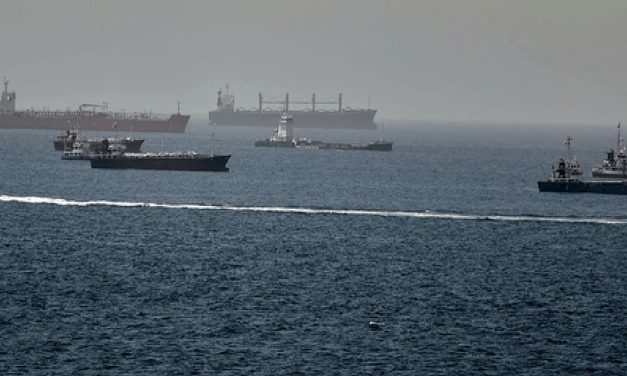
The next event also relates to growing sanctions by the US. Washington has even banned tankers that load Venezuela’s oil. Therefore, America seems to be moving in the direction of tightening the sanctions against Caracas. On the other hand, following the presence of Russian troops in Venezuela, Mike Pompeo, the US secretary of state, announced that Washington is ready to respond to the Russian move. Meanwhile, China also has sent troops to Venezuela, which was a very surprising move.

By placing these developments beside one another, it can be said that the nature of the current strategic rivalries has come out of the ideological phase of the Cold War and rivalries that covered mostly capitalist and socialist aspects. Now, the basis is more strategic economic competitions.

If we look at the macro strategies of the United States in recent years, they are more focused on financial wars and pursue several goals; first, it is a matter of protecting the US dollar system that the Americans are deeply sensitive about.

Another issue is the war of tariffs; global powers seem to be trying to avoid the military confrontation in this area, especially in the Venezuelan domain.

The oil component is also effective in the trend of the developments in Venezuela. The United States has been drawing long-term plans to sell its oil, and it is natural that countries like Iran, Venezuela and even OPEC states would not enter this cycle.

The issue of huge investments made by the Chinese and the Russians in Venezuela is also one of the other influential factors in recent developments simply because they do not want to lose this space easily.

So the three components, namely the question of the US dollar boost; the oil debate, and the arrival of military advisers from China and Russia in Venezuela, are among the factors that affect the crisis.

It seems, however, that the involvement of Chinese and Russian military forces is just a bluff, with the aim of influencing US decisions. In fact, Moscow and Beijing are keen to believe that their military forces will affect the Americans as much as possible, if they are to take a lead at the negotiating table.

As a result, perhaps the top priority of Russia and China is based on the commitment of the Americans to maintain their investments in Venezuela under all circumstances. In the meantime, the most likely scenario seems to be that Russia and China will try to manage this and resolve the problems with the United States.

Indeed, if Russia and China come to the conclusion that their investments are being maintained and will receive a share of Venezuelan cake, they would engage with the United States.

Of course, inside Venezuela, we are witnessing a chaotic situation, and it is thought that compromise is impossible there, especially because Venezuela has been turned into a field of the rivalry of the world powers.

0 Comments

Submit a Comment

Your email address will not be published. Required fields are marked *

LATEST CONTENT

The Impact of West Asian Developments on the Ukraine War

SCFR Online – Note: Vladimir Putin, President of Russia, recently announced—more than four years after the commencement of military aggression against Ukraine—that he believes the conflict between Russia and Ukraine is drawing to a close.

Temporary China–U.S. Trade Truce in the Shadow of Fundamental Distrust

SCFR Online – Opinion: The recent visit of the President of the United States to China is significant from various aspects; because China is recognized as the world’s second-largest economic power and a growing economy. The Chinese are also advancing in various fields, including the space sector, artificial intelligence, and military industries; to the extent that in the military sector, whereas they previously lacked an aircraft carrier, they now possess their third aircraft carrier. On the other hand, the United States, as a superpower, has always regarded China as its rival and continues to view it as such today.

Iran’s Success in the Narrative Battle in Cyberspace

SCFR Online – Opinion: In the war between Iran and the United States, the main battlefield was not defined solely in the military domain; rather, the battle of narratives in cyberspace—particularly through memes—reached a decisive level.

The Global Energy Shock Situation and Future Scenarios

SCFR Online – Opinion: Only one month after the beginning of the Ramadan War, maritime traffic in the Strait of Hormuz decreased dramatically, with Bloomberg announcing a reduction of 103 vessels; Brent oil prices rose by more than 50 percent, and gasoline prices in the United States increased by 31.4 percent. Additionally, benchmark gas prices in Europe showed a 73.4 percent increase.

Loading

Últimas publicaciones

The Impact of West Asian Developments on the Ukraine War

SCFR Online – Note: Vladimir Putin, President of Russia, recently announced—more than four years after the commencement of military aggression against Ukraine—that he believes the conflict between Russia and Ukraine is drawing to a close.

Temporary China–U.S. Trade Truce in the Shadow of Fundamental Distrust

SCFR Online – Opinion: The recent visit of the President of the United States to China is significant from various aspects; because China is recognized as the world’s second-largest economic power and a growing economy. The Chinese are also advancing in various fields, including the space sector, artificial intelligence, and military industries; to the extent that in the military sector, whereas they previously lacked an aircraft carrier, they now possess their third aircraft carrier. On the other hand, the United States, as a superpower, has always regarded China as its rival and continues to view it as such today.

Iran’s Success in the Narrative Battle in Cyberspace

SCFR Online – Opinion: In the war between Iran and the United States, the main battlefield was not defined solely in the military domain; rather, the battle of narratives in cyberspace—particularly through memes—reached a decisive level.

The Global Energy Shock Situation and Future Scenarios

SCFR Online – Opinion: Only one month after the beginning of the Ramadan War, maritime traffic in the Strait of Hormuz decreased dramatically, with Bloomberg announcing a reduction of 103 vessels; Brent oil prices rose by more than 50 percent, and gasoline prices in the United States increased by 31.4 percent. Additionally, benchmark gas prices in Europe showed a 73.4 percent increase.

Loading

DERNIER CONTENU

The Impact of West Asian Developments on the Ukraine War

SCFR Online – Note: Vladimir Putin, President of Russia, recently announced—more than four years after the commencement of military aggression against Ukraine—that he believes the conflict between Russia and Ukraine is drawing to a close.

Temporary China–U.S. Trade Truce in the Shadow of Fundamental Distrust

SCFR Online – Opinion: The recent visit of the President of the United States to China is significant from various aspects; because China is recognized as the world’s second-largest economic power and a growing economy. The Chinese are also advancing in various fields, including the space sector, artificial intelligence, and military industries; to the extent that in the military sector, whereas they previously lacked an aircraft carrier, they now possess their third aircraft carrier. On the other hand, the United States, as a superpower, has always regarded China as its rival and continues to view it as such today.

Iran’s Success in the Narrative Battle in Cyberspace

SCFR Online – Opinion: In the war between Iran and the United States, the main battlefield was not defined solely in the military domain; rather, the battle of narratives in cyberspace—particularly through memes—reached a decisive level.

The Global Energy Shock Situation and Future Scenarios

SCFR Online – Opinion: Only one month after the beginning of the Ramadan War, maritime traffic in the Strait of Hormuz decreased dramatically, with Bloomberg announcing a reduction of 103 vessels; Brent oil prices rose by more than 50 percent, and gasoline prices in the United States increased by 31.4 percent. Additionally, benchmark gas prices in Europe showed a 73.4 percent increase.

Loading

DERNIER CONTENU

The Impact of West Asian Developments on the Ukraine War

SCFR Online – Note: Vladimir Putin, President of Russia, recently announced—more than four years after the commencement of military aggression against Ukraine—that he believes the conflict between Russia and Ukraine is drawing to a close.

Temporary China–U.S. Trade Truce in the Shadow of Fundamental Distrust

SCFR Online – Opinion: The recent visit of the President of the United States to China is significant from various aspects; because China is recognized as the world’s second-largest economic power and a growing economy. The Chinese are also advancing in various fields, including the space sector, artificial intelligence, and military industries; to the extent that in the military sector, whereas they previously lacked an aircraft carrier, they now possess their third aircraft carrier. On the other hand, the United States, as a superpower, has always regarded China as its rival and continues to view it as such today.

Iran’s Success in the Narrative Battle in Cyberspace

SCFR Online – Opinion: In the war between Iran and the United States, the main battlefield was not defined solely in the military domain; rather, the battle of narratives in cyberspace—particularly through memes—reached a decisive level.

The Global Energy Shock Situation and Future Scenarios

SCFR Online – Opinion: Only one month after the beginning of the Ramadan War, maritime traffic in the Strait of Hormuz decreased dramatically, with Bloomberg announcing a reduction of 103 vessels; Brent oil prices rose by more than 50 percent, and gasoline prices in the United States increased by 31.4 percent. Additionally, benchmark gas prices in Europe showed a 73.4 percent increase.

Loading

DERNIER CONTENU

The Impact of West Asian Developments on the Ukraine War

SCFR Online – Note: Vladimir Putin, President of Russia, recently announced—more than four years after the commencement of military aggression against Ukraine—that he believes the conflict between Russia and Ukraine is drawing to a close.

Temporary China–U.S. Trade Truce in the Shadow of Fundamental Distrust

SCFR Online – Opinion: The recent visit of the President of the United States to China is significant from various aspects; because China is recognized as the world’s second-largest economic power and a growing economy. The Chinese are also advancing in various fields, including the space sector, artificial intelligence, and military industries; to the extent that in the military sector, whereas they previously lacked an aircraft carrier, they now possess their third aircraft carrier. On the other hand, the United States, as a superpower, has always regarded China as its rival and continues to view it as such today.

Iran’s Success in the Narrative Battle in Cyberspace

SCFR Online – Opinion: In the war between Iran and the United States, the main battlefield was not defined solely in the military domain; rather, the battle of narratives in cyberspace—particularly through memes—reached a decisive level.

The Global Energy Shock Situation and Future Scenarios

SCFR Online – Opinion: Only one month after the beginning of the Ramadan War, maritime traffic in the Strait of Hormuz decreased dramatically, with Bloomberg announcing a reduction of 103 vessels; Brent oil prices rose by more than 50 percent, and gasoline prices in the United States increased by 31.4 percent. Additionally, benchmark gas prices in Europe showed a 73.4 percent increase.

Loading