India’s Diplomatic Pivot from Washington to Beijing and Moscow

2025/09/11 | interview, Politics, top news

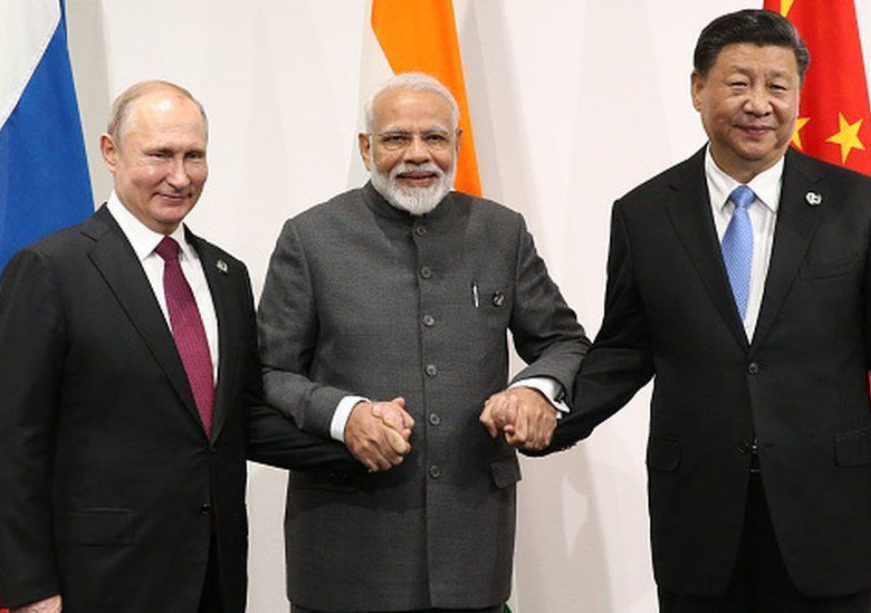
Strategic Council Online – Interview: An international affairs analyst stated that the United States' imposition of 50% tariffs on Indian export goods has not only severely impacted the economic relations between the two countries but has also opened a new path in New Delhi's foreign policy. While Washington has justified this move as "punishing" India for purchasing oil from Russia, the Narendra Modi government has called it unfair and emphasized the necessity of ensuring its country's energy security. However, India's reaction has not been limited to mere verbal statements; Modi's visit to China and participation in the Shanghai Cooperation Organization summit can practically be assessed as a strategic pivot towards the East. Simultaneously, diplomatic exchanges among the three Asian powers have accelerated: China's Foreign Minister visited New Delhi, his Indian counterpart went to Moscow, and Modi, in his meeting with Beijing's leaders, sent a clear message of India's desire for closer cooperation with Russia and China. In this context, the Indian Prime Minister's lack of response to several phone calls from Trump suggests that New Delhi is redefining its foreign policy priorities in response to Washington's pressure. Many analysts believe that India's recent actions are not merely short-term reactions but rather a sign of a new balance of power forming in Asia's equations.

US Tariffs and India’s Diplomatic Shift

Seyed Ali Saghaeian, in an interview with the website of the Strategic Council on Foreign Relations, stated: “The Trump administration’s imposition of 50% tariffs on Indian export goods is a humiliating act for New Delhi. This policy could have profound consequences for India’s relations with the US and other powers.” According to this analyst, “India’s reaction in strengthening ties with China and Russia shows that New Delhi is not willing to let Washington’s unilateral policies go unanswered. The visit of China’s Foreign Minister to Delhi and Narendra Modi’s visit to Beijing, alongside recent meetings between Indian and Russian officials, indicate a serious shift in India’s foreign policy approach.”
Saghaeian emphasizes that “India’s move closer to China and Russia is not merely a tactic to bring the US back to the negotiation table but could represent a real ‘metamorphosis’ in this country’s foreign policy.” In the view of this international affairs expert, “Within frameworks like BRICS and the Shanghai Cooperation Organization, India has placed strategic convergence with non-Western coalitions on its agenda; a convergence that is strengthening day by day against Western pressures.”

Global Economy and the Limitations of Tariff Policies

Saghaeian emphasized the importance of the US position as the world’s largest consumer market, noting that “for many countries, including China, India, Russia, and even Brazil, exports to the US remain critical.” However, he believes that “implementing tariff policies, especially at high levels, in practice has widespread negative effects on the global economy, and the US itself will not be immune from these consequences.”
From the analyst’s perspective, “China did not retreat in the trade war with the Trump administration and, relying on cheap labor and high production capacity, was able to withstand the pressures. Within this framework, India, with its population exceeding one billion and extensive production capacity, is also capable of resisting similar pressures. He notes that “although the US remains the primary destination for many of the world’s manufactured goods, large Asian countries like China and India have alternative options for developing their economic and trade relations.”
Saghaeian adds that “India, in addition to paying attention to the US market, cannot ignore its regional partners such as China, Russia, Iran, Malaysia, and Indonesia.” From his perspective, “India is forced to create a balance between engagement with the West and convergence with the East; but under current conditions, Washington’s tariff pressure has practically pushed India towards China and Russia.”

Security Equations and the Future of Regional Cooperation

Saghaeian notes that “the border disputes between China and India, which led to bloody clashes in 2020, have now been practically set aside, and the two countries have moved towards defining new cooperative equations.” From this international affairs expert’s viewpoint, “This shift indicates that India and China, understanding geopolitical and economic necessities, prefer to manage past hostilities and competitions and turn to cooperation in the face of common Western pressures.”
He adds that “under current conditions, the possibility of major powers dictating policies to independent countries has ended, and a country like India, with its demographic and economic dimensions, certainly has significant ability to maintain independence and create a balance against the West.”
Saghaeian believes that “the recent US tariffs are only part of the story.” He emphasizes that “the military advancements of Russia and China, especially in areas like fighter jets and missile capabilities, have allowed them to confront Washington’s pressures from a position of equality. An example of this shifting balance is China’s support for Pakistan in recent conflicts with India, which played an important role in the balance of power. At the same time, New Delhi has also sent its message to Washington and Europe: India is not willing to yield to economic pressures and, if necessary, can move closer to the East.”
In conclusion, this international affairs analyst concludes that “India, under current conditions, is not only seeking to diversify its foreign relations but is also drawing a new map of Asian convergences. This process, although considered a short-term reaction to US tariffs, in the long term could be a sign of a strategic shift in India’s path within the international system and a weakening of the West’s monopolistic position and hegemony.”


0 Comments

LATEST CONTENT

The Impact of West Asian Developments on the Ukraine War

SCFR Online – Note: Vladimir Putin, President of Russia, recently announced—more than four years after the commencement of military aggression against Ukraine—that he believes the conflict between Russia and Ukraine is drawing to a close.

Temporary China–U.S. Trade Truce in the Shadow of Fundamental Distrust

SCFR Online – Opinion: The recent visit of the President of the United States to China is significant from various aspects; because China is recognized as the world’s second-largest economic power and a growing economy. The Chinese are also advancing in various fields, including the space sector, artificial intelligence, and military industries; to the extent that in the military sector, whereas they previously lacked an aircraft carrier, they now possess their third aircraft carrier. On the other hand, the United States, as a superpower, has always regarded China as its rival and continues to view it as such today.

Iran’s Success in the Narrative Battle in Cyberspace

SCFR Online – Opinion: In the war between Iran and the United States, the main battlefield was not defined solely in the military domain; rather, the battle of narratives in cyberspace—particularly through memes—reached a decisive level.

The Global Energy Shock Situation and Future Scenarios

SCFR Online – Opinion: Only one month after the beginning of the Ramadan War, maritime traffic in the Strait of Hormuz decreased dramatically, with Bloomberg announcing a reduction of 103 vessels; Brent oil prices rose by more than 50 percent, and gasoline prices in the United States increased by 31.4 percent. Additionally, benchmark gas prices in Europe showed a 73.4 percent increase.

Loading

Últimas publicaciones

The Impact of West Asian Developments on the Ukraine War

SCFR Online – Note: Vladimir Putin, President of Russia, recently announced—more than four years after the commencement of military aggression against Ukraine—that he believes the conflict between Russia and Ukraine is drawing to a close.

Temporary China–U.S. Trade Truce in the Shadow of Fundamental Distrust

SCFR Online – Opinion: The recent visit of the President of the United States to China is significant from various aspects; because China is recognized as the world’s second-largest economic power and a growing economy. The Chinese are also advancing in various fields, including the space sector, artificial intelligence, and military industries; to the extent that in the military sector, whereas they previously lacked an aircraft carrier, they now possess their third aircraft carrier. On the other hand, the United States, as a superpower, has always regarded China as its rival and continues to view it as such today.

Iran’s Success in the Narrative Battle in Cyberspace

SCFR Online – Opinion: In the war between Iran and the United States, the main battlefield was not defined solely in the military domain; rather, the battle of narratives in cyberspace—particularly through memes—reached a decisive level.

The Global Energy Shock Situation and Future Scenarios

SCFR Online – Opinion: Only one month after the beginning of the Ramadan War, maritime traffic in the Strait of Hormuz decreased dramatically, with Bloomberg announcing a reduction of 103 vessels; Brent oil prices rose by more than 50 percent, and gasoline prices in the United States increased by 31.4 percent. Additionally, benchmark gas prices in Europe showed a 73.4 percent increase.

Loading

DERNIER CONTENU

The Impact of West Asian Developments on the Ukraine War

SCFR Online – Note: Vladimir Putin, President of Russia, recently announced—more than four years after the commencement of military aggression against Ukraine—that he believes the conflict between Russia and Ukraine is drawing to a close.

Temporary China–U.S. Trade Truce in the Shadow of Fundamental Distrust

SCFR Online – Opinion: The recent visit of the President of the United States to China is significant from various aspects; because China is recognized as the world’s second-largest economic power and a growing economy. The Chinese are also advancing in various fields, including the space sector, artificial intelligence, and military industries; to the extent that in the military sector, whereas they previously lacked an aircraft carrier, they now possess their third aircraft carrier. On the other hand, the United States, as a superpower, has always regarded China as its rival and continues to view it as such today.

Iran’s Success in the Narrative Battle in Cyberspace

SCFR Online – Opinion: In the war between Iran and the United States, the main battlefield was not defined solely in the military domain; rather, the battle of narratives in cyberspace—particularly through memes—reached a decisive level.

The Global Energy Shock Situation and Future Scenarios

SCFR Online – Opinion: Only one month after the beginning of the Ramadan War, maritime traffic in the Strait of Hormuz decreased dramatically, with Bloomberg announcing a reduction of 103 vessels; Brent oil prices rose by more than 50 percent, and gasoline prices in the United States increased by 31.4 percent. Additionally, benchmark gas prices in Europe showed a 73.4 percent increase.

Loading

DERNIER CONTENU

The Impact of West Asian Developments on the Ukraine War

SCFR Online – Note: Vladimir Putin, President of Russia, recently announced—more than four years after the commencement of military aggression against Ukraine—that he believes the conflict between Russia and Ukraine is drawing to a close.

Temporary China–U.S. Trade Truce in the Shadow of Fundamental Distrust

SCFR Online – Opinion: The recent visit of the President of the United States to China is significant from various aspects; because China is recognized as the world’s second-largest economic power and a growing economy. The Chinese are also advancing in various fields, including the space sector, artificial intelligence, and military industries; to the extent that in the military sector, whereas they previously lacked an aircraft carrier, they now possess their third aircraft carrier. On the other hand, the United States, as a superpower, has always regarded China as its rival and continues to view it as such today.

Iran’s Success in the Narrative Battle in Cyberspace

SCFR Online – Opinion: In the war between Iran and the United States, the main battlefield was not defined solely in the military domain; rather, the battle of narratives in cyberspace—particularly through memes—reached a decisive level.

The Global Energy Shock Situation and Future Scenarios

SCFR Online – Opinion: Only one month after the beginning of the Ramadan War, maritime traffic in the Strait of Hormuz decreased dramatically, with Bloomberg announcing a reduction of 103 vessels; Brent oil prices rose by more than 50 percent, and gasoline prices in the United States increased by 31.4 percent. Additionally, benchmark gas prices in Europe showed a 73.4 percent increase.

Loading

DERNIER CONTENU

The Impact of West Asian Developments on the Ukraine War

SCFR Online – Note: Vladimir Putin, President of Russia, recently announced—more than four years after the commencement of military aggression against Ukraine—that he believes the conflict between Russia and Ukraine is drawing to a close.

Temporary China–U.S. Trade Truce in the Shadow of Fundamental Distrust

SCFR Online – Opinion: The recent visit of the President of the United States to China is significant from various aspects; because China is recognized as the world’s second-largest economic power and a growing economy. The Chinese are also advancing in various fields, including the space sector, artificial intelligence, and military industries; to the extent that in the military sector, whereas they previously lacked an aircraft carrier, they now possess their third aircraft carrier. On the other hand, the United States, as a superpower, has always regarded China as its rival and continues to view it as such today.

Iran’s Success in the Narrative Battle in Cyberspace

SCFR Online – Opinion: In the war between Iran and the United States, the main battlefield was not defined solely in the military domain; rather, the battle of narratives in cyberspace—particularly through memes—reached a decisive level.

The Global Energy Shock Situation and Future Scenarios

SCFR Online – Opinion: Only one month after the beginning of the Ramadan War, maritime traffic in the Strait of Hormuz decreased dramatically, with Bloomberg announcing a reduction of 103 vessels; Brent oil prices rose by more than 50 percent, and gasoline prices in the United States increased by 31.4 percent. Additionally, benchmark gas prices in Europe showed a 73.4 percent increase.

Loading



