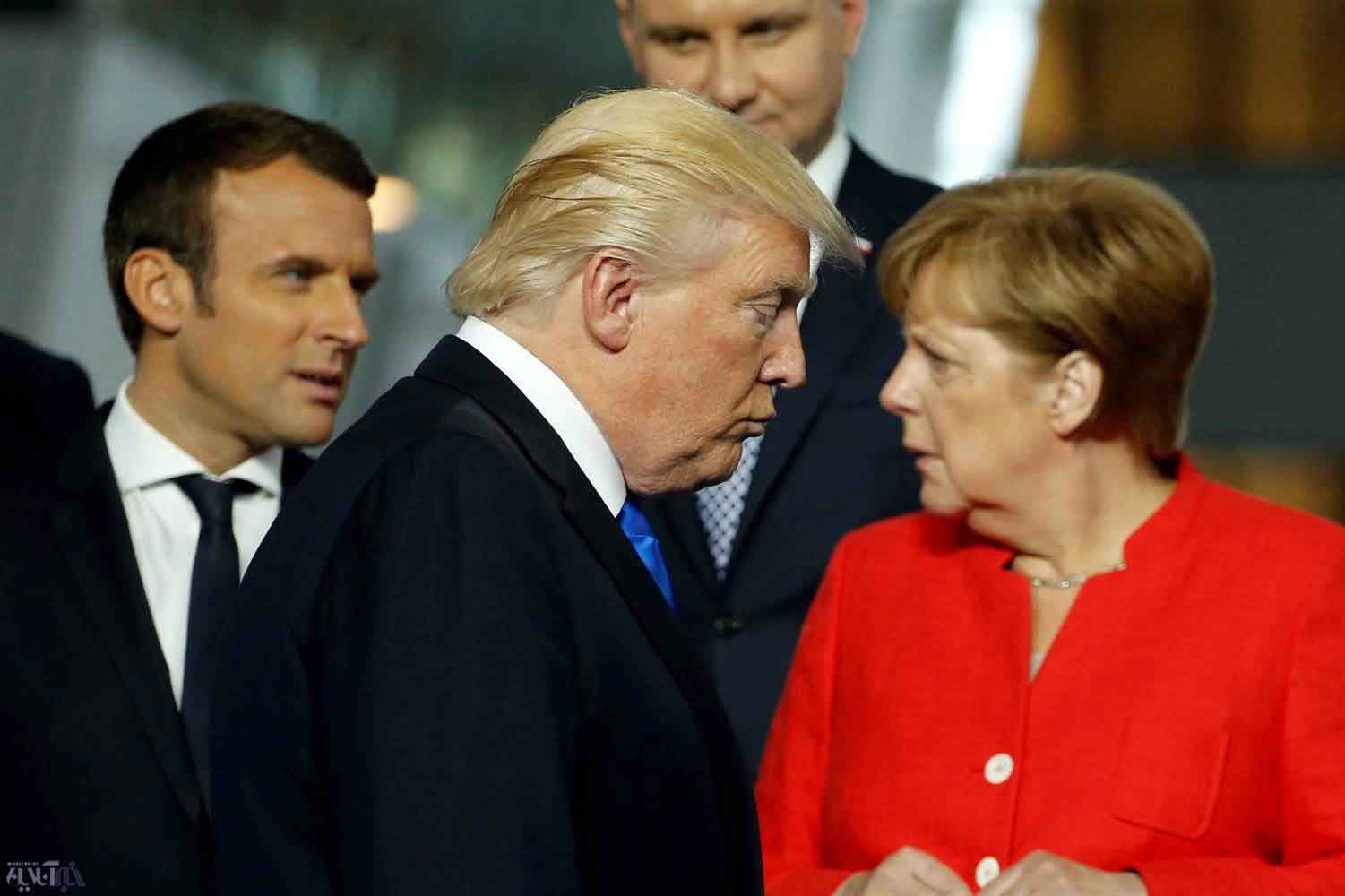
Europe’s Skepticism on Future of Relations with United States

2020/07/12 | interview, Politics, Top News

Strategic Council Online – A professor of geopolitics, referring to some of the European leaders' positions and moves toward secession from the United States, said: "However, it should not be assumed that Europeans have seceded from the United States and do not consider Washington as their ally.” But in the current situation in Europe, Europe is waiting for the results of the elections in the United States in the next four months and if Mr. Biden comes to power, the United States and Europe will be closer again.”

Dr. Abdolreza Faraji Rad, in an interview with the website of the Strategic Council on Foreign Relations, noted that the relationship between Europe and the United States lost its unity and solidarity after the end of the Cold War. “It can be said that the first tension between the United States and Europe happened during the invasion of Iraq where Western Europe and important countries other than Britain were not interested in joining Washington. Of course, there was no agreement between Europe and the United States on military action in Libya as well.

He cited the fight against the Taliban and the invasion of Afghanistan after the attack on the Twin Towers as a sign of solidarity between Europe and the United States. After the Cold War, the analyst said, they got along with one another. Of course, the Europeans were thinking about formation of a united army, but there was division between them and they finally came to the conclusion that the said army should be created gradually and remain allied to the United States because they thought they could not have a full army without US support and cooperation.

Europe Discouraged about Future Relations with US

“Trump has disappointed the Europeans by sharply criticizing NATO, exerting pressure and bringing excuses,” the geopolitical professor said, referring to the inconsistencies in US relations with Europe since Trump took office. He imposed tariffs on European goods that angered them. In addition, the insulting treatment of European leaders, especially Mrs. Merkel and some other European leaders, was unpleasant to them.

Faraji Rad continued: “Although some European leaders have been patient, a number of them, such as Germany, have come to the conclusion that Europe needs to become a little more independent and stand on its own two feet, and to some extent reduce its concerns by approaching Russia.”

Referring to recent remarks by the German chancellor that the United States no longer has or does not want global leadership, as well as French President Macron’s phone calls with Vladimir Putin and arrangements for a trip to Moscow, he said: “These positions show that they are disappointed with the United States.” But on the other hand, they are looking at the upcoming US polls. On the one hand, they are warning the White House, and on the other hand, they are waiting for the election results in this country, the analyst said.

The geopolitical professor added that all Europeans want Mr. Trump not to be reelected: “If he is not reelected, naturally the close relations between Europe and the United States will be revived. Because of some security issues, as well as Ukraine and other issues, there are concerns about Russia, as well as concerns about China’s rise to power in Europe and the acquisition of companies and the issue of the new Silk Road and China’s abandoning of conservative policies. It will bring the United States and Europe closer together if Mr. Joe Biden comes to power.”


Europe Waiting for US Election Results

Emphasizing that one should not assume that Merkel’s speech on the need for independence from the United States is over, Faraji Rad explained: “We should not rush into conclusion and say that the Europeans are taking a separate course from the United States and do not consider it an ally. In the current context, Europe is waiting for the results of the next four months.

He added: “If Mr. Trump comes to power again which is less likely, the process that the Europeans are pursuing will naturally continue. They will get a little closer to Moscow and try to move stronger towards an independent army. Especially since Britain’s withdrawal from the European Union and its proximity to the United States, Europe needs to think about its security and open up its economy in the wake of Trump’s pressures, and work more with other countries such as China, the Middle East, Latin America, Africa and even Russia.

The geopolitical professor, referring to the results of opinion polls in the United States indicating that Trump’s victory in the second round is less likely, said: “Although one cannot firmly rely on these polls because anything may happen in the next four months. In addition, the success of the candidates in debates is very important. It is clear that the US economy has been hit hard and is unlikely to rise in the next four months. Meantime, anti-racist protests, which will continue unabated, have put Mr. Trump in a bad position. So we have to wait and see if he can fix this backwardness. If he fails, his chances of losing the election will be greatly increased.”

Decline of United States Is Long-Lasting

Concerning some theories on the rising pace of US decline, he said: “Some issues such as the multipolar world, technological advances and the emergence of new world powers such as China, Russia, India, Brazil and South Africa cause that the US no longer be considered the superior or the only power. The global economy and exchanges are also diversifying, but that doesn’t mean that the decline of the United States will happen, for example, in the next 10 or 20 years. This journey is time consuming and long.

He added: “The United States is on the verge of decline and is going down, especially if people like Mr. Trump continue to come to power in this country.”

Faraji Rad emphasized that the United States is declining as the world’s leading economic and military power, but it is a gradual and time-consuming decline.” American authorities are working to ensure that this decline does not occur or that it slows down, and its struggle with China, Russia, and even the European Union is to this end.

0 Comments

Submit a Comment

Your email address will not be published. Required fields are marked *

LATEST CONTENT

Implications of the US-Saudi Nuclear Agreement

SCFR Online – Opinion: The new US-Saudi nuclear agreement, despite legal and political ambiguities, could alter previous non-proliferation standards in West Asia and intensify nuclear competition, ushering it into a new phase.

An Analysis of Recent Turkey-Israeli Regime Tensions

SCFR Online – Opinion: Recent developments in Syria indicate an intensification of strategic rivalry between Turkey and the Israeli regime, but mutual considerations and the role of the United States have limited the likelihood of direct war.

Increasing criticism of the extensive Zionist lobby network

SCFR Online – Opinion: An examination of the mechanisms of the Israeli regime’s influence in the United States depicts a complex picture of shared interests, strategic dependencies, and the limitations of this relationship.

Realities of the Tripartite Makkah Pact

SCFR Online – Interview: The signing of the Makkah agreement between Saudi Arabia, Pakistan, and Turkey has raised questions about the future of the region’s security structure and the position of these countries in West Asian equations. Can this agreement become a genuine collective defense mechanism, or does it have more of a political and deterrent function than creating new military capacity?

Strategic Implications of the Reduction of US Weapons Stockpiles

SCFR Online – Opinion: The continuation of the US war against Iran, in addition to increasing operational costs, has called into question the actual capacity of the American arsenal to simultaneously fulfill security commitments on multiple fronts; an issue that affects deterrence, defense production capacity, and Washington’s resource prioritization.

The Formation of a New Order in Relations Between Powers

SCFR Online – Opinion: The Russia-Ukraine war and the war of the United States and the Israeli regime against Iran have been formed with different objectives and actors, but field and political developments indicate that they are not entirely separate from one another.

An Analysis of the Makkah Defense Pact

SCFR Online – Opinion: On Friday, August 7, the heads of state of three countries – Saudi Arabia, Turkey, and Pakistan – signed a text under the title “Makkah Joint Defense Agreement.”

Loading

Últimas publicaciones

Implications of the US-Saudi Nuclear Agreement

SCFR Online – Opinion: The new US-Saudi nuclear agreement, despite legal and political ambiguities, could alter previous non-proliferation standards in West Asia and intensify nuclear competition, ushering it into a new phase.

An Analysis of Recent Turkey-Israeli Regime Tensions

SCFR Online – Opinion: Recent developments in Syria indicate an intensification of strategic rivalry between Turkey and the Israeli regime, but mutual considerations and the role of the United States have limited the likelihood of direct war.

Increasing criticism of the extensive Zionist lobby network

SCFR Online – Opinion: An examination of the mechanisms of the Israeli regime’s influence in the United States depicts a complex picture of shared interests, strategic dependencies, and the limitations of this relationship.

Realities of the Tripartite Makkah Pact

SCFR Online – Interview: The signing of the Makkah agreement between Saudi Arabia, Pakistan, and Turkey has raised questions about the future of the region’s security structure and the position of these countries in West Asian equations. Can this agreement become a genuine collective defense mechanism, or does it have more of a political and deterrent function than creating new military capacity?

Strategic Implications of the Reduction of US Weapons Stockpiles

SCFR Online – Opinion: The continuation of the US war against Iran, in addition to increasing operational costs, has called into question the actual capacity of the American arsenal to simultaneously fulfill security commitments on multiple fronts; an issue that affects deterrence, defense production capacity, and Washington’s resource prioritization.

The Formation of a New Order in Relations Between Powers

SCFR Online – Opinion: The Russia-Ukraine war and the war of the United States and the Israeli regime against Iran have been formed with different objectives and actors, but field and political developments indicate that they are not entirely separate from one another.

An Analysis of the Makkah Defense Pact

SCFR Online – Opinion: On Friday, August 7, the heads of state of three countries – Saudi Arabia, Turkey, and Pakistan – signed a text under the title “Makkah Joint Defense Agreement.”

Loading

DERNIER CONTENU

Implications of the US-Saudi Nuclear Agreement

SCFR Online – Opinion: The new US-Saudi nuclear agreement, despite legal and political ambiguities, could alter previous non-proliferation standards in West Asia and intensify nuclear competition, ushering it into a new phase.

An Analysis of Recent Turkey-Israeli Regime Tensions

SCFR Online – Opinion: Recent developments in Syria indicate an intensification of strategic rivalry between Turkey and the Israeli regime, but mutual considerations and the role of the United States have limited the likelihood of direct war.

Increasing criticism of the extensive Zionist lobby network

SCFR Online – Opinion: An examination of the mechanisms of the Israeli regime’s influence in the United States depicts a complex picture of shared interests, strategic dependencies, and the limitations of this relationship.

Realities of the Tripartite Makkah Pact

SCFR Online – Interview: The signing of the Makkah agreement between Saudi Arabia, Pakistan, and Turkey has raised questions about the future of the region’s security structure and the position of these countries in West Asian equations. Can this agreement become a genuine collective defense mechanism, or does it have more of a political and deterrent function than creating new military capacity?

Strategic Implications of the Reduction of US Weapons Stockpiles

SCFR Online – Opinion: The continuation of the US war against Iran, in addition to increasing operational costs, has called into question the actual capacity of the American arsenal to simultaneously fulfill security commitments on multiple fronts; an issue that affects deterrence, defense production capacity, and Washington’s resource prioritization.

The Formation of a New Order in Relations Between Powers

SCFR Online – Opinion: The Russia-Ukraine war and the war of the United States and the Israeli regime against Iran have been formed with different objectives and actors, but field and political developments indicate that they are not entirely separate from one another.

An Analysis of the Makkah Defense Pact

SCFR Online – Opinion: On Friday, August 7, the heads of state of three countries – Saudi Arabia, Turkey, and Pakistan – signed a text under the title “Makkah Joint Defense Agreement.”

Loading

DERNIER CONTENU

Implications of the US-Saudi Nuclear Agreement

SCFR Online – Opinion: The new US-Saudi nuclear agreement, despite legal and political ambiguities, could alter previous non-proliferation standards in West Asia and intensify nuclear competition, ushering it into a new phase.

An Analysis of Recent Turkey-Israeli Regime Tensions

SCFR Online – Opinion: Recent developments in Syria indicate an intensification of strategic rivalry between Turkey and the Israeli regime, but mutual considerations and the role of the United States have limited the likelihood of direct war.

Increasing criticism of the extensive Zionist lobby network

SCFR Online – Opinion: An examination of the mechanisms of the Israeli regime’s influence in the United States depicts a complex picture of shared interests, strategic dependencies, and the limitations of this relationship.

Realities of the Tripartite Makkah Pact

SCFR Online – Interview: The signing of the Makkah agreement between Saudi Arabia, Pakistan, and Turkey has raised questions about the future of the region’s security structure and the position of these countries in West Asian equations. Can this agreement become a genuine collective defense mechanism, or does it have more of a political and deterrent function than creating new military capacity?

Strategic Implications of the Reduction of US Weapons Stockpiles

SCFR Online – Opinion: The continuation of the US war against Iran, in addition to increasing operational costs, has called into question the actual capacity of the American arsenal to simultaneously fulfill security commitments on multiple fronts; an issue that affects deterrence, defense production capacity, and Washington’s resource prioritization.

The Formation of a New Order in Relations Between Powers

SCFR Online – Opinion: The Russia-Ukraine war and the war of the United States and the Israeli regime against Iran have been formed with different objectives and actors, but field and political developments indicate that they are not entirely separate from one another.

An Analysis of the Makkah Defense Pact

SCFR Online – Opinion: On Friday, August 7, the heads of state of three countries – Saudi Arabia, Turkey, and Pakistan – signed a text under the title “Makkah Joint Defense Agreement.”

Loading

DERNIER CONTENU

Implications of the US-Saudi Nuclear Agreement

SCFR Online – Opinion: The new US-Saudi nuclear agreement, despite legal and political ambiguities, could alter previous non-proliferation standards in West Asia and intensify nuclear competition, ushering it into a new phase.

An Analysis of Recent Turkey-Israeli Regime Tensions

SCFR Online – Opinion: Recent developments in Syria indicate an intensification of strategic rivalry between Turkey and the Israeli regime, but mutual considerations and the role of the United States have limited the likelihood of direct war.

Increasing criticism of the extensive Zionist lobby network

SCFR Online – Opinion: An examination of the mechanisms of the Israeli regime’s influence in the United States depicts a complex picture of shared interests, strategic dependencies, and the limitations of this relationship.

Realities of the Tripartite Makkah Pact

SCFR Online – Interview: The signing of the Makkah agreement between Saudi Arabia, Pakistan, and Turkey has raised questions about the future of the region’s security structure and the position of these countries in West Asian equations. Can this agreement become a genuine collective defense mechanism, or does it have more of a political and deterrent function than creating new military capacity?

Strategic Implications of the Reduction of US Weapons Stockpiles

SCFR Online – Opinion: The continuation of the US war against Iran, in addition to increasing operational costs, has called into question the actual capacity of the American arsenal to simultaneously fulfill security commitments on multiple fronts; an issue that affects deterrence, defense production capacity, and Washington’s resource prioritization.

The Formation of a New Order in Relations Between Powers

SCFR Online – Opinion: The Russia-Ukraine war and the war of the United States and the Israeli regime against Iran have been formed with different objectives and actors, but field and political developments indicate that they are not entirely separate from one another.

An Analysis of the Makkah Defense Pact

SCFR Online – Opinion: On Friday, August 7, the heads of state of three countries – Saudi Arabia, Turkey, and Pakistan – signed a text under the title “Makkah Joint Defense Agreement.”

Loading





