Impact of Russia’s Constitutional Reforms on Moscow’s Foreign Policy

2020/07/12 | Note, Politics, Top News

Strategic Council Online - The outcome of the amendments to Articles 67 and 79 of the Russian Constitution reflects President Vladimir Putin's pragmatic and, of course, multifaceted Russian foreign policy approach. Russia is moving in line with improving ties with the West by sticking to its red lines in order to strengthening its upstream status in the regional crises and global order. Ahmad Vakhshiteh - Associate Professor, Eurasian National University

Russia’s constitutional reform referendum will undoubtedly have a significant impact on the country’s future, but if we look at this referendum in its context of international reform, we will face two important principles that seem to play a significant role in explaining Russia’s foreign policy approach in the future.

First, the amendment to Article 79 of the Russian Constitution emphasizes that if an international law is enacted that is contrary to the Russian Constitution, foreigners will not be allowed to rule against Russia, and the criterion will be the Russian Constitution.

After the lapse of more than two decades since involvement in the Syrian crisis, Russia has increased its role in the international arena and international organizations, and has sought to play a leading role in many regional crises, such as Syria, Yemen, and Afghanistan. Russia’s foreign policy trend is likely to continue with the latest multifaceted foreign policy document with the consideration that Moscow will remain independent of the laws that could be the result of political space created by the United States, and take steps in compliance with the articles of the Russian Constitution.

Given the amendment of Article 81 of the Constitution and the welcome accorded by the people in all polls, Vladimir Putin will undoubtedly be re-elected President of Russia in the 2024 election, and the Kremlin will try to establish the position it had been seeking in international relations since 2015. To this end, Moscow is expected to further expand its relations with Europe, particularly Germany, France and Italy more seriously. This has been evident in recent years, with Merkel’s and Macron’s close talks with Putin, led by the implementation of the Nord Stream 2 Pipeline.

Russia is aware of the role of European powers in balancing the threat of global crises and is trying to tie them to Moscow in various areas, especially energy, through a tactical convergence approach. Thus Russia would not only win the vote of the European Union, but would disarm of the weapon of sanctions against Moscow.

But at the same time, the Kremlin’s multifaceted foreign policy requires Moscow to seek to mend relations with Washington based on its principles. Donald Trump’s stay in power seems to be Moscow’s best option, so if he wins the US presidential election again, talks between senior officials in the two countries over the past few years are expected to enter a more serious phase.

Over the past decade, the Ukraine crisis has been one of the most important threats outside of Russia and its coincidence with Syrian crisis dealt a major shock to the Kremlin since the Syrian crisis. This made Russia to clearly realize the scenario of change in its strategic domain and gradually get rid of a passive foreign policy that had dominated the country following the collapse of the Soviet Union.

Tartus and Crimea, two geostrategic bases for Russia, were both on the verge of collapse. Therefore, Moscow immediately annexed the Crimean after holding a referendum. Meantime, by extending its contract with Syria’s Assad, established its presence in Tartus;

But there appear to be fears that a consensus may be reached against Moscow in the face of international crises. Therefore, in amending Article 67 of the Russian Constitution, which deals with the subject of territory, the term annexed territories” has been added to the article. This was a message to the West that Russia is not willing to give even a single inch of the annexed territories.

The outcome of the amendments to Articles 67 and 79 of the Russian Constitution reflects President Vladimir Putin’s pragmatic and, of course, multifaceted Russian foreign policy approach. Russia is moving in line with improving ties with the West by sticking to its red lines in order to strengthen its upstream status in the regional crises and global order.


0 Comments

Submit a Comment

Your email address will not be published. Required fields are marked *

LATEST CONTENT

The Makkah Pact; Reasons for its Formation and Challenges Ahead

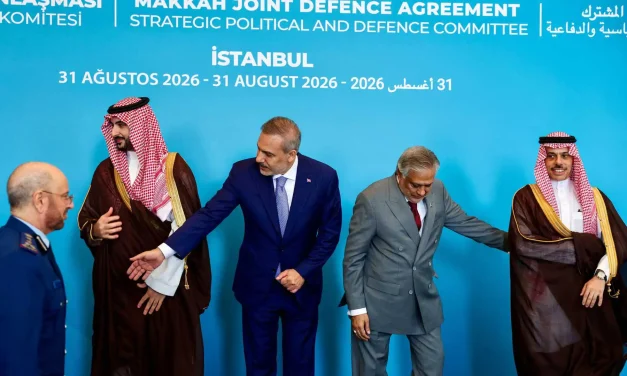
SCFR Online – Opinion: The Makkah Pact, signed between Saudi Arabia, Pakistan, and Turkey under the motto “an attack on one is an attack on all,” is viewed by some analysts less as a full-fledged military coalition and more as an attempt to reduce security dependence on an external power and to establish a regional security mechanism.

Implications of the US-Saudi Nuclear Agreement

SCFR Online – Opinion: The new US-Saudi nuclear agreement, despite legal and political ambiguities, could alter previous non-proliferation standards in West Asia and intensify nuclear competition, ushering it into a new phase.

An Analysis of Recent Turkey-Israeli Regime Tensions

SCFR Online – Opinion: Recent developments in Syria indicate an intensification of strategic rivalry between Turkey and the Israeli regime, but mutual considerations and the role of the United States have limited the likelihood of direct war.

Increasing criticism of the extensive Zionist lobby network

SCFR Online – Opinion: An examination of the mechanisms of the Israeli regime’s influence in the United States depicts a complex picture of shared interests, strategic dependencies, and the limitations of this relationship.

Realities of the Tripartite Makkah Pact

SCFR Online – Interview: The signing of the Makkah agreement between Saudi Arabia, Pakistan, and Turkey has raised questions about the future of the region’s security structure and the position of these countries in West Asian equations. Can this agreement become a genuine collective defense mechanism, or does it have more of a political and deterrent function than creating new military capacity?

Loading

Últimas publicaciones

The Makkah Pact; Reasons for its Formation and Challenges Ahead

SCFR Online – Opinion: The Makkah Pact, signed between Saudi Arabia, Pakistan, and Turkey under the motto “an attack on one is an attack on all,” is viewed by some analysts less as a full-fledged military coalition and more as an attempt to reduce security dependence on an external power and to establish a regional security mechanism.

Implications of the US-Saudi Nuclear Agreement

SCFR Online – Opinion: The new US-Saudi nuclear agreement, despite legal and political ambiguities, could alter previous non-proliferation standards in West Asia and intensify nuclear competition, ushering it into a new phase.

An Analysis of Recent Turkey-Israeli Regime Tensions

SCFR Online – Opinion: Recent developments in Syria indicate an intensification of strategic rivalry between Turkey and the Israeli regime, but mutual considerations and the role of the United States have limited the likelihood of direct war.

Increasing criticism of the extensive Zionist lobby network

SCFR Online – Opinion: An examination of the mechanisms of the Israeli regime’s influence in the United States depicts a complex picture of shared interests, strategic dependencies, and the limitations of this relationship.

Realities of the Tripartite Makkah Pact

SCFR Online – Interview: The signing of the Makkah agreement between Saudi Arabia, Pakistan, and Turkey has raised questions about the future of the region’s security structure and the position of these countries in West Asian equations. Can this agreement become a genuine collective defense mechanism, or does it have more of a political and deterrent function than creating new military capacity?

Loading

DERNIER CONTENU

The Makkah Pact; Reasons for its Formation and Challenges Ahead

SCFR Online – Opinion: The Makkah Pact, signed between Saudi Arabia, Pakistan, and Turkey under the motto “an attack on one is an attack on all,” is viewed by some analysts less as a full-fledged military coalition and more as an attempt to reduce security dependence on an external power and to establish a regional security mechanism.

Implications of the US-Saudi Nuclear Agreement

SCFR Online – Opinion: The new US-Saudi nuclear agreement, despite legal and political ambiguities, could alter previous non-proliferation standards in West Asia and intensify nuclear competition, ushering it into a new phase.

An Analysis of Recent Turkey-Israeli Regime Tensions

SCFR Online – Opinion: Recent developments in Syria indicate an intensification of strategic rivalry between Turkey and the Israeli regime, but mutual considerations and the role of the United States have limited the likelihood of direct war.

Increasing criticism of the extensive Zionist lobby network

SCFR Online – Opinion: An examination of the mechanisms of the Israeli regime’s influence in the United States depicts a complex picture of shared interests, strategic dependencies, and the limitations of this relationship.

Realities of the Tripartite Makkah Pact

SCFR Online – Interview: The signing of the Makkah agreement between Saudi Arabia, Pakistan, and Turkey has raised questions about the future of the region’s security structure and the position of these countries in West Asian equations. Can this agreement become a genuine collective defense mechanism, or does it have more of a political and deterrent function than creating new military capacity?

Loading

DERNIER CONTENU

The Makkah Pact; Reasons for its Formation and Challenges Ahead

SCFR Online – Opinion: The Makkah Pact, signed between Saudi Arabia, Pakistan, and Turkey under the motto “an attack on one is an attack on all,” is viewed by some analysts less as a full-fledged military coalition and more as an attempt to reduce security dependence on an external power and to establish a regional security mechanism.

Implications of the US-Saudi Nuclear Agreement

SCFR Online – Opinion: The new US-Saudi nuclear agreement, despite legal and political ambiguities, could alter previous non-proliferation standards in West Asia and intensify nuclear competition, ushering it into a new phase.

An Analysis of Recent Turkey-Israeli Regime Tensions

SCFR Online – Opinion: Recent developments in Syria indicate an intensification of strategic rivalry between Turkey and the Israeli regime, but mutual considerations and the role of the United States have limited the likelihood of direct war.

Increasing criticism of the extensive Zionist lobby network

SCFR Online – Opinion: An examination of the mechanisms of the Israeli regime’s influence in the United States depicts a complex picture of shared interests, strategic dependencies, and the limitations of this relationship.

Realities of the Tripartite Makkah Pact

SCFR Online – Interview: The signing of the Makkah agreement between Saudi Arabia, Pakistan, and Turkey has raised questions about the future of the region’s security structure and the position of these countries in West Asian equations. Can this agreement become a genuine collective defense mechanism, or does it have more of a political and deterrent function than creating new military capacity?

Loading

DERNIER CONTENU

The Makkah Pact; Reasons for its Formation and Challenges Ahead

SCFR Online – Opinion: The Makkah Pact, signed between Saudi Arabia, Pakistan, and Turkey under the motto “an attack on one is an attack on all,” is viewed by some analysts less as a full-fledged military coalition and more as an attempt to reduce security dependence on an external power and to establish a regional security mechanism.

Implications of the US-Saudi Nuclear Agreement

SCFR Online – Opinion: The new US-Saudi nuclear agreement, despite legal and political ambiguities, could alter previous non-proliferation standards in West Asia and intensify nuclear competition, ushering it into a new phase.

An Analysis of Recent Turkey-Israeli Regime Tensions

SCFR Online – Opinion: Recent developments in Syria indicate an intensification of strategic rivalry between Turkey and the Israeli regime, but mutual considerations and the role of the United States have limited the likelihood of direct war.

Increasing criticism of the extensive Zionist lobby network

SCFR Online – Opinion: An examination of the mechanisms of the Israeli regime’s influence in the United States depicts a complex picture of shared interests, strategic dependencies, and the limitations of this relationship.

Realities of the Tripartite Makkah Pact

SCFR Online – Interview: The signing of the Makkah agreement between Saudi Arabia, Pakistan, and Turkey has raised questions about the future of the region’s security structure and the position of these countries in West Asian equations. Can this agreement become a genuine collective defense mechanism, or does it have more of a political and deterrent function than creating new military capacity?

Loading