How to Make the Most of the Provisional Order of the International Court of Justice

2024/02/21 | Note, Politics, Top News

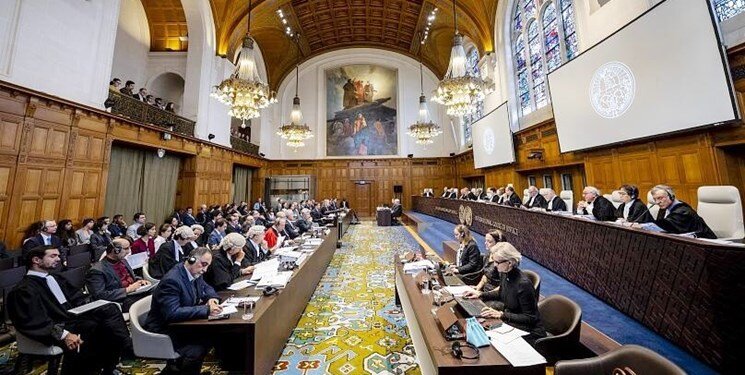
Strategic Council Online - Note: The recent provisional order indicated by the International Court of Justice on the "Application of the Convention on the Prevention and Punishment of the Crime of Genocide in the Gaza Strip (South Africa v. Israel) – if used astutely – could constitute a "turning point" in the struggle of civil advocates and governments committed to the Palestinian cause. Before this decision, two other significant legal instruments had been produced at the highest levels of the United Nations concerning Israel, but unfortunately - despite their remarkable potential - neither was adequately exploited by pro-Palestine governments - including the "Palestinian Authority" - due to lassitude in some instances, unwarranted prudence in others, or even the fear that engaging the Israeli regime in any manner on a formal stage could wrongly be construed as its "recognition." Reza Nasri – International Jurist

Indeed, the International Court of Justice’s historic Advisory opinion on the “Legal Consequences of the Construction of a Wall in the Occupied Palestinian Territory” in 2004, followed by the famous “Goldstone Report” submitted to the United Nations Human Rights Council in 2009, were two powerful instruments that could have been explored to their full potential to exert pressure on the Israeli regime and its leaders to the benefit of the Palestinian cause. Still, unfortunately, both these documents are biting the dust today in the archives of the United Nations Depository or on library shelves in law schools around the world!


Against this backdrop, it’s justified to contend that it would be a sacrilege to treat this third document produced by the International Court of Justice with the same degree of laxity, unappreciation, and passivity as the previous two, given the vast possibilities that the latter presents. In other words, it is imperative today to formulate a precise and effective strategy – whether in the field of “media” or “public diplomacy” – to optimize the benefits of this historic legal instrument.


As a matter of fact, from the very first minutes following the issuance of the recent ICJ provisional order against Israel, a full-scale battle had already begun over the interpretation of its provisions, in which all governments and civil advocates supporting the Palestinian people ought to actively participate to prevent the Israeli propaganda machine from imposing its self-serving narrative!


Bearing this in mind, there are a few points regarding the interpretation of this order, its scope, and potentials that I would like to address herein:


  1. The fact that the ICJ has not specifically used the term “ceasefire” in the document does not mean in any way that the Court does not consider halting military operations in Gaza. There are at least two main reasons justifying this claim:


First, the term “ceasefire” is normally employed in cases involving an armed conflict between two states – or two conventional armies. Whereas in the case of Israel and Gaza, we have a conventional army on one side and “civilians” – belonging to a particular ethnic group – on the other. For this reason, given the fact that the South African Application was predicated on the 1948 “Genocide Convention,” the ICJ used terminology that would best suit the legal framework within which the contention is taking place. In other words, the Court referred to terms such as “the prevention of genocide” or “preventing the commission of all acts” such as “killing of members of the group” instead of using the term “ceasefire,” which mainly pertains to the domain of IHL (International Humanitarian Law).


More precisely, to convey the cessation of hostilities within the legal framework at hand, the Court states that “Israel shall, in accordance with its obligations under the Convention on the Prevention and Punishment of the Crime of Genocide, in relation to Palestinians in Gaza, take all measures within its power to prevent the commission of all acts within the scope of Article II of this Convention, in particular:


(a) Killing members of the group;

(b) Causing serious bodily or mental harm to members of the group;

(c) Deliberately inflicting on the group conditions of life calculated to bring about its physical destruction in whole or in part;

(d) Imposing measures intended to prevent births within the group;”


Secondly, it is also notable that none of the Court’s indicated provisional measures could be – in practice – implemented unless there is a complete halt to military operations or a “ceasefire.” In other words, a cessation of hostilities constitutes the indispensable “precondition” for implementing the provisional order, and anything less than that ought to be construed – whether in the press or official statement – as a violation of the Court’s decision.


Indeed, neither the prevention of acts constituting “genocide,” nor the enabling of “the provision of urgently needed basic services and humanitarian assistance,” nor the implementation of “effective measures to prevent the destruction of evidence related to allegations of acts within the scope of the Convention” can be materialized unless a ceasefire is implemented and maintained in Gaza.


In this regard, any other critical interpretation revolving around the absence of the word “ceasefire” in the order would only reinforce the construction and the narrative that the Israeli regime and its propaganda apparatus are trying to impose on public opinion.


  1. Not only is the ICJ provisional order legally binding on Israel but it also paves the ground for various other legal and political initiatives – at both national and international levels – while opening the path to many creative opportunities. For example, even assuming that all “enforcement initiatives” of the order would be blocked at the Security Council through a US “veto,” the General Assembly would still be able to exert pressure on Israel via the “Uniting for Peace resolution” to compel it to abide by the Court’s ruling. In doing so, the General Assembly can, for instance, exercise its authority to revoke Israel’s membership in certain institutions, recommend economic sanctions, establish special commissions, and even create an ad hoc “Special International Criminal Tribunal” for Israel based on its prerogative under Article 22 of the Charter or through other treaty-based multilateral initiatives.


In this regard, even if the realization of some of these measures seems politically far-fetched, publicly demanding and claiming them through various media and diplomatic campaigns could eventually create the necessary conditions for their realization. In this context, insisting upon the “lack of an enforcement mechanism” – an often repeated claim that is at least not “legally” sound  – will have no other effect but to induce diplomatic inaction, disengagement, and the frustration of political and civil activists that the recent ICJ order has revitalized.


  1. Considering that the Court’s provisional order rests on the “Genocide Convention,” which contains erga omnes obligations for all states, it is essential to emphasize that any support for the Israeli regime’s conduct in Gaza constitutes – as of now – a defiance of the World Court’s judicial decision and can even be construed as complicity in genocide. In fact, it is necessary to create an environment whereby pro-Israel states – and their propaganda and media apparatus – realize that the Court’s decision had “consequences” and that they could not keep operating as if it is not a decisive factor.


For example, it is now imperative to designate measures such as the recent move by some Western governments to cut off UNWRA funding – not just as an immoral act but – as a wrongful act in violation of the ICJ order. In this regard, it is also possible to interpret the unwarranted exercise of the United States “veto power” at the Security Council in favor of Israel – or even the perpetuation of the “EU-Israel Association Agreement” under present circumstances – as acts contravening these states’ obligations under the Genocide Convention.


  1. One of the ICJ’s very important indicated provisional measures is the requirement that Israel “submit a report to the Court on all measures taken to give effect to the Order.” This particular provision is significant in the sense that it would allow observers to verify Israel’s conduct in light of that report and to denounce any deviation. Another notable provision is the measure requiring Israel “to prevent the destruction and ensure the preservation of evidence related to allegations of acts within the scope of Article II and Article III of the Convention.” This is also important as it can lay the ground for forming an International Fact-finding Commission that would oversee the implementation of the order and collect – at the same time – evidence that could be subsequently used in criminal proceedings against Israeli authorities. Moreover, another binding order of the Court is the requirement for Israel to “take all measures within its power to prevent and punish the direct and public incitement to commit genocide in relation to members of the Palestinian group in Gaza.” This order is also of particular importance as it enables observers to make Israeli officials accountable and – absent meaningful prosecution by the Israeli judiciary – pave the ground for criminal proceedings at the ICC or at the domestic level even before the issuance of a final decision by the ICJ on the merits.


Once again, these examples demonstrate the significance of the recent provisional order and reject all attempts at underestimating its potential.


  1. The present case against Israel at the ICJ will likely take several years to conclude. This longevity provides the Iranian government and other pro-Palestinian states the opportunity to exert long-term and continuous pressure on the Israeli regime over the years to come. However, sustaining prolonged pressure on Israel can only be achieved through careful planning and a long-term approach to the issue. In this context, it seems crucial to establish a special committee within the Ministry of Foreign Affairs with the mandate to monitor the technical aspects of the case closely, scrutinize statements and actions by Israeli officials, verify that the Israeli regime’s conduct is compliant with each of the provisional measures indicated by the Court, and to plan “next moves” consistent with the evolution of the case.


0 Comments

LATEST CONTENT

The Inseparability of the Lebanese Front from the Axis of Resistance

SCFR Online–Opinion: By providing an extensive network of social, healthcare, educational, and post-war reconstruction services, Hezbollah has established a strong social base for itself among Lebanon’s Shiites and Sunnis, and even beyond that, among other segments of Lebanese society, including Christians. Hezbollah has never been an external actor imposed upon Lebanon; rather, it is a phenomenon fundamentally born out of the occupation and crimes of the Zionist regime and itself influenced by popular resistance.

The Increasing Efforts of the Zionist Regime to Redefine Borders and the Regional Order and Its Consequences

SCFR Online– Opinion: Security and military developments in the region over recent months indicate that the ongoing crises and wars in Gaza, southern Lebanon, and parts of Syrian territory encompass broader dimensions of geopolitical and geostrategic transformations. In this context, the increased military presence and control of the Zionist regime over parts of the territories of these areas, along with proposals regarding the creation of buffer zones or even the expansion of security borders, have raised serious questions about the future of the regional order and its consequences for the countries of West Asia.

The Components of Iran’s Deterrence Power

SCFR Online – Opinion: At a time when regional security equations have reached a sensitive stage under the influence of Iran’s strategic confrontation with the United States and the Zionist regime, the question of the nature of Tehran’s defensive power has gained greater significance than ever before. While Washington and Tel Aviv rely on their technological superiority, the Islamic Republic of Iran has presented a model of deterrence that extends beyond the material calculations of the world’s classical militaries. This power, rooted in the connection between “the field” and “the people,” has not only altered the balance of power in recent conflicts but has also disrupted adversaries’ calculations when confronting Iran’s strategic depth.

The Persian Gulf; A Cold Battlefield Between Beijing and Washington

SCFR Online – Opinion: The competition in recent years between the United States and China encompasses various geographical regions—including the Indo-Pacific, West Asia, the Arctic and Antarctic, and Africa—as well as multiple domains such as economics and technology. Within this context, a strategic competition has also emerged in the Persian Gulf region across economic, technological, and military spheres.

Europe’s Enduring Dependence on Persian Gulf Energy

SCFR Online – Opinion: The dominant discourse in the field of European energy security over the past two decades has revolved around diversification of supply sources and the gradual reduction of dependence on fossil fuels. This narrative, which gained particular momentum after the Ukraine gas crisis in 2006 and its intensification in 2014 and 2022, was based on the assumption that Europe could free itself from the geopolitical vulnerabilities arising from dependence on specific suppliers through investment in renewable energy, imports of liquefied natural gas from diversified sources, and the establishment of new infrastructure. However, a closer analysis of energy trade data and the structure of the global oil and gas supply chain presents a different picture. Europe has not only failed to meaningfully reduce its dependence on the Persian Gulf, but in some sectors — particularly in liquefied natural gas imports — this dependence has deepened. This reality, which is often overlooked in public discourse, raises fundamental questions about the sustainability of Europe’s energy security strategies and their impact on regional power equations.

Loading

Últimas publicaciones

The Inseparability of the Lebanese Front from the Axis of Resistance

SCFR Online–Opinion: By providing an extensive network of social, healthcare, educational, and post-war reconstruction services, Hezbollah has established a strong social base for itself among Lebanon’s Shiites and Sunnis, and even beyond that, among other segments of Lebanese society, including Christians. Hezbollah has never been an external actor imposed upon Lebanon; rather, it is a phenomenon fundamentally born out of the occupation and crimes of the Zionist regime and itself influenced by popular resistance.

The Increasing Efforts of the Zionist Regime to Redefine Borders and the Regional Order and Its Consequences

SCFR Online– Opinion: Security and military developments in the region over recent months indicate that the ongoing crises and wars in Gaza, southern Lebanon, and parts of Syrian territory encompass broader dimensions of geopolitical and geostrategic transformations. In this context, the increased military presence and control of the Zionist regime over parts of the territories of these areas, along with proposals regarding the creation of buffer zones or even the expansion of security borders, have raised serious questions about the future of the regional order and its consequences for the countries of West Asia.

The Components of Iran’s Deterrence Power

SCFR Online – Opinion: At a time when regional security equations have reached a sensitive stage under the influence of Iran’s strategic confrontation with the United States and the Zionist regime, the question of the nature of Tehran’s defensive power has gained greater significance than ever before. While Washington and Tel Aviv rely on their technological superiority, the Islamic Republic of Iran has presented a model of deterrence that extends beyond the material calculations of the world’s classical militaries. This power, rooted in the connection between “the field” and “the people,” has not only altered the balance of power in recent conflicts but has also disrupted adversaries’ calculations when confronting Iran’s strategic depth.

The Persian Gulf; A Cold Battlefield Between Beijing and Washington

SCFR Online – Opinion: The competition in recent years between the United States and China encompasses various geographical regions—including the Indo-Pacific, West Asia, the Arctic and Antarctic, and Africa—as well as multiple domains such as economics and technology. Within this context, a strategic competition has also emerged in the Persian Gulf region across economic, technological, and military spheres.

Europe’s Enduring Dependence on Persian Gulf Energy

SCFR Online – Opinion: The dominant discourse in the field of European energy security over the past two decades has revolved around diversification of supply sources and the gradual reduction of dependence on fossil fuels. This narrative, which gained particular momentum after the Ukraine gas crisis in 2006 and its intensification in 2014 and 2022, was based on the assumption that Europe could free itself from the geopolitical vulnerabilities arising from dependence on specific suppliers through investment in renewable energy, imports of liquefied natural gas from diversified sources, and the establishment of new infrastructure. However, a closer analysis of energy trade data and the structure of the global oil and gas supply chain presents a different picture. Europe has not only failed to meaningfully reduce its dependence on the Persian Gulf, but in some sectors — particularly in liquefied natural gas imports — this dependence has deepened. This reality, which is often overlooked in public discourse, raises fundamental questions about the sustainability of Europe’s energy security strategies and their impact on regional power equations.

Loading

DERNIER CONTENU

The Inseparability of the Lebanese Front from the Axis of Resistance

SCFR Online–Opinion: By providing an extensive network of social, healthcare, educational, and post-war reconstruction services, Hezbollah has established a strong social base for itself among Lebanon’s Shiites and Sunnis, and even beyond that, among other segments of Lebanese society, including Christians. Hezbollah has never been an external actor imposed upon Lebanon; rather, it is a phenomenon fundamentally born out of the occupation and crimes of the Zionist regime and itself influenced by popular resistance.

The Increasing Efforts of the Zionist Regime to Redefine Borders and the Regional Order and Its Consequences

SCFR Online– Opinion: Security and military developments in the region over recent months indicate that the ongoing crises and wars in Gaza, southern Lebanon, and parts of Syrian territory encompass broader dimensions of geopolitical and geostrategic transformations. In this context, the increased military presence and control of the Zionist regime over parts of the territories of these areas, along with proposals regarding the creation of buffer zones or even the expansion of security borders, have raised serious questions about the future of the regional order and its consequences for the countries of West Asia.

The Components of Iran’s Deterrence Power

SCFR Online – Opinion: At a time when regional security equations have reached a sensitive stage under the influence of Iran’s strategic confrontation with the United States and the Zionist regime, the question of the nature of Tehran’s defensive power has gained greater significance than ever before. While Washington and Tel Aviv rely on their technological superiority, the Islamic Republic of Iran has presented a model of deterrence that extends beyond the material calculations of the world’s classical militaries. This power, rooted in the connection between “the field” and “the people,” has not only altered the balance of power in recent conflicts but has also disrupted adversaries’ calculations when confronting Iran’s strategic depth.

The Persian Gulf; A Cold Battlefield Between Beijing and Washington

SCFR Online – Opinion: The competition in recent years between the United States and China encompasses various geographical regions—including the Indo-Pacific, West Asia, the Arctic and Antarctic, and Africa—as well as multiple domains such as economics and technology. Within this context, a strategic competition has also emerged in the Persian Gulf region across economic, technological, and military spheres.

Europe’s Enduring Dependence on Persian Gulf Energy

SCFR Online – Opinion: The dominant discourse in the field of European energy security over the past two decades has revolved around diversification of supply sources and the gradual reduction of dependence on fossil fuels. This narrative, which gained particular momentum after the Ukraine gas crisis in 2006 and its intensification in 2014 and 2022, was based on the assumption that Europe could free itself from the geopolitical vulnerabilities arising from dependence on specific suppliers through investment in renewable energy, imports of liquefied natural gas from diversified sources, and the establishment of new infrastructure. However, a closer analysis of energy trade data and the structure of the global oil and gas supply chain presents a different picture. Europe has not only failed to meaningfully reduce its dependence on the Persian Gulf, but in some sectors — particularly in liquefied natural gas imports — this dependence has deepened. This reality, which is often overlooked in public discourse, raises fundamental questions about the sustainability of Europe’s energy security strategies and their impact on regional power equations.

Loading

DERNIER CONTENU

The Inseparability of the Lebanese Front from the Axis of Resistance

SCFR Online–Opinion: By providing an extensive network of social, healthcare, educational, and post-war reconstruction services, Hezbollah has established a strong social base for itself among Lebanon’s Shiites and Sunnis, and even beyond that, among other segments of Lebanese society, including Christians. Hezbollah has never been an external actor imposed upon Lebanon; rather, it is a phenomenon fundamentally born out of the occupation and crimes of the Zionist regime and itself influenced by popular resistance.

The Increasing Efforts of the Zionist Regime to Redefine Borders and the Regional Order and Its Consequences

SCFR Online– Opinion: Security and military developments in the region over recent months indicate that the ongoing crises and wars in Gaza, southern Lebanon, and parts of Syrian territory encompass broader dimensions of geopolitical and geostrategic transformations. In this context, the increased military presence and control of the Zionist regime over parts of the territories of these areas, along with proposals regarding the creation of buffer zones or even the expansion of security borders, have raised serious questions about the future of the regional order and its consequences for the countries of West Asia.

The Components of Iran’s Deterrence Power

SCFR Online – Opinion: At a time when regional security equations have reached a sensitive stage under the influence of Iran’s strategic confrontation with the United States and the Zionist regime, the question of the nature of Tehran’s defensive power has gained greater significance than ever before. While Washington and Tel Aviv rely on their technological superiority, the Islamic Republic of Iran has presented a model of deterrence that extends beyond the material calculations of the world’s classical militaries. This power, rooted in the connection between “the field” and “the people,” has not only altered the balance of power in recent conflicts but has also disrupted adversaries’ calculations when confronting Iran’s strategic depth.

The Persian Gulf; A Cold Battlefield Between Beijing and Washington

SCFR Online – Opinion: The competition in recent years between the United States and China encompasses various geographical regions—including the Indo-Pacific, West Asia, the Arctic and Antarctic, and Africa—as well as multiple domains such as economics and technology. Within this context, a strategic competition has also emerged in the Persian Gulf region across economic, technological, and military spheres.

Europe’s Enduring Dependence on Persian Gulf Energy

SCFR Online – Opinion: The dominant discourse in the field of European energy security over the past two decades has revolved around diversification of supply sources and the gradual reduction of dependence on fossil fuels. This narrative, which gained particular momentum after the Ukraine gas crisis in 2006 and its intensification in 2014 and 2022, was based on the assumption that Europe could free itself from the geopolitical vulnerabilities arising from dependence on specific suppliers through investment in renewable energy, imports of liquefied natural gas from diversified sources, and the establishment of new infrastructure. However, a closer analysis of energy trade data and the structure of the global oil and gas supply chain presents a different picture. Europe has not only failed to meaningfully reduce its dependence on the Persian Gulf, but in some sectors — particularly in liquefied natural gas imports — this dependence has deepened. This reality, which is often overlooked in public discourse, raises fundamental questions about the sustainability of Europe’s energy security strategies and their impact on regional power equations.

Loading

DERNIER CONTENU

The Inseparability of the Lebanese Front from the Axis of Resistance

SCFR Online–Opinion: By providing an extensive network of social, healthcare, educational, and post-war reconstruction services, Hezbollah has established a strong social base for itself among Lebanon’s Shiites and Sunnis, and even beyond that, among other segments of Lebanese society, including Christians. Hezbollah has never been an external actor imposed upon Lebanon; rather, it is a phenomenon fundamentally born out of the occupation and crimes of the Zionist regime and itself influenced by popular resistance.

The Increasing Efforts of the Zionist Regime to Redefine Borders and the Regional Order and Its Consequences

SCFR Online– Opinion: Security and military developments in the region over recent months indicate that the ongoing crises and wars in Gaza, southern Lebanon, and parts of Syrian territory encompass broader dimensions of geopolitical and geostrategic transformations. In this context, the increased military presence and control of the Zionist regime over parts of the territories of these areas, along with proposals regarding the creation of buffer zones or even the expansion of security borders, have raised serious questions about the future of the regional order and its consequences for the countries of West Asia.

The Components of Iran’s Deterrence Power

SCFR Online – Opinion: At a time when regional security equations have reached a sensitive stage under the influence of Iran’s strategic confrontation with the United States and the Zionist regime, the question of the nature of Tehran’s defensive power has gained greater significance than ever before. While Washington and Tel Aviv rely on their technological superiority, the Islamic Republic of Iran has presented a model of deterrence that extends beyond the material calculations of the world’s classical militaries. This power, rooted in the connection between “the field” and “the people,” has not only altered the balance of power in recent conflicts but has also disrupted adversaries’ calculations when confronting Iran’s strategic depth.

The Persian Gulf; A Cold Battlefield Between Beijing and Washington

SCFR Online – Opinion: The competition in recent years between the United States and China encompasses various geographical regions—including the Indo-Pacific, West Asia, the Arctic and Antarctic, and Africa—as well as multiple domains such as economics and technology. Within this context, a strategic competition has also emerged in the Persian Gulf region across economic, technological, and military spheres.

Europe’s Enduring Dependence on Persian Gulf Energy

SCFR Online – Opinion: The dominant discourse in the field of European energy security over the past two decades has revolved around diversification of supply sources and the gradual reduction of dependence on fossil fuels. This narrative, which gained particular momentum after the Ukraine gas crisis in 2006 and its intensification in 2014 and 2022, was based on the assumption that Europe could free itself from the geopolitical vulnerabilities arising from dependence on specific suppliers through investment in renewable energy, imports of liquefied natural gas from diversified sources, and the establishment of new infrastructure. However, a closer analysis of energy trade data and the structure of the global oil and gas supply chain presents a different picture. Europe has not only failed to meaningfully reduce its dependence on the Persian Gulf, but in some sectors — particularly in liquefied natural gas imports — this dependence has deepened. This reality, which is often overlooked in public discourse, raises fundamental questions about the sustainability of Europe’s energy security strategies and their impact on regional power equations.

Loading