Consequences of Inviting Al-Sharaa to the Arab Summit in Iraq

2025/05/13 | Note, Politics, top news

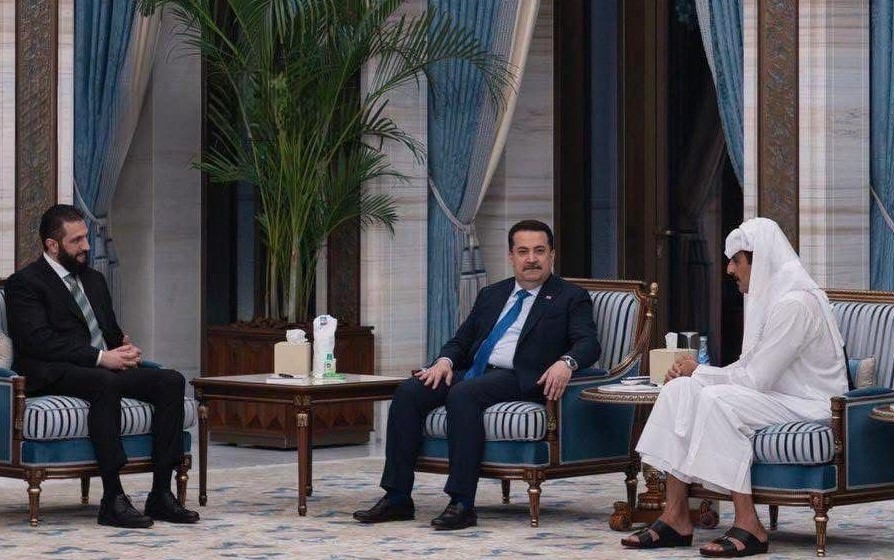
Strategic Council Online – Opinion: The invitation to Ahmed Al-Sharaa, head of Syria’s interim government, to attend the Arab Summit in Baghdad sends a message from the Iraqi government to the Arab world that Baghdad seeks to play a central role in rebuilding Arab relations and reducing regional tensions. However, the path ahead for Baghdad does not appear straightforward. The invitation to Syria’s interim President, facilitated by the mediation of Sheikh Tamim bin Hamad Al Thani, the Emir of Qatar, and Iraqi Prime Minister Sudani’s initial meeting with Al-Sharaa in Doha in February 2025, demonstrates Iraq’s determination to mediate regional conflicts.

Hussein Ahmadi – West Asia Affairs Expert
Iraq, weakened by internal conflicts in the past decades, is now seeking a new position as a key player in Arab diplomacy. This move can be analyzed within the framework of diplomatic representation, where states redefine their political identities through multilateral relations.

However, Al-Sharaa’s invitation raises questions due to his past as a former leader of Hay’at Tahrir al-Sham and his ties to extremist groups. Although Al-Sharaa has tried to distance himself from his past since 2017, accusations by the UN Security Council and Western countries, who still consider Hay’at Tahrir al-Sham a terrorist organization, make it difficult to trust him. The meeting between Iraq’s Culture Minister, Ahmed Al-Badrani, and his Syrian Counterpart, emphasizing cultural cooperation, reflects Baghdad’s public diplomacy efforts to build civilizational ties with Damascus under West Asia’s political-security framework. Yet, these initiatives may falter amid doubts surrounding Al-Sharaa.

This diplomatically cautious, realism-driven message indicates Iraq’s attempt to balance regional ambitions with the risks of controversial choices, such as hosting Syria’s interim leader.

Domestic Political Consequences
The invitation to Al-Sharaa has significant political repercussions in Iraq, particularly for Prime Minister Mohammed Shia’ Al-Sudani’s government. Widespread protests on social media and statements by political groups, including the Asa’ib Ahl al-Haq movement led by Qais al-Khazali, reflect deep dissatisfaction with this decision. Khazali warned that Al-Sharaa’s presence could lead to his judicial arrest—a claim rooted in allegations of his activities in Iraq, including ties to Al-Qaeda and ISIS in the 2000s. Reports suggest Al-Sharaa used the alias “Amjad Muzaffar Hussein” during that period, posing as an Iraqi citizen, which has angered many Iraqis.

These tensions highlight deep divisions in Iraq’s political scene. Opposition groups view Al-Sharaa’s presence as legitimizing a controversial figure, disrespecting past victims of violence, and whitewashing terrorism. In contrast, Al-Sudani’s government justifies the invitation as a step toward regional stability and Syria’s reintegration into the Arab League. This clash, intensifying ahead of Iraq’s parliamentary elections, could lead to domestic political instability. Analysts like Iraqi political researcher Alla Mustafa argue that an existing arrest warrant for Al-Sharaa could legally challenge the government, especially if the invitation bypassed judicial coordination.

From a regional perspective, Al-Sharaa’s potential attendance could bolster Syria’s interim government within the Arab League. Having participated in the emergency Arab Summit in Cairo (March 2025), his presence in Baghdad may strengthen Damascus’s ties with the Arab world. However, doubts about his commitment to reform and distancing from his past cast uncertainty over this positive outcome. His name change and apparent break from Al-Qaeda—seen by the West as a legitimacy-seeking tactic—have further eroded trust.

Security Challenges
One of the biggest challenges for Iraq is the security risks tied to Al-Sharaa’s potential presence. His extremist-linked past heightens the threat of violent reactions from armed groups. Omar Mohammed, a researcher at George Washington University, warns that this invitation could trigger organized protests or targeted violence, particularly from factions viewing Al-Sharaa as a threat to Iraq’s security. Viral videos of Iraqi citizens threatening Al-Sharaa have amplified these concerns.

According to Fadhil Abu Ragheef, a political analyst, Iraq’s government is committed to securing Al-Sharaa and other Arab leaders. However, Iraq’s complex security landscape complicates this pledge. Reports suggest some groups may disrupt the summit through intimidation or leaking information to opposition parties. These threats, interpreted through tense geopolitics, make the summit a test of the government’s security capabilities. Some social media sources claim Al-Sharaa may send Syria’s Foreign Minister, Asaad Al-Shaybani, instead—a move that could ease tensions but diminish the summit’s diplomatic impact.

Ultimately, the Baghdad Arab Summit is a unique opportunity for Iraq to solidify its regional role, but its success hinges on managing domestic and security tensions. Whether Al-Shar’ attends or not, the outcome will reflect the Arab world’s political complexities and the Arab League’s challenges. This development, showcasing Al-Sudani’s cautious realism and diplomatic activism, could mark a turning point in Iraq-Syria relations—if handled correctly. Yet, Al-Sharaa’s controversial past and lack of definitive evidence of genuine change place Iraq in a problematic position, requiring a thorough cost-benefit analysis of this invitation, which appears to favor Al-Sharaa more.


0 Comments

LATEST CONTENT

Iran’s Success in the Narrative Battle in Cyberspace

SCFR Online – Opinion: In the war between Iran and the United States, the main battlefield was not defined solely in the military domain; rather, the battle of narratives in cyberspace—particularly through memes—reached a decisive level.

The Global Energy Shock Situation and Future Scenarios

SCFR Online – Opinion: Only one month after the beginning of the Ramadan War, maritime traffic in the Strait of Hormuz decreased dramatically, with Bloomberg announcing a reduction of 103 vessels; Brent oil prices rose by more than 50 percent, and gasoline prices in the United States increased by 31.4 percent. Additionally, benchmark gas prices in Europe showed a 73.4 percent increase.

Al-Zaydi’s Selection as Prime Minister, The Beginning of a New Chapter in Iraq

SCFR Online – Note: After approximately five months of political deadlock and institutional confusion, Ali al-Zaydi has finally been selected as Iraq’s Prime Minister. Al-Zaydi’s selection as Prime Minister represents a positive sign of the completion of the government formation process and the beginning of a new phase in Iraqi politics and governance. The emergence of a young, technocratic figure from the third generation of politicians—in a context where the country has been administered by traditional figures for decades—revives hope that Iraq may perhaps distance itself from the repetitive cycle of crises and experience a new path of stability, efficiency, and regional convergence.

Intensifying Intra-Party Divisions in the United States Regarding the Zionist Regime

SCFR Online – Note: Over recent decades, support for the Zionist regime has been one of the few issues commanding bipartisan consensus in US foreign policy. Since the Cold War era, Republicans and Democrats have generally agreed on the necessity of preserving the security and survival of the Zionist regime as Washington’s most strategic ally in West Asia—and indeed, globally. However, developments in recent years—particularly the Gaza war, escalating regional conflicts, the expansion of tensions into Lebanon, and this regime’s recent warmongering against Iran—have caused this traditional consensus, especially within the Democratic Party, to face significant fractures.

Loading

Últimas publicaciones

Iran’s Success in the Narrative Battle in Cyberspace

SCFR Online – Opinion: In the war between Iran and the United States, the main battlefield was not defined solely in the military domain; rather, the battle of narratives in cyberspace—particularly through memes—reached a decisive level.

The Global Energy Shock Situation and Future Scenarios

SCFR Online – Opinion: Only one month after the beginning of the Ramadan War, maritime traffic in the Strait of Hormuz decreased dramatically, with Bloomberg announcing a reduction of 103 vessels; Brent oil prices rose by more than 50 percent, and gasoline prices in the United States increased by 31.4 percent. Additionally, benchmark gas prices in Europe showed a 73.4 percent increase.

Al-Zaydi’s Selection as Prime Minister, The Beginning of a New Chapter in Iraq

SCFR Online – Note: After approximately five months of political deadlock and institutional confusion, Ali al-Zaydi has finally been selected as Iraq’s Prime Minister. Al-Zaydi’s selection as Prime Minister represents a positive sign of the completion of the government formation process and the beginning of a new phase in Iraqi politics and governance. The emergence of a young, technocratic figure from the third generation of politicians—in a context where the country has been administered by traditional figures for decades—revives hope that Iraq may perhaps distance itself from the repetitive cycle of crises and experience a new path of stability, efficiency, and regional convergence.

Intensifying Intra-Party Divisions in the United States Regarding the Zionist Regime

SCFR Online – Note: Over recent decades, support for the Zionist regime has been one of the few issues commanding bipartisan consensus in US foreign policy. Since the Cold War era, Republicans and Democrats have generally agreed on the necessity of preserving the security and survival of the Zionist regime as Washington’s most strategic ally in West Asia—and indeed, globally. However, developments in recent years—particularly the Gaza war, escalating regional conflicts, the expansion of tensions into Lebanon, and this regime’s recent warmongering against Iran—have caused this traditional consensus, especially within the Democratic Party, to face significant fractures.

Loading

DERNIER CONTENU

Iran’s Success in the Narrative Battle in Cyberspace

SCFR Online – Opinion: In the war between Iran and the United States, the main battlefield was not defined solely in the military domain; rather, the battle of narratives in cyberspace—particularly through memes—reached a decisive level.

The Global Energy Shock Situation and Future Scenarios

SCFR Online – Opinion: Only one month after the beginning of the Ramadan War, maritime traffic in the Strait of Hormuz decreased dramatically, with Bloomberg announcing a reduction of 103 vessels; Brent oil prices rose by more than 50 percent, and gasoline prices in the United States increased by 31.4 percent. Additionally, benchmark gas prices in Europe showed a 73.4 percent increase.

Al-Zaydi’s Selection as Prime Minister, The Beginning of a New Chapter in Iraq

SCFR Online – Note: After approximately five months of political deadlock and institutional confusion, Ali al-Zaydi has finally been selected as Iraq’s Prime Minister. Al-Zaydi’s selection as Prime Minister represents a positive sign of the completion of the government formation process and the beginning of a new phase in Iraqi politics and governance. The emergence of a young, technocratic figure from the third generation of politicians—in a context where the country has been administered by traditional figures for decades—revives hope that Iraq may perhaps distance itself from the repetitive cycle of crises and experience a new path of stability, efficiency, and regional convergence.

Intensifying Intra-Party Divisions in the United States Regarding the Zionist Regime

SCFR Online – Note: Over recent decades, support for the Zionist regime has been one of the few issues commanding bipartisan consensus in US foreign policy. Since the Cold War era, Republicans and Democrats have generally agreed on the necessity of preserving the security and survival of the Zionist regime as Washington’s most strategic ally in West Asia—and indeed, globally. However, developments in recent years—particularly the Gaza war, escalating regional conflicts, the expansion of tensions into Lebanon, and this regime’s recent warmongering against Iran—have caused this traditional consensus, especially within the Democratic Party, to face significant fractures.

Loading

DERNIER CONTENU

Iran’s Success in the Narrative Battle in Cyberspace

SCFR Online – Opinion: In the war between Iran and the United States, the main battlefield was not defined solely in the military domain; rather, the battle of narratives in cyberspace—particularly through memes—reached a decisive level.

The Global Energy Shock Situation and Future Scenarios

SCFR Online – Opinion: Only one month after the beginning of the Ramadan War, maritime traffic in the Strait of Hormuz decreased dramatically, with Bloomberg announcing a reduction of 103 vessels; Brent oil prices rose by more than 50 percent, and gasoline prices in the United States increased by 31.4 percent. Additionally, benchmark gas prices in Europe showed a 73.4 percent increase.

Al-Zaydi’s Selection as Prime Minister, The Beginning of a New Chapter in Iraq

SCFR Online – Note: After approximately five months of political deadlock and institutional confusion, Ali al-Zaydi has finally been selected as Iraq’s Prime Minister. Al-Zaydi’s selection as Prime Minister represents a positive sign of the completion of the government formation process and the beginning of a new phase in Iraqi politics and governance. The emergence of a young, technocratic figure from the third generation of politicians—in a context where the country has been administered by traditional figures for decades—revives hope that Iraq may perhaps distance itself from the repetitive cycle of crises and experience a new path of stability, efficiency, and regional convergence.

Intensifying Intra-Party Divisions in the United States Regarding the Zionist Regime

SCFR Online – Note: Over recent decades, support for the Zionist regime has been one of the few issues commanding bipartisan consensus in US foreign policy. Since the Cold War era, Republicans and Democrats have generally agreed on the necessity of preserving the security and survival of the Zionist regime as Washington’s most strategic ally in West Asia—and indeed, globally. However, developments in recent years—particularly the Gaza war, escalating regional conflicts, the expansion of tensions into Lebanon, and this regime’s recent warmongering against Iran—have caused this traditional consensus, especially within the Democratic Party, to face significant fractures.

Loading

DERNIER CONTENU

Iran’s Success in the Narrative Battle in Cyberspace

SCFR Online – Opinion: In the war between Iran and the United States, the main battlefield was not defined solely in the military domain; rather, the battle of narratives in cyberspace—particularly through memes—reached a decisive level.

The Global Energy Shock Situation and Future Scenarios

SCFR Online – Opinion: Only one month after the beginning of the Ramadan War, maritime traffic in the Strait of Hormuz decreased dramatically, with Bloomberg announcing a reduction of 103 vessels; Brent oil prices rose by more than 50 percent, and gasoline prices in the United States increased by 31.4 percent. Additionally, benchmark gas prices in Europe showed a 73.4 percent increase.

Al-Zaydi’s Selection as Prime Minister, The Beginning of a New Chapter in Iraq

SCFR Online – Note: After approximately five months of political deadlock and institutional confusion, Ali al-Zaydi has finally been selected as Iraq’s Prime Minister. Al-Zaydi’s selection as Prime Minister represents a positive sign of the completion of the government formation process and the beginning of a new phase in Iraqi politics and governance. The emergence of a young, technocratic figure from the third generation of politicians—in a context where the country has been administered by traditional figures for decades—revives hope that Iraq may perhaps distance itself from the repetitive cycle of crises and experience a new path of stability, efficiency, and regional convergence.

Intensifying Intra-Party Divisions in the United States Regarding the Zionist Regime

SCFR Online – Note: Over recent decades, support for the Zionist regime has been one of the few issues commanding bipartisan consensus in US foreign policy. Since the Cold War era, Republicans and Democrats have generally agreed on the necessity of preserving the security and survival of the Zionist regime as Washington’s most strategic ally in West Asia—and indeed, globally. However, developments in recent years—particularly the Gaza war, escalating regional conflicts, the expansion of tensions into Lebanon, and this regime’s recent warmongering against Iran—have caused this traditional consensus, especially within the Democratic Party, to face significant fractures.

Loading