
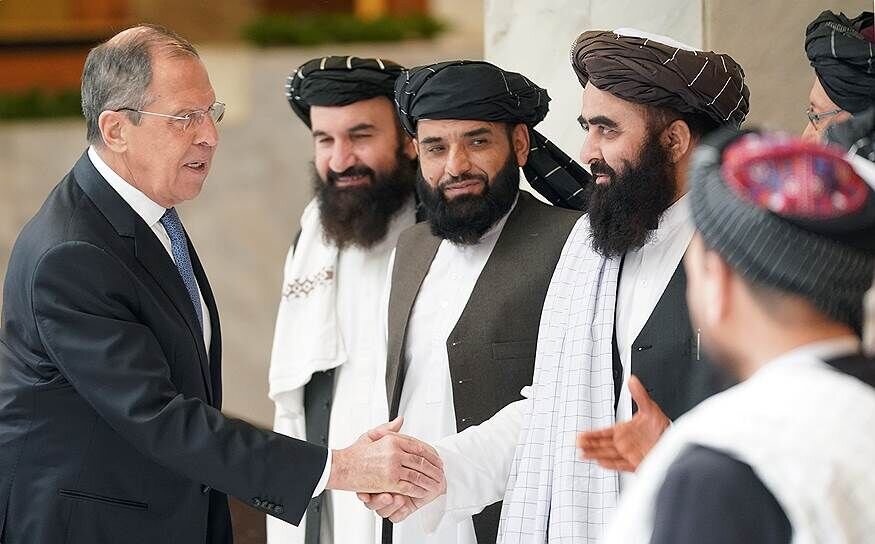
Seyed Rasoul Mousavi, in an interview with the Strategic Council on Foreign Relations website regarding Russia’s recognition of the Taliban, said: “During the Taliban’s first period of rule from 1996 to 2001, Russia did not recognize the Taliban and supported the Northern Front, while the Taliban openly declared Russia as their enemy. In contrast, the Taliban supported Chechen claims of independence, recognized them, and trained around 1,500 Chechen fighters on Afghan soil. This situation led Russia to consider bombing Chechen training centers in Afghanistan. However, after the 9/11 attacks, Moscow supported U.S. actions in bombing various militant facilities in Afghanistan and toppling the Taliban.”*The former Director-General of South Asia at the Ministry of Foreign Affairs added: “Since 2010, when discussions about the U.S. withdrawal from Afghanistan began, the Russians started engaging with the Taliban. This was important for Russia due to security concerns, particularly the security of the Central Asian republics’ borders, as well as the fight against drug trafficking. As the Taliban gained power and negotiations between the Taliban and the U.S. began in Doha, Russia also initiated parallel efforts through the Moscow Format for intra-Afghan talks.”*
Iran’s former ambassador to Tajikistan stated: With the fall of the Republic in Afghanistan and the Taliban’s return to power, Russia continued its relations with the Taliban. Without officially recognizing them, their embassy remained active in Afghanistan. Since 2021, Russia’s relations with the Taliban have been continuous. However, during this period, the Russian embassy in Kabul was attacked once in September 2022. In March 2024, ISIS-Khorasan carried out a deadly attack on a concert hall in Moscow, killing over 140 people. In both incidents, Russia blamed ISIS-Khorasan and cooperated with the Taliban to counter them.”
Mousavi emphasized: “At the same time, just as during its first rule, the Taliban remains on Russia’s list of terrorist organizations. Early in 2025, discussions arose that Russia might remove the Taliban from its terrorist list, but the Russian Prosecutor’s Office did not delist them—only suspended their designation. This indicates that Russia is still cautious about fully removing the Taliban from its terrorist list.”
He noted: *”On July 3, Russian Deputy Foreign Minister Andrey Rudenko accepted the credentials of Mr. Gul Hassan, who had been introduced as ambassador to Moscow. Subsequently, the Russian Foreign Ministry issued a statement declaring that accepting Mr. Gul Hassan meant recognizing the Islamic Emirate of Afghanistan, which could improve Russia’s relations with Afghanistan in political, economic, infrastructural, counterterrorism, and anti-drug trafficking fields.”*
The former Iranian diplomat stressed: “The Russians had always conditioned their recognition of the Taliban and the Islamic Emirate on the formation of an inclusive government and respect for women’s rights, but now, by recognizing the Taliban, it appears they have set aside this condition. However, a few days after Russia’s recognition announcement, during the Shanghai Cooperation Organization foreign ministers’ meeting, Russian Foreign Minister Sergey Lavrov reiterated the necessity of forming an inclusive government in Afghanistan. Thus, it can be said that forming an inclusive government remains important for Russia alongside recognizing the Taliban.”
Mousavi underscored: “For Russia, the Taliban have transformed from an enemy they once fought into an established government and an undeniable reality in Afghanistan’s political landscape. Nevertheless, Russia remains cautious in dealing with this new situation. From Moscow’s perspective, the Taliban or the Islamic Emirate of Afghanistan is primarily a security and intelligence matter, and any expansion of political and economic relations with them will be handled with specific considerations.”
Regarding regional and global reactions to Russia’s recognition of the Taliban, he said: “Russia’s move has sent different messages to various countries. Pakistan viewed it as a bilateral matter. India stated that Russia made the decision based on its security needs, which would not significantly impact Russia-Taliban relations. However, the U.S. and European countries interpreted it as Russia entering strategic competition and somewhat condemned the move. Within this framework, Central Asian countries may follow Russia’s path and move toward recognizing the Taliban.”
On Iran’s stance toward Russia’s recognition of the Islamic Emirate of Afghanistan, the former diplomat said: “Iran shares over 900 kilometers of border with Afghanistan, hosts millions of Afghans, and has significant trade relations with the country. The Islamic Republic of Iran’s path to recognizing the Taliban should be within a framework addressing key bilateral issues, including water rights, border security, the two countries’ regional strategic positions, terrorism, and other matters. In practice, de facto relations with the Taliban continue, with embassies and consulates operating in both countries. However, if recognition is to be upgraded, a comprehensive cooperation agreement between the two nations must be signed.”
When asked how much Russia’s recognition of the Taliban is driven by the threat of terrorist groups in Afghanistan and their actions against Russia, Mousavi replied: “The Taliban have labeled ISIS-Khorasan as terrorists and are fighting them as Kharijites (renegades). They do not engage with other terrorist groups active in Afghanistan per UN reports, but have emphasized they will not allow these groups to threaten neighboring countries from Afghan soil—though this stance does not mean they actively fight them within Afghanistan.”
The regional affairs expert stressed that one of Russia’s goals in recognizing the Taliban is countering ISIS-Khorasan, adding: “Another stated goal in the Russian Foreign Ministry’s declaration is counterterrorism. However, the practical outcome of this recognition depends on the future. According to UN Security Council reports, various terrorist groups—such as ISIS-Khorasan, Ansarullah Tajikistan, Tehrik-i-Taliban Pakistan, the Islamic Movement of Uzbekistan, and Jaish al-Zulm (linked to terrorist groups in Iran’s Balochistan)—are all present in Afghanistan. Thus, Russia, as a country neighboring Afghanistan through Central Asian states, seeks to cooperate with the Taliban against these terrorist groups.”
Mousavi noted that the Taliban have never officially acknowledged the presence of these armed groups on their soil and reject UN reports on the matter.
Regarding the impact of the Ukraine war on Russia’s decision to recognize the Taliban, he stated: “There is no direct link between recognizing the Taliban and the Russia-Ukraine war. However, since Ukraine is Russia’s top priority, they are managing other conflicts in their neighborhood to focus primarily on the Ukraine war.”

0 Comments