جدیدترین مطالب

Consequences of Declining Trust in the Judiciary in Europe

SCFRonline – Opinion: The increase in public distrust of the French judicial system, which in recent surveys has reached approximately two-thirds of citizens, should be analyzed within a framework broader than temporary dissatisfaction or an emotional reaction to a particular criminal case.

Iran’s Potential Levers of Power

SCFRonline– Opinion: Iran’s geopolitical power is not limited solely to oil and the Strait of Hormuz; the unintended emergence of disruptions in the future global food and energy security chains can also demonstrate Iran’s strategic importance.

The Inseparability of the Lebanese Front from the Axis of Resistance

SCFR Online–Opinion: By providing an extensive network of social, healthcare, educational, and post-war reconstruction services, Hezbollah has established a strong social base for itself among Lebanon’s Shiites and Sunnis, and even beyond that, among other segments of Lebanese society, including Christians. Hezbollah has never been an external actor imposed upon Lebanon; rather, it is a phenomenon fundamentally born out of the occupation and crimes of the Zionist regime and itself influenced by popular resistance.

The Increasing Efforts of the Zionist Regime to Redefine Borders and the Regional Order and Its Consequences

SCFR Online– Opinion: Security and military developments in the region over recent months indicate that the ongoing crises and wars in Gaza, southern Lebanon, and parts of Syrian territory encompass broader dimensions of geopolitical and geostrategic transformations. In this context, the increased military presence and control of the Zionist regime over parts of the territories of these areas, along with proposals regarding the creation of buffer zones or even the expansion of security borders, have raised serious questions about the future of the regional order and its consequences for the countries of West Asia.

Loading

USA

Objectives and Consequences of the South Caucasus Trilateral Agreement

Objectives and Consequences of the South Caucasus Trilateral Agreement

Strategic Council Online – Interview: A senior Eurasian affairs analyst stated that the trilateral agreement between Armenia, the Republic of Azerbaijan, and the United States on August 8, 2025, known as the “Trump Route,” is a turning point in the geopolitical equations of the South Caucasus. This agreement, ostensibly signed for peace and the establishment of a transit corridor between Baku and Nakhchivan, carries serious concerns. From the perspective of analysts, this plan is not merely an economic project but part of the U.S. strategy to enhance its influence in the region and contain regional powers such as Iran and Russia.

Venezuela Crisis and US Interventionist Strategy in Latin America

Venezuela Crisis and US Interventionist Strategy in Latin America

Strategic Council Online – Interview: A senior Latin American affairs analyst stated that the Trump administration’s view of South America is fundamentally defined by ideological pessimism and hostility towards socialist systems. Just as the United States pursued a policy of regime change in Cuba, Nicaragua, and Chile over the past decades, it is following the same approach in Venezuela.

New China-India Engagement: Formation of a New Strategy in Asia

New China-India Engagement: Formation of a New Strategy in Asia

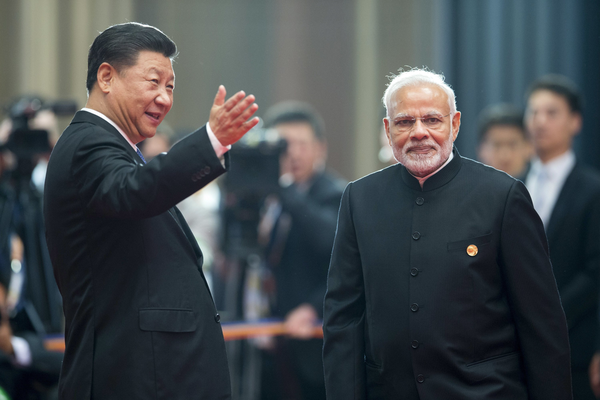
Strategic Council Online – Interview: A senior international relations analyst stated that the recent visit of Wang Yi, China’s Foreign Minister, to New Delhi is not merely a routine diplomatic meeting; rather, it represents a decisive point in the geopolitical equations of South Asia and even the new global order. After four years of tension and distrust stemming from deadly border clashes in Ladakh and Beijing’s full-throated support for Islamabad during the four-day India-Pakistan war, Beijing and New Delhi are now moving towards economic and political reconciliation under circumstances where external variables, including Trump’s tariff pressures and India’s closeness to Russia, have complicated the equation.

New Syrian-Zionist Interactions and the Greater Israel Project

New Syrian-Zionist Interactions and the Greater Israel Project

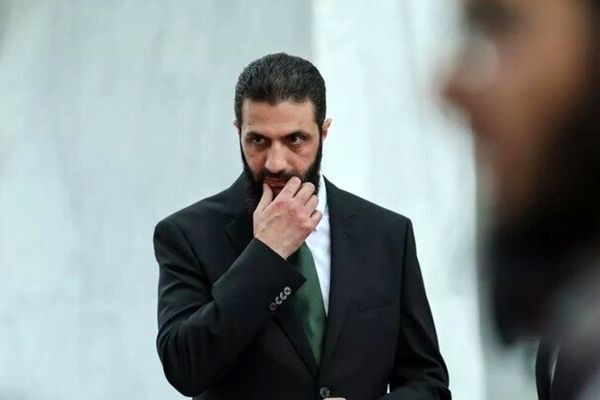
Strategic Council Online – Interview: A senior international affairs analyst stated that the recent meeting of the foreign minister of Syria’s interim government with a delegation from the Zionist regime in Paris marks a turning point in the regional equations; an event that, beyond a simple diplomatic meeting, signifies a redefinition of strategies regarding Syria’s future. These talks, which were mediated by the United States and focused on reducing tensions in southern Syria, monitoring the ceasefire, and reactivating the 1974 agreement, clearly indicate that the Syria file can no longer be analyzed solely within the framework of an internal crisis or field conflicts. Instead, Damascus today is caught in a complex duality: on one hand, it faces the occupation of part of its territory by the Israeli regime and increasing pressures on its strategic geography, and on the other hand, it feels the necessity of utilizing diplomacy to break out of political isolation. Meanwhile, the Israeli regime seeks to consolidate its position in the region, an issue that links to the long-standing project of “Greater Israel” and efforts to dismantle the traditional structures of the Middle East.

Dimensions and Implications of Parallel Efforts to Disarm the Resistance in West Asia

Dimensions and Implications of Parallel Efforts to Disarm the Resistance in West Asia

Strategic Council Online – Interview: A senior analyst on West Asian affairs stated that under the current circumstances, discussing the disarmament of the Resistance is not only unfeasible but could also lead to an escalation of tensions. Following the 12-day aggression by the United States and the Israeli regime against Iran, efforts in another layer to disarm Resistance groups, including Hezbollah, the Popular Mobilization Forces (PMF or Hashd al-Shaabi), and Hamas, have intensified as part of a coordinated project pursued to weaken the Axis of Resistance and impose American regional dominance. The U.S. proposal for Lebanon, which includes disarming Hezbollah by the end of 2025 and the withdrawal of the Israeli regime from border positions, is an attempt to transform an external conflict into an internal one. Hezbollah has firmly rejected this proposal, deeming it a violation of national sovereignty and a service to the interests of the Israeli regime, while emphasizing its defensive role. In Iraq, pressure on the Popular Mobilization Forces has been accompanied by accusations and economic sanctions, yet this group continues to stand as a popular force against external threats. Hamas, despite heavy attacks by the Israeli regime, has continued its resistance and rejected a recent ceasefire proposal in exchange for disarmament. These plans, supported by U.S. and allied diplomatic and economic backing, seek to alter the balance of power in the region. Still, the resistance of the groups and popular support have prevented the realization of these objectives.

An Analysis of the Gas Tension in the Eastern Mediterranean to Lebanon’s Detriment

An Analysis of the Gas Tension in the Eastern Mediterranean to Lebanon’s Detriment

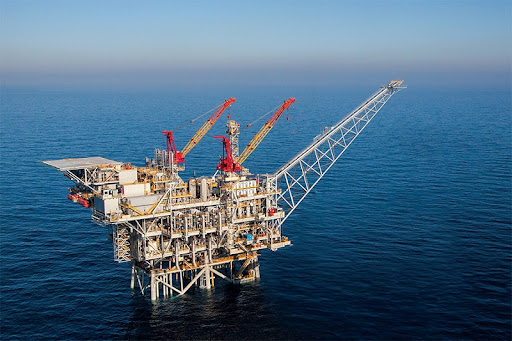
Strategic Council Online – Interview: A researcher on Lebanese affairs stated: Under intense US pressure, Lebanon’s current government is hastily finalizing the gas dossier in the Eastern Mediterranean; an action that benefits the US, the Israeli regime, and their allies, and may result in Lebanon losing approximately five thousand square kilometers of area containing its gas and oil wealth. In this regard, the Al-Akhbar newspaper wrote: What is happening today is not merely a maritime negotiation, but a battle over sovereignty and survival that is feared will end unilaterally at a bargaining table where there is no room for national interests.

The Outlook for Political-Security Developments in Syria

The Outlook for Political-Security Developments in Syria

Strategic Council Online – Interview: A regional affairs expert stated that at present, it is impossible to have an accurate prediction whether Syria will move towards stability or another civil war will occur in the country in the next six months to a year.

France’s Parliament Concerned About the EU’s Catastrophic Strategic Dependence on America

France’s Parliament Concerned About the EU’s Catastrophic Strategic Dependence on America

Strategic Council Online – Interview: A senior international affairs analyst stated that the current geopolitical situation has created an unprecedented space for strategic changes in Europe, adding that the recommendation letter from France’s parliament is essentially a strategic response to these conditions. The release of the French parliament’s 153-page report—dubbed by Arnaud Bertrand (French journalist) as “the most prominent geopolitical document of the century”—has sparked a wave of debate and reactions in global political and intellectual circles. This document describes the European Union’s strategic dependence on the United States as a catastrophic failure and, through 50 practical recommendations, proposes a new path to escape Atlanticist hegemony and move towards equal partnership with China. If the contents and recommendations of this document are taken seriously in Europe, the consequences will extend beyond the geography of the Green Continent and directly impact relations among emerging powers, financial markets, and even international security equations. Furthermore, the document goes beyond “defense independence” to address “economic and monetary independence”—an area hitherto under the shadow of the US dollar and Washington’s policies. From this perspective, the present moment may mark the beginning of a new chapter in international politics, where Europe defines itself as an independent actor in the future multipolar order.

Features of Cryptocurrencies and the Consequences of Their Use Under Sanction Conditions

Features of Cryptocurrencies and the Consequences of Their Use Under Sanction Conditions

Strategic Council Online – Opinion: In recent years, with the expansion of international sanctions and the intensification of economic pressures on specific countries, many have turned their attention to new financial technologies. Among these technologies, cryptocurrencies have garnered more attention than others. Media, economic actors, and even some politicians have referred to cryptocurrency as a potential tool for bypassing sanctions, as if these cryptocurrencies are the very keyword that unlocks the closed doors of the global banking system.

Critical Analysis of the Security Council’s Approach Towards the Gaza Crisis

Critical Analysis of the Security Council’s Approach Towards the Gaza Crisis

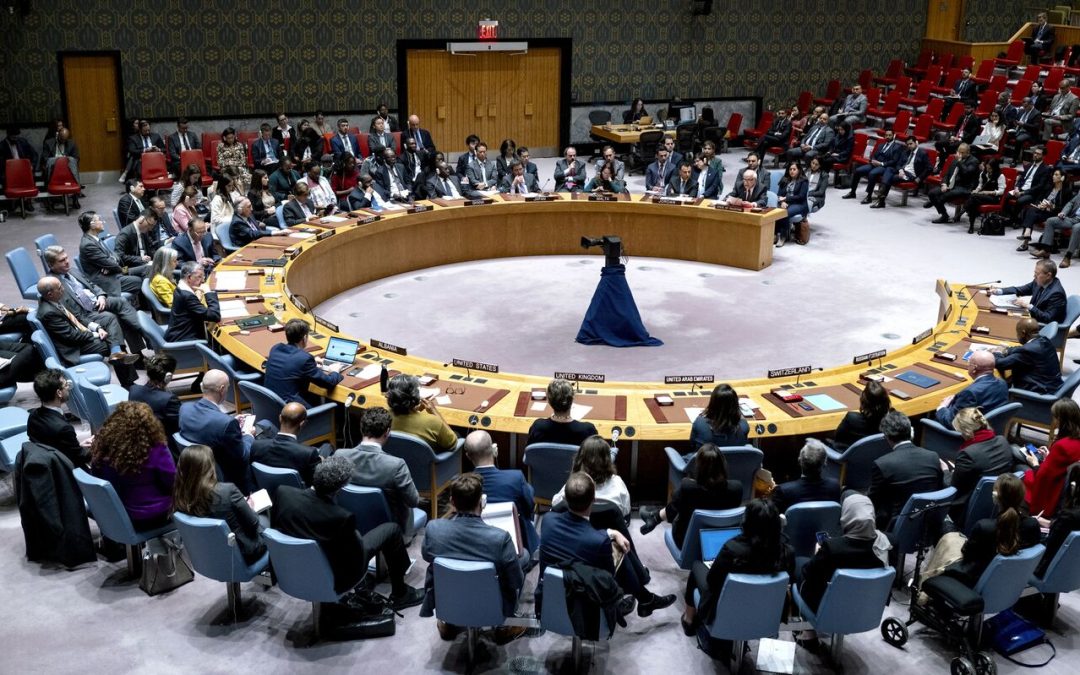
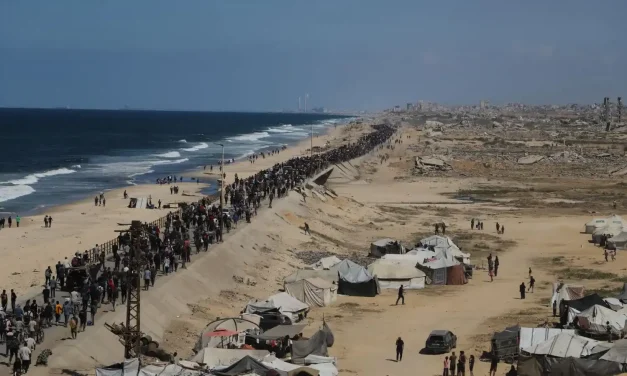
Strategic Council Online in – Interview: A senior Arab world analyst stated: When 61 thousand people are killed in Gaza and the Security Council is not even willing to issue a simple resolution in condemnation of the Zionist regime, it means the international structure is entirely dysfunctional. In such a situation, it is the nations that must cry out and awaken the global conscience.

أحدث الوظائف

Consequences of Declining Trust in the Judiciary in Europe

SCFRonline – Opinion: The increase in public distrust of the French judicial system, which in recent surveys has reached approximately two-thirds of citizens, should be analyzed within a framework broader than temporary dissatisfaction or an emotional reaction to a particular criminal case.

Iran’s Potential Levers of Power

SCFRonline– Opinion: Iran’s geopolitical power is not limited solely to oil and the Strait of Hormuz; the unintended emergence of disruptions in the future global food and energy security chains can also demonstrate Iran’s strategic importance.

The Inseparability of the Lebanese Front from the Axis of Resistance

SCFR Online–Opinion: By providing an extensive network of social, healthcare, educational, and post-war reconstruction services, Hezbollah has established a strong social base for itself among Lebanon’s Shiites and Sunnis, and even beyond that, among other segments of Lebanese society, including Christians. Hezbollah has never been an external actor imposed upon Lebanon; rather, it is a phenomenon fundamentally born out of the occupation and crimes of the Zionist regime and itself influenced by popular resistance.

The Increasing Efforts of the Zionist Regime to Redefine Borders and the Regional Order and Its Consequences

SCFR Online– Opinion: Security and military developments in the region over recent months indicate that the ongoing crises and wars in Gaza, southern Lebanon, and parts of Syrian territory encompass broader dimensions of geopolitical and geostrategic transformations. In this context, the increased military presence and control of the Zionist regime over parts of the territories of these areas, along with proposals regarding the creation of buffer zones or even the expansion of security borders, have raised serious questions about the future of the regional order and its consequences for the countries of West Asia.

Loading

USA

Objectives and Consequences of the South Caucasus Trilateral Agreement

Objectives and Consequences of the South Caucasus Trilateral Agreement

Strategic Council Online – Interview: A senior Eurasian affairs analyst stated that the trilateral agreement between Armenia, the Republic of Azerbaijan, and the United States on August 8, 2025, known as the “Trump Route,” is a turning point in the geopolitical equations of the South Caucasus. This agreement, ostensibly signed for peace and the establishment of a transit corridor between Baku and Nakhchivan, carries serious concerns. From the perspective of analysts, this plan is not merely an economic project but part of the U.S. strategy to enhance its influence in the region and contain regional powers such as Iran and Russia.

Venezuela Crisis and US Interventionist Strategy in Latin America

Venezuela Crisis and US Interventionist Strategy in Latin America

Strategic Council Online – Interview: A senior Latin American affairs analyst stated that the Trump administration’s view of South America is fundamentally defined by ideological pessimism and hostility towards socialist systems. Just as the United States pursued a policy of regime change in Cuba, Nicaragua, and Chile over the past decades, it is following the same approach in Venezuela.

New China-India Engagement: Formation of a New Strategy in Asia

New China-India Engagement: Formation of a New Strategy in Asia

Strategic Council Online – Interview: A senior international relations analyst stated that the recent visit of Wang Yi, China’s Foreign Minister, to New Delhi is not merely a routine diplomatic meeting; rather, it represents a decisive point in the geopolitical equations of South Asia and even the new global order. After four years of tension and distrust stemming from deadly border clashes in Ladakh and Beijing’s full-throated support for Islamabad during the four-day India-Pakistan war, Beijing and New Delhi are now moving towards economic and political reconciliation under circumstances where external variables, including Trump’s tariff pressures and India’s closeness to Russia, have complicated the equation.

New Syrian-Zionist Interactions and the Greater Israel Project

New Syrian-Zionist Interactions and the Greater Israel Project

Strategic Council Online – Interview: A senior international affairs analyst stated that the recent meeting of the foreign minister of Syria’s interim government with a delegation from the Zionist regime in Paris marks a turning point in the regional equations; an event that, beyond a simple diplomatic meeting, signifies a redefinition of strategies regarding Syria’s future. These talks, which were mediated by the United States and focused on reducing tensions in southern Syria, monitoring the ceasefire, and reactivating the 1974 agreement, clearly indicate that the Syria file can no longer be analyzed solely within the framework of an internal crisis or field conflicts. Instead, Damascus today is caught in a complex duality: on one hand, it faces the occupation of part of its territory by the Israeli regime and increasing pressures on its strategic geography, and on the other hand, it feels the necessity of utilizing diplomacy to break out of political isolation. Meanwhile, the Israeli regime seeks to consolidate its position in the region, an issue that links to the long-standing project of “Greater Israel” and efforts to dismantle the traditional structures of the Middle East.

Dimensions and Implications of Parallel Efforts to Disarm the Resistance in West Asia

Dimensions and Implications of Parallel Efforts to Disarm the Resistance in West Asia

Strategic Council Online – Interview: A senior analyst on West Asian affairs stated that under the current circumstances, discussing the disarmament of the Resistance is not only unfeasible but could also lead to an escalation of tensions. Following the 12-day aggression by the United States and the Israeli regime against Iran, efforts in another layer to disarm Resistance groups, including Hezbollah, the Popular Mobilization Forces (PMF or Hashd al-Shaabi), and Hamas, have intensified as part of a coordinated project pursued to weaken the Axis of Resistance and impose American regional dominance. The U.S. proposal for Lebanon, which includes disarming Hezbollah by the end of 2025 and the withdrawal of the Israeli regime from border positions, is an attempt to transform an external conflict into an internal one. Hezbollah has firmly rejected this proposal, deeming it a violation of national sovereignty and a service to the interests of the Israeli regime, while emphasizing its defensive role. In Iraq, pressure on the Popular Mobilization Forces has been accompanied by accusations and economic sanctions, yet this group continues to stand as a popular force against external threats. Hamas, despite heavy attacks by the Israeli regime, has continued its resistance and rejected a recent ceasefire proposal in exchange for disarmament. These plans, supported by U.S. and allied diplomatic and economic backing, seek to alter the balance of power in the region. Still, the resistance of the groups and popular support have prevented the realization of these objectives.

An Analysis of the Gas Tension in the Eastern Mediterranean to Lebanon’s Detriment

An Analysis of the Gas Tension in the Eastern Mediterranean to Lebanon’s Detriment

Strategic Council Online – Interview: A researcher on Lebanese affairs stated: Under intense US pressure, Lebanon’s current government is hastily finalizing the gas dossier in the Eastern Mediterranean; an action that benefits the US, the Israeli regime, and their allies, and may result in Lebanon losing approximately five thousand square kilometers of area containing its gas and oil wealth. In this regard, the Al-Akhbar newspaper wrote: What is happening today is not merely a maritime negotiation, but a battle over sovereignty and survival that is feared will end unilaterally at a bargaining table where there is no room for national interests.

The Outlook for Political-Security Developments in Syria

The Outlook for Political-Security Developments in Syria

Strategic Council Online – Interview: A regional affairs expert stated that at present, it is impossible to have an accurate prediction whether Syria will move towards stability or another civil war will occur in the country in the next six months to a year.

France’s Parliament Concerned About the EU’s Catastrophic Strategic Dependence on America

France’s Parliament Concerned About the EU’s Catastrophic Strategic Dependence on America

Strategic Council Online – Interview: A senior international affairs analyst stated that the current geopolitical situation has created an unprecedented space for strategic changes in Europe, adding that the recommendation letter from France’s parliament is essentially a strategic response to these conditions. The release of the French parliament’s 153-page report—dubbed by Arnaud Bertrand (French journalist) as “the most prominent geopolitical document of the century”—has sparked a wave of debate and reactions in global political and intellectual circles. This document describes the European Union’s strategic dependence on the United States as a catastrophic failure and, through 50 practical recommendations, proposes a new path to escape Atlanticist hegemony and move towards equal partnership with China. If the contents and recommendations of this document are taken seriously in Europe, the consequences will extend beyond the geography of the Green Continent and directly impact relations among emerging powers, financial markets, and even international security equations. Furthermore, the document goes beyond “defense independence” to address “economic and monetary independence”—an area hitherto under the shadow of the US dollar and Washington’s policies. From this perspective, the present moment may mark the beginning of a new chapter in international politics, where Europe defines itself as an independent actor in the future multipolar order.

Features of Cryptocurrencies and the Consequences of Their Use Under Sanction Conditions

Features of Cryptocurrencies and the Consequences of Their Use Under Sanction Conditions

Strategic Council Online – Opinion: In recent years, with the expansion of international sanctions and the intensification of economic pressures on specific countries, many have turned their attention to new financial technologies. Among these technologies, cryptocurrencies have garnered more attention than others. Media, economic actors, and even some politicians have referred to cryptocurrency as a potential tool for bypassing sanctions, as if these cryptocurrencies are the very keyword that unlocks the closed doors of the global banking system.

Critical Analysis of the Security Council’s Approach Towards the Gaza Crisis

Critical Analysis of the Security Council’s Approach Towards the Gaza Crisis

Strategic Council Online in – Interview: A senior Arab world analyst stated: When 61 thousand people are killed in Gaza and the Security Council is not even willing to issue a simple resolution in condemnation of the Zionist regime, it means the international structure is entirely dysfunctional. In such a situation, it is the nations that must cry out and awaken the global conscience.

USA

Objectives and Consequences of the South Caucasus Trilateral Agreement

Objectives and Consequences of the South Caucasus Trilateral Agreement

Strategic Council Online – Interview: A senior Eurasian affairs analyst stated that the trilateral agreement between Armenia, the Republic of Azerbaijan, and the United States on August 8, 2025, known as the “Trump Route,” is a turning point in the geopolitical equations of the South Caucasus. This agreement, ostensibly signed for peace and the establishment of a transit corridor between Baku and Nakhchivan, carries serious concerns. From the perspective of analysts, this plan is not merely an economic project but part of the U.S. strategy to enhance its influence in the region and contain regional powers such as Iran and Russia.

Venezuela Crisis and US Interventionist Strategy in Latin America

Venezuela Crisis and US Interventionist Strategy in Latin America

Strategic Council Online – Interview: A senior Latin American affairs analyst stated that the Trump administration’s view of South America is fundamentally defined by ideological pessimism and hostility towards socialist systems. Just as the United States pursued a policy of regime change in Cuba, Nicaragua, and Chile over the past decades, it is following the same approach in Venezuela.

New China-India Engagement: Formation of a New Strategy in Asia

New China-India Engagement: Formation of a New Strategy in Asia

Strategic Council Online – Interview: A senior international relations analyst stated that the recent visit of Wang Yi, China’s Foreign Minister, to New Delhi is not merely a routine diplomatic meeting; rather, it represents a decisive point in the geopolitical equations of South Asia and even the new global order. After four years of tension and distrust stemming from deadly border clashes in Ladakh and Beijing’s full-throated support for Islamabad during the four-day India-Pakistan war, Beijing and New Delhi are now moving towards economic and political reconciliation under circumstances where external variables, including Trump’s tariff pressures and India’s closeness to Russia, have complicated the equation.

New Syrian-Zionist Interactions and the Greater Israel Project

New Syrian-Zionist Interactions and the Greater Israel Project

Strategic Council Online – Interview: A senior international affairs analyst stated that the recent meeting of the foreign minister of Syria’s interim government with a delegation from the Zionist regime in Paris marks a turning point in the regional equations; an event that, beyond a simple diplomatic meeting, signifies a redefinition of strategies regarding Syria’s future. These talks, which were mediated by the United States and focused on reducing tensions in southern Syria, monitoring the ceasefire, and reactivating the 1974 agreement, clearly indicate that the Syria file can no longer be analyzed solely within the framework of an internal crisis or field conflicts. Instead, Damascus today is caught in a complex duality: on one hand, it faces the occupation of part of its territory by the Israeli regime and increasing pressures on its strategic geography, and on the other hand, it feels the necessity of utilizing diplomacy to break out of political isolation. Meanwhile, the Israeli regime seeks to consolidate its position in the region, an issue that links to the long-standing project of “Greater Israel” and efforts to dismantle the traditional structures of the Middle East.

Dimensions and Implications of Parallel Efforts to Disarm the Resistance in West Asia

Dimensions and Implications of Parallel Efforts to Disarm the Resistance in West Asia

Strategic Council Online – Interview: A senior analyst on West Asian affairs stated that under the current circumstances, discussing the disarmament of the Resistance is not only unfeasible but could also lead to an escalation of tensions. Following the 12-day aggression by the United States and the Israeli regime against Iran, efforts in another layer to disarm Resistance groups, including Hezbollah, the Popular Mobilization Forces (PMF or Hashd al-Shaabi), and Hamas, have intensified as part of a coordinated project pursued to weaken the Axis of Resistance and impose American regional dominance. The U.S. proposal for Lebanon, which includes disarming Hezbollah by the end of 2025 and the withdrawal of the Israeli regime from border positions, is an attempt to transform an external conflict into an internal one. Hezbollah has firmly rejected this proposal, deeming it a violation of national sovereignty and a service to the interests of the Israeli regime, while emphasizing its defensive role. In Iraq, pressure on the Popular Mobilization Forces has been accompanied by accusations and economic sanctions, yet this group continues to stand as a popular force against external threats. Hamas, despite heavy attacks by the Israeli regime, has continued its resistance and rejected a recent ceasefire proposal in exchange for disarmament. These plans, supported by U.S. and allied diplomatic and economic backing, seek to alter the balance of power in the region. Still, the resistance of the groups and popular support have prevented the realization of these objectives.

An Analysis of the Gas Tension in the Eastern Mediterranean to Lebanon’s Detriment

An Analysis of the Gas Tension in the Eastern Mediterranean to Lebanon’s Detriment

Strategic Council Online – Interview: A researcher on Lebanese affairs stated: Under intense US pressure, Lebanon’s current government is hastily finalizing the gas dossier in the Eastern Mediterranean; an action that benefits the US, the Israeli regime, and their allies, and may result in Lebanon losing approximately five thousand square kilometers of area containing its gas and oil wealth. In this regard, the Al-Akhbar newspaper wrote: What is happening today is not merely a maritime negotiation, but a battle over sovereignty and survival that is feared will end unilaterally at a bargaining table where there is no room for national interests.

The Outlook for Political-Security Developments in Syria

The Outlook for Political-Security Developments in Syria

Strategic Council Online – Interview: A regional affairs expert stated that at present, it is impossible to have an accurate prediction whether Syria will move towards stability or another civil war will occur in the country in the next six months to a year.

France’s Parliament Concerned About the EU’s Catastrophic Strategic Dependence on America

France’s Parliament Concerned About the EU’s Catastrophic Strategic Dependence on America

Strategic Council Online – Interview: A senior international affairs analyst stated that the current geopolitical situation has created an unprecedented space for strategic changes in Europe, adding that the recommendation letter from France’s parliament is essentially a strategic response to these conditions. The release of the French parliament’s 153-page report—dubbed by Arnaud Bertrand (French journalist) as “the most prominent geopolitical document of the century”—has sparked a wave of debate and reactions in global political and intellectual circles. This document describes the European Union’s strategic dependence on the United States as a catastrophic failure and, through 50 practical recommendations, proposes a new path to escape Atlanticist hegemony and move towards equal partnership with China. If the contents and recommendations of this document are taken seriously in Europe, the consequences will extend beyond the geography of the Green Continent and directly impact relations among emerging powers, financial markets, and even international security equations. Furthermore, the document goes beyond “defense independence” to address “economic and monetary independence”—an area hitherto under the shadow of the US dollar and Washington’s policies. From this perspective, the present moment may mark the beginning of a new chapter in international politics, where Europe defines itself as an independent actor in the future multipolar order.

Features of Cryptocurrencies and the Consequences of Their Use Under Sanction Conditions

Features of Cryptocurrencies and the Consequences of Their Use Under Sanction Conditions

Strategic Council Online – Opinion: In recent years, with the expansion of international sanctions and the intensification of economic pressures on specific countries, many have turned their attention to new financial technologies. Among these technologies, cryptocurrencies have garnered more attention than others. Media, economic actors, and even some politicians have referred to cryptocurrency as a potential tool for bypassing sanctions, as if these cryptocurrencies are the very keyword that unlocks the closed doors of the global banking system.

Critical Analysis of the Security Council’s Approach Towards the Gaza Crisis

Critical Analysis of the Security Council’s Approach Towards the Gaza Crisis

Strategic Council Online in – Interview: A senior Arab world analyst stated: When 61 thousand people are killed in Gaza and the Security Council is not even willing to issue a simple resolution in condemnation of the Zionist regime, it means the international structure is entirely dysfunctional. In such a situation, it is the nations that must cry out and awaken the global conscience.

LATEST CONTENT

Consequences of Declining Trust in the Judiciary in Europe

SCFRonline – Opinion: The increase in public distrust of the French judicial system, which in recent surveys has reached approximately two-thirds of citizens, should be analyzed within a framework broader than temporary dissatisfaction or an emotional reaction to a particular criminal case.

Iran’s Potential Levers of Power

SCFRonline– Opinion: Iran’s geopolitical power is not limited solely to oil and the Strait of Hormuz; the unintended emergence of disruptions in the future global food and energy security chains can also demonstrate Iran’s strategic importance.

The Inseparability of the Lebanese Front from the Axis of Resistance

SCFR Online–Opinion: By providing an extensive network of social, healthcare, educational, and post-war reconstruction services, Hezbollah has established a strong social base for itself among Lebanon’s Shiites and Sunnis, and even beyond that, among other segments of Lebanese society, including Christians. Hezbollah has never been an external actor imposed upon Lebanon; rather, it is a phenomenon fundamentally born out of the occupation and crimes of the Zionist regime and itself influenced by popular resistance.

The Increasing Efforts of the Zionist Regime to Redefine Borders and the Regional Order and Its Consequences

SCFR Online– Opinion: Security and military developments in the region over recent months indicate that the ongoing crises and wars in Gaza, southern Lebanon, and parts of Syrian territory encompass broader dimensions of geopolitical and geostrategic transformations. In this context, the increased military presence and control of the Zionist regime over parts of the territories of these areas, along with proposals regarding the creation of buffer zones or even the expansion of security borders, have raised serious questions about the future of the regional order and its consequences for the countries of West Asia.

Loading

USA

Objectives and Consequences of the South Caucasus Trilateral Agreement

Objectives and Consequences of the South Caucasus Trilateral Agreement

Strategic Council Online – Interview: A senior Eurasian affairs analyst stated that the trilateral agreement between Armenia, the Republic of Azerbaijan, and the United States on August 8, 2025, known as the “Trump Route,” is a turning point in the geopolitical equations of the South Caucasus. This agreement, ostensibly signed for peace and the establishment of a transit corridor between Baku and Nakhchivan, carries serious concerns. From the perspective of analysts, this plan is not merely an economic project but part of the U.S. strategy to enhance its influence in the region and contain regional powers such as Iran and Russia.

Venezuela Crisis and US Interventionist Strategy in Latin America

Venezuela Crisis and US Interventionist Strategy in Latin America

Strategic Council Online – Interview: A senior Latin American affairs analyst stated that the Trump administration’s view of South America is fundamentally defined by ideological pessimism and hostility towards socialist systems. Just as the United States pursued a policy of regime change in Cuba, Nicaragua, and Chile over the past decades, it is following the same approach in Venezuela.

New China-India Engagement: Formation of a New Strategy in Asia

New China-India Engagement: Formation of a New Strategy in Asia

Strategic Council Online – Interview: A senior international relations analyst stated that the recent visit of Wang Yi, China’s Foreign Minister, to New Delhi is not merely a routine diplomatic meeting; rather, it represents a decisive point in the geopolitical equations of South Asia and even the new global order. After four years of tension and distrust stemming from deadly border clashes in Ladakh and Beijing’s full-throated support for Islamabad during the four-day India-Pakistan war, Beijing and New Delhi are now moving towards economic and political reconciliation under circumstances where external variables, including Trump’s tariff pressures and India’s closeness to Russia, have complicated the equation.

New Syrian-Zionist Interactions and the Greater Israel Project

New Syrian-Zionist Interactions and the Greater Israel Project

Strategic Council Online – Interview: A senior international affairs analyst stated that the recent meeting of the foreign minister of Syria’s interim government with a delegation from the Zionist regime in Paris marks a turning point in the regional equations; an event that, beyond a simple diplomatic meeting, signifies a redefinition of strategies regarding Syria’s future. These talks, which were mediated by the United States and focused on reducing tensions in southern Syria, monitoring the ceasefire, and reactivating the 1974 agreement, clearly indicate that the Syria file can no longer be analyzed solely within the framework of an internal crisis or field conflicts. Instead, Damascus today is caught in a complex duality: on one hand, it faces the occupation of part of its territory by the Israeli regime and increasing pressures on its strategic geography, and on the other hand, it feels the necessity of utilizing diplomacy to break out of political isolation. Meanwhile, the Israeli regime seeks to consolidate its position in the region, an issue that links to the long-standing project of “Greater Israel” and efforts to dismantle the traditional structures of the Middle East.

Dimensions and Implications of Parallel Efforts to Disarm the Resistance in West Asia

Dimensions and Implications of Parallel Efforts to Disarm the Resistance in West Asia

Strategic Council Online – Interview: A senior analyst on West Asian affairs stated that under the current circumstances, discussing the disarmament of the Resistance is not only unfeasible but could also lead to an escalation of tensions. Following the 12-day aggression by the United States and the Israeli regime against Iran, efforts in another layer to disarm Resistance groups, including Hezbollah, the Popular Mobilization Forces (PMF or Hashd al-Shaabi), and Hamas, have intensified as part of a coordinated project pursued to weaken the Axis of Resistance and impose American regional dominance. The U.S. proposal for Lebanon, which includes disarming Hezbollah by the end of 2025 and the withdrawal of the Israeli regime from border positions, is an attempt to transform an external conflict into an internal one. Hezbollah has firmly rejected this proposal, deeming it a violation of national sovereignty and a service to the interests of the Israeli regime, while emphasizing its defensive role. In Iraq, pressure on the Popular Mobilization Forces has been accompanied by accusations and economic sanctions, yet this group continues to stand as a popular force against external threats. Hamas, despite heavy attacks by the Israeli regime, has continued its resistance and rejected a recent ceasefire proposal in exchange for disarmament. These plans, supported by U.S. and allied diplomatic and economic backing, seek to alter the balance of power in the region. Still, the resistance of the groups and popular support have prevented the realization of these objectives.

An Analysis of the Gas Tension in the Eastern Mediterranean to Lebanon’s Detriment

An Analysis of the Gas Tension in the Eastern Mediterranean to Lebanon’s Detriment

Strategic Council Online – Interview: A researcher on Lebanese affairs stated: Under intense US pressure, Lebanon’s current government is hastily finalizing the gas dossier in the Eastern Mediterranean; an action that benefits the US, the Israeli regime, and their allies, and may result in Lebanon losing approximately five thousand square kilometers of area containing its gas and oil wealth. In this regard, the Al-Akhbar newspaper wrote: What is happening today is not merely a maritime negotiation, but a battle over sovereignty and survival that is feared will end unilaterally at a bargaining table where there is no room for national interests.

The Outlook for Political-Security Developments in Syria

The Outlook for Political-Security Developments in Syria

Strategic Council Online – Interview: A regional affairs expert stated that at present, it is impossible to have an accurate prediction whether Syria will move towards stability or another civil war will occur in the country in the next six months to a year.

France’s Parliament Concerned About the EU’s Catastrophic Strategic Dependence on America

France’s Parliament Concerned About the EU’s Catastrophic Strategic Dependence on America

Strategic Council Online – Interview: A senior international affairs analyst stated that the current geopolitical situation has created an unprecedented space for strategic changes in Europe, adding that the recommendation letter from France’s parliament is essentially a strategic response to these conditions. The release of the French parliament’s 153-page report—dubbed by Arnaud Bertrand (French journalist) as “the most prominent geopolitical document of the century”—has sparked a wave of debate and reactions in global political and intellectual circles. This document describes the European Union’s strategic dependence on the United States as a catastrophic failure and, through 50 practical recommendations, proposes a new path to escape Atlanticist hegemony and move towards equal partnership with China. If the contents and recommendations of this document are taken seriously in Europe, the consequences will extend beyond the geography of the Green Continent and directly impact relations among emerging powers, financial markets, and even international security equations. Furthermore, the document goes beyond “defense independence” to address “economic and monetary independence”—an area hitherto under the shadow of the US dollar and Washington’s policies. From this perspective, the present moment may mark the beginning of a new chapter in international politics, where Europe defines itself as an independent actor in the future multipolar order.

Features of Cryptocurrencies and the Consequences of Their Use Under Sanction Conditions

Features of Cryptocurrencies and the Consequences of Their Use Under Sanction Conditions

Strategic Council Online – Opinion: In recent years, with the expansion of international sanctions and the intensification of economic pressures on specific countries, many have turned their attention to new financial technologies. Among these technologies, cryptocurrencies have garnered more attention than others. Media, economic actors, and even some politicians have referred to cryptocurrency as a potential tool for bypassing sanctions, as if these cryptocurrencies are the very keyword that unlocks the closed doors of the global banking system.

Critical Analysis of the Security Council’s Approach Towards the Gaza Crisis

Critical Analysis of the Security Council’s Approach Towards the Gaza Crisis

Strategic Council Online in – Interview: A senior Arab world analyst stated: When 61 thousand people are killed in Gaza and the Security Council is not even willing to issue a simple resolution in condemnation of the Zionist regime, it means the international structure is entirely dysfunctional. In such a situation, it is the nations that must cry out and awaken the global conscience.

ÚLTIMAS PUBLICACIONES

Consequences of Declining Trust in the Judiciary in Europe

SCFRonline – Opinion: The increase in public distrust of the French judicial system, which in recent surveys has reached approximately two-thirds of citizens, should be analyzed within a framework broader than temporary dissatisfaction or an emotional reaction to a particular criminal case.

Iran’s Potential Levers of Power

SCFRonline– Opinion: Iran’s geopolitical power is not limited solely to oil and the Strait of Hormuz; the unintended emergence of disruptions in the future global food and energy security chains can also demonstrate Iran’s strategic importance.

The Inseparability of the Lebanese Front from the Axis of Resistance

SCFR Online–Opinion: By providing an extensive network of social, healthcare, educational, and post-war reconstruction services, Hezbollah has established a strong social base for itself among Lebanon’s Shiites and Sunnis, and even beyond that, among other segments of Lebanese society, including Christians. Hezbollah has never been an external actor imposed upon Lebanon; rather, it is a phenomenon fundamentally born out of the occupation and crimes of the Zionist regime and itself influenced by popular resistance.

The Increasing Efforts of the Zionist Regime to Redefine Borders and the Regional Order and Its Consequences

SCFR Online– Opinion: Security and military developments in the region over recent months indicate that the ongoing crises and wars in Gaza, southern Lebanon, and parts of Syrian territory encompass broader dimensions of geopolitical and geostrategic transformations. In this context, the increased military presence and control of the Zionist regime over parts of the territories of these areas, along with proposals regarding the creation of buffer zones or even the expansion of security borders, have raised serious questions about the future of the regional order and its consequences for the countries of West Asia.

Loading

USA

Objectives and Consequences of the South Caucasus Trilateral Agreement

Objectives and Consequences of the South Caucasus Trilateral Agreement

Strategic Council Online – Interview: A senior Eurasian affairs analyst stated that the trilateral agreement between Armenia, the Republic of Azerbaijan, and the United States on August 8, 2025, known as the “Trump Route,” is a turning point in the geopolitical equations of the South Caucasus. This agreement, ostensibly signed for peace and the establishment of a transit corridor between Baku and Nakhchivan, carries serious concerns. From the perspective of analysts, this plan is not merely an economic project but part of the U.S. strategy to enhance its influence in the region and contain regional powers such as Iran and Russia.

Venezuela Crisis and US Interventionist Strategy in Latin America

Venezuela Crisis and US Interventionist Strategy in Latin America

Strategic Council Online – Interview: A senior Latin American affairs analyst stated that the Trump administration’s view of South America is fundamentally defined by ideological pessimism and hostility towards socialist systems. Just as the United States pursued a policy of regime change in Cuba, Nicaragua, and Chile over the past decades, it is following the same approach in Venezuela.

New China-India Engagement: Formation of a New Strategy in Asia

New China-India Engagement: Formation of a New Strategy in Asia

Strategic Council Online – Interview: A senior international relations analyst stated that the recent visit of Wang Yi, China’s Foreign Minister, to New Delhi is not merely a routine diplomatic meeting; rather, it represents a decisive point in the geopolitical equations of South Asia and even the new global order. After four years of tension and distrust stemming from deadly border clashes in Ladakh and Beijing’s full-throated support for Islamabad during the four-day India-Pakistan war, Beijing and New Delhi are now moving towards economic and political reconciliation under circumstances where external variables, including Trump’s tariff pressures and India’s closeness to Russia, have complicated the equation.

New Syrian-Zionist Interactions and the Greater Israel Project

New Syrian-Zionist Interactions and the Greater Israel Project

Strategic Council Online – Interview: A senior international affairs analyst stated that the recent meeting of the foreign minister of Syria’s interim government with a delegation from the Zionist regime in Paris marks a turning point in the regional equations; an event that, beyond a simple diplomatic meeting, signifies a redefinition of strategies regarding Syria’s future. These talks, which were mediated by the United States and focused on reducing tensions in southern Syria, monitoring the ceasefire, and reactivating the 1974 agreement, clearly indicate that the Syria file can no longer be analyzed solely within the framework of an internal crisis or field conflicts. Instead, Damascus today is caught in a complex duality: on one hand, it faces the occupation of part of its territory by the Israeli regime and increasing pressures on its strategic geography, and on the other hand, it feels the necessity of utilizing diplomacy to break out of political isolation. Meanwhile, the Israeli regime seeks to consolidate its position in the region, an issue that links to the long-standing project of “Greater Israel” and efforts to dismantle the traditional structures of the Middle East.

Dimensions and Implications of Parallel Efforts to Disarm the Resistance in West Asia

Dimensions and Implications of Parallel Efforts to Disarm the Resistance in West Asia

Strategic Council Online – Interview: A senior analyst on West Asian affairs stated that under the current circumstances, discussing the disarmament of the Resistance is not only unfeasible but could also lead to an escalation of tensions. Following the 12-day aggression by the United States and the Israeli regime against Iran, efforts in another layer to disarm Resistance groups, including Hezbollah, the Popular Mobilization Forces (PMF or Hashd al-Shaabi), and Hamas, have intensified as part of a coordinated project pursued to weaken the Axis of Resistance and impose American regional dominance. The U.S. proposal for Lebanon, which includes disarming Hezbollah by the end of 2025 and the withdrawal of the Israeli regime from border positions, is an attempt to transform an external conflict into an internal one. Hezbollah has firmly rejected this proposal, deeming it a violation of national sovereignty and a service to the interests of the Israeli regime, while emphasizing its defensive role. In Iraq, pressure on the Popular Mobilization Forces has been accompanied by accusations and economic sanctions, yet this group continues to stand as a popular force against external threats. Hamas, despite heavy attacks by the Israeli regime, has continued its resistance and rejected a recent ceasefire proposal in exchange for disarmament. These plans, supported by U.S. and allied diplomatic and economic backing, seek to alter the balance of power in the region. Still, the resistance of the groups and popular support have prevented the realization of these objectives.

An Analysis of the Gas Tension in the Eastern Mediterranean to Lebanon’s Detriment

An Analysis of the Gas Tension in the Eastern Mediterranean to Lebanon’s Detriment

Strategic Council Online – Interview: A researcher on Lebanese affairs stated: Under intense US pressure, Lebanon’s current government is hastily finalizing the gas dossier in the Eastern Mediterranean; an action that benefits the US, the Israeli regime, and their allies, and may result in Lebanon losing approximately five thousand square kilometers of area containing its gas and oil wealth. In this regard, the Al-Akhbar newspaper wrote: What is happening today is not merely a maritime negotiation, but a battle over sovereignty and survival that is feared will end unilaterally at a bargaining table where there is no room for national interests.

The Outlook for Political-Security Developments in Syria

The Outlook for Political-Security Developments in Syria

Strategic Council Online – Interview: A regional affairs expert stated that at present, it is impossible to have an accurate prediction whether Syria will move towards stability or another civil war will occur in the country in the next six months to a year.

France’s Parliament Concerned About the EU’s Catastrophic Strategic Dependence on America

France’s Parliament Concerned About the EU’s Catastrophic Strategic Dependence on America

Strategic Council Online – Interview: A senior international affairs analyst stated that the current geopolitical situation has created an unprecedented space for strategic changes in Europe, adding that the recommendation letter from France’s parliament is essentially a strategic response to these conditions. The release of the French parliament’s 153-page report—dubbed by Arnaud Bertrand (French journalist) as “the most prominent geopolitical document of the century”—has sparked a wave of debate and reactions in global political and intellectual circles. This document describes the European Union’s strategic dependence on the United States as a catastrophic failure and, through 50 practical recommendations, proposes a new path to escape Atlanticist hegemony and move towards equal partnership with China. If the contents and recommendations of this document are taken seriously in Europe, the consequences will extend beyond the geography of the Green Continent and directly impact relations among emerging powers, financial markets, and even international security equations. Furthermore, the document goes beyond “defense independence” to address “economic and monetary independence”—an area hitherto under the shadow of the US dollar and Washington’s policies. From this perspective, the present moment may mark the beginning of a new chapter in international politics, where Europe defines itself as an independent actor in the future multipolar order.

Features of Cryptocurrencies and the Consequences of Their Use Under Sanction Conditions

Features of Cryptocurrencies and the Consequences of Their Use Under Sanction Conditions

Strategic Council Online – Opinion: In recent years, with the expansion of international sanctions and the intensification of economic pressures on specific countries, many have turned their attention to new financial technologies. Among these technologies, cryptocurrencies have garnered more attention than others. Media, economic actors, and even some politicians have referred to cryptocurrency as a potential tool for bypassing sanctions, as if these cryptocurrencies are the very keyword that unlocks the closed doors of the global banking system.

Critical Analysis of the Security Council’s Approach Towards the Gaza Crisis

Critical Analysis of the Security Council’s Approach Towards the Gaza Crisis

Strategic Council Online in – Interview: A senior Arab world analyst stated: When 61 thousand people are killed in Gaza and the Security Council is not even willing to issue a simple resolution in condemnation of the Zionist regime, it means the international structure is entirely dysfunctional. In such a situation, it is the nations that must cry out and awaken the global conscience.

ÚLTIMAS PUBLICACIONES

Consequences of Declining Trust in the Judiciary in Europe

SCFRonline – Opinion: The increase in public distrust of the French judicial system, which in recent surveys has reached approximately two-thirds of citizens, should be analyzed within a framework broader than temporary dissatisfaction or an emotional reaction to a particular criminal case.

Iran’s Potential Levers of Power

SCFRonline– Opinion: Iran’s geopolitical power is not limited solely to oil and the Strait of Hormuz; the unintended emergence of disruptions in the future global food and energy security chains can also demonstrate Iran’s strategic importance.

The Inseparability of the Lebanese Front from the Axis of Resistance

SCFR Online–Opinion: By providing an extensive network of social, healthcare, educational, and post-war reconstruction services, Hezbollah has established a strong social base for itself among Lebanon’s Shiites and Sunnis, and even beyond that, among other segments of Lebanese society, including Christians. Hezbollah has never been an external actor imposed upon Lebanon; rather, it is a phenomenon fundamentally born out of the occupation and crimes of the Zionist regime and itself influenced by popular resistance.

The Increasing Efforts of the Zionist Regime to Redefine Borders and the Regional Order and Its Consequences

SCFR Online– Opinion: Security and military developments in the region over recent months indicate that the ongoing crises and wars in Gaza, southern Lebanon, and parts of Syrian territory encompass broader dimensions of geopolitical and geostrategic transformations. In this context, the increased military presence and control of the Zionist regime over parts of the territories of these areas, along with proposals regarding the creation of buffer zones or even the expansion of security borders, have raised serious questions about the future of the regional order and its consequences for the countries of West Asia.

Loading

USA

Objectives and Consequences of the South Caucasus Trilateral Agreement

Objectives and Consequences of the South Caucasus Trilateral Agreement

Strategic Council Online – Interview: A senior Eurasian affairs analyst stated that the trilateral agreement between Armenia, the Republic of Azerbaijan, and the United States on August 8, 2025, known as the “Trump Route,” is a turning point in the geopolitical equations of the South Caucasus. This agreement, ostensibly signed for peace and the establishment of a transit corridor between Baku and Nakhchivan, carries serious concerns. From the perspective of analysts, this plan is not merely an economic project but part of the U.S. strategy to enhance its influence in the region and contain regional powers such as Iran and Russia.

Venezuela Crisis and US Interventionist Strategy in Latin America

Venezuela Crisis and US Interventionist Strategy in Latin America

Strategic Council Online – Interview: A senior Latin American affairs analyst stated that the Trump administration’s view of South America is fundamentally defined by ideological pessimism and hostility towards socialist systems. Just as the United States pursued a policy of regime change in Cuba, Nicaragua, and Chile over the past decades, it is following the same approach in Venezuela.

New China-India Engagement: Formation of a New Strategy in Asia

New China-India Engagement: Formation of a New Strategy in Asia

Strategic Council Online – Interview: A senior international relations analyst stated that the recent visit of Wang Yi, China’s Foreign Minister, to New Delhi is not merely a routine diplomatic meeting; rather, it represents a decisive point in the geopolitical equations of South Asia and even the new global order. After four years of tension and distrust stemming from deadly border clashes in Ladakh and Beijing’s full-throated support for Islamabad during the four-day India-Pakistan war, Beijing and New Delhi are now moving towards economic and political reconciliation under circumstances where external variables, including Trump’s tariff pressures and India’s closeness to Russia, have complicated the equation.

New Syrian-Zionist Interactions and the Greater Israel Project

New Syrian-Zionist Interactions and the Greater Israel Project

Strategic Council Online – Interview: A senior international affairs analyst stated that the recent meeting of the foreign minister of Syria’s interim government with a delegation from the Zionist regime in Paris marks a turning point in the regional equations; an event that, beyond a simple diplomatic meeting, signifies a redefinition of strategies regarding Syria’s future. These talks, which were mediated by the United States and focused on reducing tensions in southern Syria, monitoring the ceasefire, and reactivating the 1974 agreement, clearly indicate that the Syria file can no longer be analyzed solely within the framework of an internal crisis or field conflicts. Instead, Damascus today is caught in a complex duality: on one hand, it faces the occupation of part of its territory by the Israeli regime and increasing pressures on its strategic geography, and on the other hand, it feels the necessity of utilizing diplomacy to break out of political isolation. Meanwhile, the Israeli regime seeks to consolidate its position in the region, an issue that links to the long-standing project of “Greater Israel” and efforts to dismantle the traditional structures of the Middle East.

Dimensions and Implications of Parallel Efforts to Disarm the Resistance in West Asia

Dimensions and Implications of Parallel Efforts to Disarm the Resistance in West Asia

Strategic Council Online – Interview: A senior analyst on West Asian affairs stated that under the current circumstances, discussing the disarmament of the Resistance is not only unfeasible but could also lead to an escalation of tensions. Following the 12-day aggression by the United States and the Israeli regime against Iran, efforts in another layer to disarm Resistance groups, including Hezbollah, the Popular Mobilization Forces (PMF or Hashd al-Shaabi), and Hamas, have intensified as part of a coordinated project pursued to weaken the Axis of Resistance and impose American regional dominance. The U.S. proposal for Lebanon, which includes disarming Hezbollah by the end of 2025 and the withdrawal of the Israeli regime from border positions, is an attempt to transform an external conflict into an internal one. Hezbollah has firmly rejected this proposal, deeming it a violation of national sovereignty and a service to the interests of the Israeli regime, while emphasizing its defensive role. In Iraq, pressure on the Popular Mobilization Forces has been accompanied by accusations and economic sanctions, yet this group continues to stand as a popular force against external threats. Hamas, despite heavy attacks by the Israeli regime, has continued its resistance and rejected a recent ceasefire proposal in exchange for disarmament. These plans, supported by U.S. and allied diplomatic and economic backing, seek to alter the balance of power in the region. Still, the resistance of the groups and popular support have prevented the realization of these objectives.

An Analysis of the Gas Tension in the Eastern Mediterranean to Lebanon’s Detriment

An Analysis of the Gas Tension in the Eastern Mediterranean to Lebanon’s Detriment

Strategic Council Online – Interview: A researcher on Lebanese affairs stated: Under intense US pressure, Lebanon’s current government is hastily finalizing the gas dossier in the Eastern Mediterranean; an action that benefits the US, the Israeli regime, and their allies, and may result in Lebanon losing approximately five thousand square kilometers of area containing its gas and oil wealth. In this regard, the Al-Akhbar newspaper wrote: What is happening today is not merely a maritime negotiation, but a battle over sovereignty and survival that is feared will end unilaterally at a bargaining table where there is no room for national interests.

The Outlook for Political-Security Developments in Syria

The Outlook for Political-Security Developments in Syria

Strategic Council Online – Interview: A regional affairs expert stated that at present, it is impossible to have an accurate prediction whether Syria will move towards stability or another civil war will occur in the country in the next six months to a year.

France’s Parliament Concerned About the EU’s Catastrophic Strategic Dependence on America

France’s Parliament Concerned About the EU’s Catastrophic Strategic Dependence on America

Strategic Council Online – Interview: A senior international affairs analyst stated that the current geopolitical situation has created an unprecedented space for strategic changes in Europe, adding that the recommendation letter from France’s parliament is essentially a strategic response to these conditions. The release of the French parliament’s 153-page report—dubbed by Arnaud Bertrand (French journalist) as “the most prominent geopolitical document of the century”—has sparked a wave of debate and reactions in global political and intellectual circles. This document describes the European Union’s strategic dependence on the United States as a catastrophic failure and, through 50 practical recommendations, proposes a new path to escape Atlanticist hegemony and move towards equal partnership with China. If the contents and recommendations of this document are taken seriously in Europe, the consequences will extend beyond the geography of the Green Continent and directly impact relations among emerging powers, financial markets, and even international security equations. Furthermore, the document goes beyond “defense independence” to address “economic and monetary independence”—an area hitherto under the shadow of the US dollar and Washington’s policies. From this perspective, the present moment may mark the beginning of a new chapter in international politics, where Europe defines itself as an independent actor in the future multipolar order.

Features of Cryptocurrencies and the Consequences of Their Use Under Sanction Conditions

Features of Cryptocurrencies and the Consequences of Their Use Under Sanction Conditions

Strategic Council Online – Opinion: In recent years, with the expansion of international sanctions and the intensification of economic pressures on specific countries, many have turned their attention to new financial technologies. Among these technologies, cryptocurrencies have garnered more attention than others. Media, economic actors, and even some politicians have referred to cryptocurrency as a potential tool for bypassing sanctions, as if these cryptocurrencies are the very keyword that unlocks the closed doors of the global banking system.

Critical Analysis of the Security Council’s Approach Towards the Gaza Crisis

Critical Analysis of the Security Council’s Approach Towards the Gaza Crisis

Strategic Council Online in – Interview: A senior Arab world analyst stated: When 61 thousand people are killed in Gaza and the Security Council is not even willing to issue a simple resolution in condemnation of the Zionist regime, it means the international structure is entirely dysfunctional. In such a situation, it is the nations that must cry out and awaken the global conscience.

ÚLTIMAS PUBLICACIONES

Consequences of Declining Trust in the Judiciary in Europe

SCFRonline – Opinion: The increase in public distrust of the French judicial system, which in recent surveys has reached approximately two-thirds of citizens, should be analyzed within a framework broader than temporary dissatisfaction or an emotional reaction to a particular criminal case.

Iran’s Potential Levers of Power

SCFRonline– Opinion: Iran’s geopolitical power is not limited solely to oil and the Strait of Hormuz; the unintended emergence of disruptions in the future global food and energy security chains can also demonstrate Iran’s strategic importance.

The Inseparability of the Lebanese Front from the Axis of Resistance

SCFR Online–Opinion: By providing an extensive network of social, healthcare, educational, and post-war reconstruction services, Hezbollah has established a strong social base for itself among Lebanon’s Shiites and Sunnis, and even beyond that, among other segments of Lebanese society, including Christians. Hezbollah has never been an external actor imposed upon Lebanon; rather, it is a phenomenon fundamentally born out of the occupation and crimes of the Zionist regime and itself influenced by popular resistance.

The Increasing Efforts of the Zionist Regime to Redefine Borders and the Regional Order and Its Consequences

SCFR Online– Opinion: Security and military developments in the region over recent months indicate that the ongoing crises and wars in Gaza, southern Lebanon, and parts of Syrian territory encompass broader dimensions of geopolitical and geostrategic transformations. In this context, the increased military presence and control of the Zionist regime over parts of the territories of these areas, along with proposals regarding the creation of buffer zones or even the expansion of security borders, have raised serious questions about the future of the regional order and its consequences for the countries of West Asia.

Loading

USA

Objectives and Consequences of the South Caucasus Trilateral Agreement

Objectives and Consequences of the South Caucasus Trilateral Agreement

Strategic Council Online – Interview: A senior Eurasian affairs analyst stated that the trilateral agreement between Armenia, the Republic of Azerbaijan, and the United States on August 8, 2025, known as the “Trump Route,” is a turning point in the geopolitical equations of the South Caucasus. This agreement, ostensibly signed for peace and the establishment of a transit corridor between Baku and Nakhchivan, carries serious concerns. From the perspective of analysts, this plan is not merely an economic project but part of the U.S. strategy to enhance its influence in the region and contain regional powers such as Iran and Russia.

Venezuela Crisis and US Interventionist Strategy in Latin America

Venezuela Crisis and US Interventionist Strategy in Latin America

Strategic Council Online – Interview: A senior Latin American affairs analyst stated that the Trump administration’s view of South America is fundamentally defined by ideological pessimism and hostility towards socialist systems. Just as the United States pursued a policy of regime change in Cuba, Nicaragua, and Chile over the past decades, it is following the same approach in Venezuela.

New China-India Engagement: Formation of a New Strategy in Asia

New China-India Engagement: Formation of a New Strategy in Asia

Strategic Council Online – Interview: A senior international relations analyst stated that the recent visit of Wang Yi, China’s Foreign Minister, to New Delhi is not merely a routine diplomatic meeting; rather, it represents a decisive point in the geopolitical equations of South Asia and even the new global order. After four years of tension and distrust stemming from deadly border clashes in Ladakh and Beijing’s full-throated support for Islamabad during the four-day India-Pakistan war, Beijing and New Delhi are now moving towards economic and political reconciliation under circumstances where external variables, including Trump’s tariff pressures and India’s closeness to Russia, have complicated the equation.

New Syrian-Zionist Interactions and the Greater Israel Project

New Syrian-Zionist Interactions and the Greater Israel Project

Strategic Council Online – Interview: A senior international affairs analyst stated that the recent meeting of the foreign minister of Syria’s interim government with a delegation from the Zionist regime in Paris marks a turning point in the regional equations; an event that, beyond a simple diplomatic meeting, signifies a redefinition of strategies regarding Syria’s future. These talks, which were mediated by the United States and focused on reducing tensions in southern Syria, monitoring the ceasefire, and reactivating the 1974 agreement, clearly indicate that the Syria file can no longer be analyzed solely within the framework of an internal crisis or field conflicts. Instead, Damascus today is caught in a complex duality: on one hand, it faces the occupation of part of its territory by the Israeli regime and increasing pressures on its strategic geography, and on the other hand, it feels the necessity of utilizing diplomacy to break out of political isolation. Meanwhile, the Israeli regime seeks to consolidate its position in the region, an issue that links to the long-standing project of “Greater Israel” and efforts to dismantle the traditional structures of the Middle East.

Dimensions and Implications of Parallel Efforts to Disarm the Resistance in West Asia

Dimensions and Implications of Parallel Efforts to Disarm the Resistance in West Asia

Strategic Council Online – Interview: A senior analyst on West Asian affairs stated that under the current circumstances, discussing the disarmament of the Resistance is not only unfeasible but could also lead to an escalation of tensions. Following the 12-day aggression by the United States and the Israeli regime against Iran, efforts in another layer to disarm Resistance groups, including Hezbollah, the Popular Mobilization Forces (PMF or Hashd al-Shaabi), and Hamas, have intensified as part of a coordinated project pursued to weaken the Axis of Resistance and impose American regional dominance. The U.S. proposal for Lebanon, which includes disarming Hezbollah by the end of 2025 and the withdrawal of the Israeli regime from border positions, is an attempt to transform an external conflict into an internal one. Hezbollah has firmly rejected this proposal, deeming it a violation of national sovereignty and a service to the interests of the Israeli regime, while emphasizing its defensive role. In Iraq, pressure on the Popular Mobilization Forces has been accompanied by accusations and economic sanctions, yet this group continues to stand as a popular force against external threats. Hamas, despite heavy attacks by the Israeli regime, has continued its resistance and rejected a recent ceasefire proposal in exchange for disarmament. These plans, supported by U.S. and allied diplomatic and economic backing, seek to alter the balance of power in the region. Still, the resistance of the groups and popular support have prevented the realization of these objectives.

An Analysis of the Gas Tension in the Eastern Mediterranean to Lebanon’s Detriment

An Analysis of the Gas Tension in the Eastern Mediterranean to Lebanon’s Detriment

Strategic Council Online – Interview: A researcher on Lebanese affairs stated: Under intense US pressure, Lebanon’s current government is hastily finalizing the gas dossier in the Eastern Mediterranean; an action that benefits the US, the Israeli regime, and their allies, and may result in Lebanon losing approximately five thousand square kilometers of area containing its gas and oil wealth. In this regard, the Al-Akhbar newspaper wrote: What is happening today is not merely a maritime negotiation, but a battle over sovereignty and survival that is feared will end unilaterally at a bargaining table where there is no room for national interests.

The Outlook for Political-Security Developments in Syria

The Outlook for Political-Security Developments in Syria

Strategic Council Online – Interview: A regional affairs expert stated that at present, it is impossible to have an accurate prediction whether Syria will move towards stability or another civil war will occur in the country in the next six months to a year.

France’s Parliament Concerned About the EU’s Catastrophic Strategic Dependence on America

France’s Parliament Concerned About the EU’s Catastrophic Strategic Dependence on America

Strategic Council Online – Interview: A senior international affairs analyst stated that the current geopolitical situation has created an unprecedented space for strategic changes in Europe, adding that the recommendation letter from France’s parliament is essentially a strategic response to these conditions. The release of the French parliament’s 153-page report—dubbed by Arnaud Bertrand (French journalist) as “the most prominent geopolitical document of the century”—has sparked a wave of debate and reactions in global political and intellectual circles. This document describes the European Union’s strategic dependence on the United States as a catastrophic failure and, through 50 practical recommendations, proposes a new path to escape Atlanticist hegemony and move towards equal partnership with China. If the contents and recommendations of this document are taken seriously in Europe, the consequences will extend beyond the geography of the Green Continent and directly impact relations among emerging powers, financial markets, and even international security equations. Furthermore, the document goes beyond “defense independence” to address “economic and monetary independence”—an area hitherto under the shadow of the US dollar and Washington’s policies. From this perspective, the present moment may mark the beginning of a new chapter in international politics, where Europe defines itself as an independent actor in the future multipolar order.

Features of Cryptocurrencies and the Consequences of Their Use Under Sanction Conditions

Features of Cryptocurrencies and the Consequences of Their Use Under Sanction Conditions

Strategic Council Online – Opinion: In recent years, with the expansion of international sanctions and the intensification of economic pressures on specific countries, many have turned their attention to new financial technologies. Among these technologies, cryptocurrencies have garnered more attention than others. Media, economic actors, and even some politicians have referred to cryptocurrency as a potential tool for bypassing sanctions, as if these cryptocurrencies are the very keyword that unlocks the closed doors of the global banking system.

Critical Analysis of the Security Council’s Approach Towards the Gaza Crisis

Critical Analysis of the Security Council’s Approach Towards the Gaza Crisis

Strategic Council Online in – Interview: A senior Arab world analyst stated: When 61 thousand people are killed in Gaza and the Security Council is not even willing to issue a simple resolution in condemnation of the Zionist regime, it means the international structure is entirely dysfunctional. In such a situation, it is the nations that must cry out and awaken the global conscience.

ÚLTIMAS PUBLICACIONES

Consequences of Declining Trust in the Judiciary in Europe

SCFRonline – Opinion: The increase in public distrust of the French judicial system, which in recent surveys has reached approximately two-thirds of citizens, should be analyzed within a framework broader than temporary dissatisfaction or an emotional reaction to a particular criminal case.

Iran’s Potential Levers of Power

SCFRonline– Opinion: Iran’s geopolitical power is not limited solely to oil and the Strait of Hormuz; the unintended emergence of disruptions in the future global food and energy security chains can also demonstrate Iran’s strategic importance.

The Inseparability of the Lebanese Front from the Axis of Resistance

SCFR Online–Opinion: By providing an extensive network of social, healthcare, educational, and post-war reconstruction services, Hezbollah has established a strong social base for itself among Lebanon’s Shiites and Sunnis, and even beyond that, among other segments of Lebanese society, including Christians. Hezbollah has never been an external actor imposed upon Lebanon; rather, it is a phenomenon fundamentally born out of the occupation and crimes of the Zionist regime and itself influenced by popular resistance.

The Increasing Efforts of the Zionist Regime to Redefine Borders and the Regional Order and Its Consequences

SCFR Online– Opinion: Security and military developments in the region over recent months indicate that the ongoing crises and wars in Gaza, southern Lebanon, and parts of Syrian territory encompass broader dimensions of geopolitical and geostrategic transformations. In this context, the increased military presence and control of the Zionist regime over parts of the territories of these areas, along with proposals regarding the creation of buffer zones or even the expansion of security borders, have raised serious questions about the future of the regional order and its consequences for the countries of West Asia.

Loading