Possibility of Libya’s Disintegration Due to Foreign Intervention

2020/10/10 | Note, Politics, Top News

Strategic Council Online - Regional players such as Saudi Arabia, the United Arab Emirates and Turkey are attempting to break up Libya and establish two different sovereignties in the country. Therefore, if the war continues, Libya like Sudan, may be divided into the two eastern and western parts. Hassan Hanizadeh – Expert on Asian Affairs

Since 2011 and in the aftermath of the fall of the former Libyan dictator Muammar Gaddafi Libya has been in a crisis and bloody war and so far no international effort has been effective in bringing peace to the warring parties.

Libya is currently ruled by two governments; on the one hand, the government of Faiz al-Siraj in western Libya, which has been recognized by the United Nations, and Turkey and Qatar also support this government financially and militarily. On the other hand, large parts of southern and eastern Libya are under the control of forces of Khalifa Haftar. Egypt, the United Arab Emirates and Russia are also standing beside General Haftar.

Recently, meetings have been held to resolve the Libyan crisis, one of the most important of which was the meeting to discuss Libya with the presence of representatives of the official Libyan government and committees from the House of Representatives supporting Khalifa Haftar, in the east of the country on September 7 in the city of Bouznika, south of Moroccan capital Rabat. Later, another meeting was held in Berlin. Recently, representatives of 16 countries and international organizations followed the peace process in Libya and the results of the Berlin conference on the crisis in that country through video conference. UN Secretary-General António Guterres and German Foreign Minister Heiko Josef Maas were among the participants. Following escalation of the Libyan crisis, since months ago Germany has invited global powers and regional players to a peace conference on Libya to reach a lasting ceasefire agreement. Meanwhile, Paris hosted the Libyan summit on Thursday, September 17. The meeting appears to be a prelude to the Elysee Palace advisory group’s efforts to resolve the Libyan crisis, as Paris intends to put an end to Turkey’s expansionism in any possible way.

Disputes between Khalifa Haftar, the Libyan coup officer, and the Muslim Brotherhood-affiliated government of Faiz al-Siraj have led to new polarizations in Libya since the overthrow of Muammar Gaddafi’s regime. Since Mr Faiz al-Siraj is elected by the Libyan people, therefore Khalifa Haftar, relying on the support of the United States, Saudi Arabia, Egypt and the UAE, tried to overthrow the government of Faiz al-Siraj by using military force. On the other hand, Turkey as an influential country in the region and due to its ideological orientations towards the Muslim Brotherhood and high volume of investments in that country during Gaddafi’s rule, which amounted to 20 billion dollars, is severely after expanding its military influence in Libya and has rendered much assistance to the government of Mr Siraj. Therefore, due to the West’s concern over the expansion of the rule of Muslim Brotherhood in Libya, especially on the Mediterranean coast, Western countries sought to find a middle ground solution to end the bloody conflict in Libya. For this reason, a series of talks took place in Morocco and Paris between representatives of the government of Faiz al-Siraj and General Khalifa Haftar. In Germany, a meeting was held between Siraj and Haftar, but failed due to a rift in viewpoints of the two sides. Western countries and Egypt are now trying to end the crisis because they share common border with Libya, but Turkey opposes any rule by General Haftar.

The most important achievements of the talks and meetings was that after the establishment of a complete ceasefire, a cabinet of national unity be formed and then parliamentary and presidential elections to be held. Of course, none of these plans have been implemented yet. In fact, presently the ceasefire has been proposed, but each time it has been violated by Khalifa Haftar.

It should be noted that Haftar and Siraj each have different tendencies; for example, General Haftar has anti-Islamic tendencies and Faiz al-Siraj has Islamic inclinations. In terms of sectarianism, we are also witness to the fact that different tribes each support either Haftar or Siraj, which has hindered the formation of a national unity government.

At the same time, with regard to crises such as the Libyan crisis, foreign intervention should not be overlooked; such foreign interventions are aimed at dominating over the east coast of the Mediterranean Sea and Libya’s oil wells, and the target is that Western countries form a pro-Western government to dominate over the country’s oil resources.

In the meantime, unfortunately, the situation is as such that regional players such as Saudi Arabia, the UAE and Turkey are trying to divide Libya and establish two different governments in that country. Therefore, if the war continues, Libya like Sudan, may be divided into the two eastern and western parts.

At the present juncture, due to the greed and share-seeking of each party, the formation of a national unity government is not possible.

These talks and meetings are also held with an aim of reaching a relative agreement between the two sides and holding elections and enabling both General Haftar and Fayez al-Siraj to freely participate in the elections under the supervision of the United Nations. In other words, an interim national unity government is formed in the light of which a president is elected.  Howsoever, given the existing obstacles and problems, follow up of such a trend will be very difficult and unimaginable.

0 Comments

Submit a Comment

Your email address will not be published. Required fields are marked *

LATEST CONTENT

Increasing criticism of the extensive Zionist lobby network

SCFR Online – Opinion: An examination of the mechanisms of the Israeli regime’s influence in the United States depicts a complex picture of shared interests, strategic dependencies, and the limitations of this relationship.

Realities of the Tripartite Makkah Pact

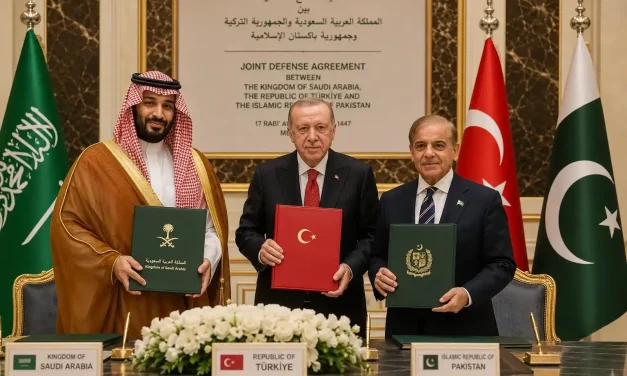
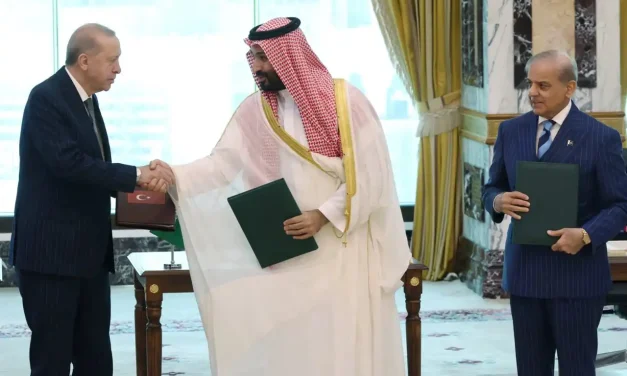
SCFR Online – Interview: The signing of the Makkah agreement between Saudi Arabia, Pakistan, and Turkey has raised questions about the future of the region’s security structure and the position of these countries in West Asian equations. Can this agreement become a genuine collective defense mechanism, or does it have more of a political and deterrent function than creating new military capacity?

Strategic Implications of the Reduction of US Weapons Stockpiles

SCFR Online – Opinion: The continuation of the US war against Iran, in addition to increasing operational costs, has called into question the actual capacity of the American arsenal to simultaneously fulfill security commitments on multiple fronts; an issue that affects deterrence, defense production capacity, and Washington’s resource prioritization.

The Formation of a New Order in Relations Between Powers

SCFR Online – Opinion: The Russia-Ukraine war and the war of the United States and the Israeli regime against Iran have been formed with different objectives and actors, but field and political developments indicate that they are not entirely separate from one another.

An Analysis of the Makkah Defense Pact

SCFR Online – Opinion: On Friday, August 7, the heads of state of three countries – Saudi Arabia, Turkey, and Pakistan – signed a text under the title “Makkah Joint Defense Agreement.”

Dimensions and challenges of the initiative to revive the Hejaz Railway

Strategic Council Online – Note: The initiative to revive the Hejaz Railway, beyond being a transportation project, constitutes an attempt to redefine geopolitics, the economy, and Turkey’s regional position; however, its realization appears to face significant financial, security, and institutional challenges.

Loading

Últimas publicaciones

Increasing criticism of the extensive Zionist lobby network

SCFR Online – Opinion: An examination of the mechanisms of the Israeli regime’s influence in the United States depicts a complex picture of shared interests, strategic dependencies, and the limitations of this relationship.

Realities of the Tripartite Makkah Pact

SCFR Online – Interview: The signing of the Makkah agreement between Saudi Arabia, Pakistan, and Turkey has raised questions about the future of the region’s security structure and the position of these countries in West Asian equations. Can this agreement become a genuine collective defense mechanism, or does it have more of a political and deterrent function than creating new military capacity?

Strategic Implications of the Reduction of US Weapons Stockpiles

SCFR Online – Opinion: The continuation of the US war against Iran, in addition to increasing operational costs, has called into question the actual capacity of the American arsenal to simultaneously fulfill security commitments on multiple fronts; an issue that affects deterrence, defense production capacity, and Washington’s resource prioritization.

The Formation of a New Order in Relations Between Powers

SCFR Online – Opinion: The Russia-Ukraine war and the war of the United States and the Israeli regime against Iran have been formed with different objectives and actors, but field and political developments indicate that they are not entirely separate from one another.

An Analysis of the Makkah Defense Pact

SCFR Online – Opinion: On Friday, August 7, the heads of state of three countries – Saudi Arabia, Turkey, and Pakistan – signed a text under the title “Makkah Joint Defense Agreement.”

Dimensions and challenges of the initiative to revive the Hejaz Railway

Strategic Council Online – Note: The initiative to revive the Hejaz Railway, beyond being a transportation project, constitutes an attempt to redefine geopolitics, the economy, and Turkey’s regional position; however, its realization appears to face significant financial, security, and institutional challenges.

Loading

DERNIER CONTENU

Increasing criticism of the extensive Zionist lobby network

SCFR Online – Opinion: An examination of the mechanisms of the Israeli regime’s influence in the United States depicts a complex picture of shared interests, strategic dependencies, and the limitations of this relationship.

Realities of the Tripartite Makkah Pact

SCFR Online – Interview: The signing of the Makkah agreement between Saudi Arabia, Pakistan, and Turkey has raised questions about the future of the region’s security structure and the position of these countries in West Asian equations. Can this agreement become a genuine collective defense mechanism, or does it have more of a political and deterrent function than creating new military capacity?

Strategic Implications of the Reduction of US Weapons Stockpiles

SCFR Online – Opinion: The continuation of the US war against Iran, in addition to increasing operational costs, has called into question the actual capacity of the American arsenal to simultaneously fulfill security commitments on multiple fronts; an issue that affects deterrence, defense production capacity, and Washington’s resource prioritization.

The Formation of a New Order in Relations Between Powers

SCFR Online – Opinion: The Russia-Ukraine war and the war of the United States and the Israeli regime against Iran have been formed with different objectives and actors, but field and political developments indicate that they are not entirely separate from one another.

An Analysis of the Makkah Defense Pact

SCFR Online – Opinion: On Friday, August 7, the heads of state of three countries – Saudi Arabia, Turkey, and Pakistan – signed a text under the title “Makkah Joint Defense Agreement.”

Dimensions and challenges of the initiative to revive the Hejaz Railway

Strategic Council Online – Note: The initiative to revive the Hejaz Railway, beyond being a transportation project, constitutes an attempt to redefine geopolitics, the economy, and Turkey’s regional position; however, its realization appears to face significant financial, security, and institutional challenges.

Loading

DERNIER CONTENU

Increasing criticism of the extensive Zionist lobby network

SCFR Online – Opinion: An examination of the mechanisms of the Israeli regime’s influence in the United States depicts a complex picture of shared interests, strategic dependencies, and the limitations of this relationship.

Realities of the Tripartite Makkah Pact

SCFR Online – Interview: The signing of the Makkah agreement between Saudi Arabia, Pakistan, and Turkey has raised questions about the future of the region’s security structure and the position of these countries in West Asian equations. Can this agreement become a genuine collective defense mechanism, or does it have more of a political and deterrent function than creating new military capacity?

Strategic Implications of the Reduction of US Weapons Stockpiles

SCFR Online – Opinion: The continuation of the US war against Iran, in addition to increasing operational costs, has called into question the actual capacity of the American arsenal to simultaneously fulfill security commitments on multiple fronts; an issue that affects deterrence, defense production capacity, and Washington’s resource prioritization.

The Formation of a New Order in Relations Between Powers

SCFR Online – Opinion: The Russia-Ukraine war and the war of the United States and the Israeli regime against Iran have been formed with different objectives and actors, but field and political developments indicate that they are not entirely separate from one another.

An Analysis of the Makkah Defense Pact

SCFR Online – Opinion: On Friday, August 7, the heads of state of three countries – Saudi Arabia, Turkey, and Pakistan – signed a text under the title “Makkah Joint Defense Agreement.”

Dimensions and challenges of the initiative to revive the Hejaz Railway

Strategic Council Online – Note: The initiative to revive the Hejaz Railway, beyond being a transportation project, constitutes an attempt to redefine geopolitics, the economy, and Turkey’s regional position; however, its realization appears to face significant financial, security, and institutional challenges.

Loading

DERNIER CONTENU

Increasing criticism of the extensive Zionist lobby network

SCFR Online – Opinion: An examination of the mechanisms of the Israeli regime’s influence in the United States depicts a complex picture of shared interests, strategic dependencies, and the limitations of this relationship.

Realities of the Tripartite Makkah Pact

SCFR Online – Interview: The signing of the Makkah agreement between Saudi Arabia, Pakistan, and Turkey has raised questions about the future of the region’s security structure and the position of these countries in West Asian equations. Can this agreement become a genuine collective defense mechanism, or does it have more of a political and deterrent function than creating new military capacity?

Strategic Implications of the Reduction of US Weapons Stockpiles

SCFR Online – Opinion: The continuation of the US war against Iran, in addition to increasing operational costs, has called into question the actual capacity of the American arsenal to simultaneously fulfill security commitments on multiple fronts; an issue that affects deterrence, defense production capacity, and Washington’s resource prioritization.

The Formation of a New Order in Relations Between Powers

SCFR Online – Opinion: The Russia-Ukraine war and the war of the United States and the Israeli regime against Iran have been formed with different objectives and actors, but field and political developments indicate that they are not entirely separate from one another.

An Analysis of the Makkah Defense Pact

SCFR Online – Opinion: On Friday, August 7, the heads of state of three countries – Saudi Arabia, Turkey, and Pakistan – signed a text under the title “Makkah Joint Defense Agreement.”

Dimensions and challenges of the initiative to revive the Hejaz Railway

Strategic Council Online – Note: The initiative to revive the Hejaz Railway, beyond being a transportation project, constitutes an attempt to redefine geopolitics, the economy, and Turkey’s regional position; however, its realization appears to face significant financial, security, and institutional challenges.

Loading