America’s Strategy in East Asia: Management of Tension; Containment of China

Strategic Council Online: Interview: An international affairs expert says that America's economic and military policies and plans in East Asia are such that they will move towards coping with tension in this region.

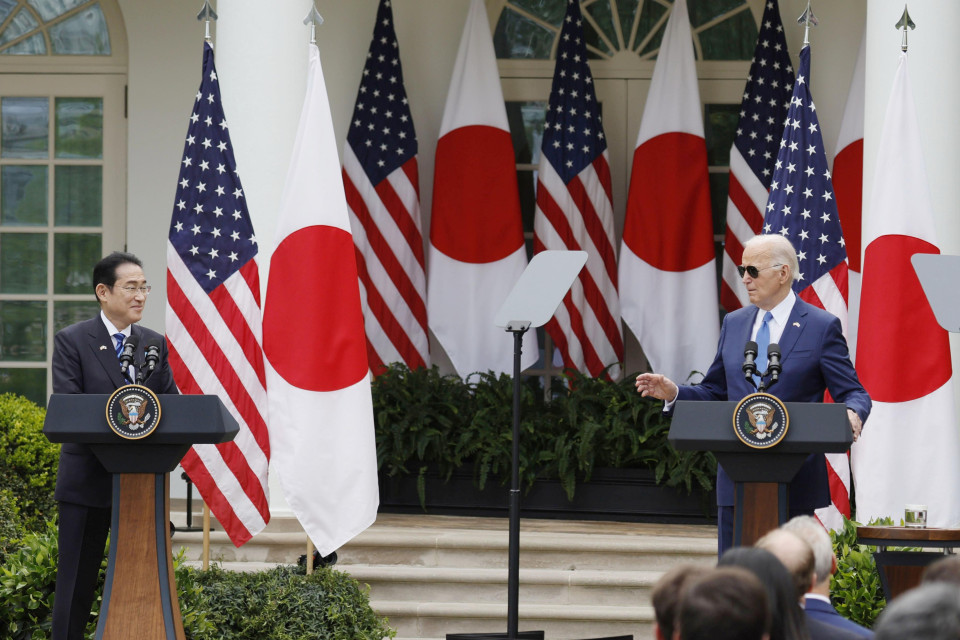
In an interview with the website of the Strategic Council of Foreign Relations, referring to the recent visit of the Japanese Prime Minister to America and Washington’s strategy for managing or escalating tensions in East Asia, Ali Bigdeli said: America has been committed to supporting and protecting Japan’s security since 1951, and in return, Japan has agreed not to have an offensive army within this framework. Therefore, the increase in the share of Japan’s military budget last year does not mean that they have decided to change their plans and policies.

In his recent visit to America, the Prime Minister of Japan emphasized that the military power of the United States must be preserved and dominant everywhere in the world. Therefore, America seeks to manage the East Asian region in terms of security, and this management complies with the policy of containing China.

Referring to the recent trip of the US Treasury Secretary to China in the midst of the Ukraine war and the escalation of tension between Beijing and Washington, Bigdeli stated: This trip had the message that America does not want to alienate China because the security of East Asia, including Japan and South Korea, is threatened, and America does not want that.

Emphasizing that America’s policy in East Asia is based on tension management and that this is America’s long-term strategy, Bigdeli said that America is not looking for conflict in East Asia. Considering that America is trying to shift its attention and focus from the Middle East to China, it will not welcome the escalation of tension in East Asia.

The international affairs expert said about the possibility of expanding the nuclear deterrence policy in this region by the United States and its allies to deal with the military and economic threat of China: Nuclear centers in the world have endangered global security enough; meantime, any attempt to increase nuclear deterrence threatens the security of Japan and South Korea.

Considering North Korea’s alignment with China, intensifying the deterrence policy may provoke North Korea, which is not good for the East Asian region.

He talked about increasing cooperation between America and Japan and China’s view on this issue: The Chindo do not favor war and confrontation; their long-term plans and policies are economic, which has become an essential concern of the United States.  Washington does not want Beijing as an economic competitor and the world’s number one economy. Taking all these into consideration, it must be noted that the US will go towards the management of tension and space in East Asia in the medium term, so it is unlikely that the US, with the cooperation and participation of Japan and South Korea, will start a large-scale nuclear armament in the region. By saying that America made a mistake for a while and  adopted a revenge policy against China; Beijing, too, provoked and threatened the region by showing a green card to North Korea, and it was tilted toward Russia, on the other hand. He noted: Today, the Americans have realized that they made a mistake, and they are trying not to put China in such a situation again.


0 Comments

LATEST CONTENT

An Analysis of the Makkah Defense Pact

SCFR Online – Opinion: On Friday, August 7, the heads of state of three countries – Saudi Arabia, Turkey, and Pakistan – signed a text under the title “Makkah Joint Defense Agreement.”

Dimensions and challenges of the initiative to revive the Hejaz Railway

Strategic Council Online – Note: The initiative to revive the Hejaz Railway, beyond being a transportation project, constitutes an attempt to redefine geopolitics, the economy, and Turkey’s regional position; however, its realization appears to face significant financial, security, and institutional challenges.

Balancing in the chain of chokepoints; from sea-based deterrence to pluralistic diplomacy

Strategic Council Online – Note: Recent developments in the political geography of West Asia, from rising tensions in the Persian Gulf to missile and drone activities in the Red Sea and the recent warning by Kaja Kallas, the European Union’s foreign policy chief, regarding the threat to freedom of navigation, indicate a key pattern shift; the US-Iran war has moved beyond the scope of a regional and local confrontation and has linked two vital passageways for the global economy: the Strait of Hormuz and the Bab el-Mandeb Strait.

Loading

Últimas publicaciones

An Analysis of the Makkah Defense Pact

SCFR Online – Opinion: On Friday, August 7, the heads of state of three countries – Saudi Arabia, Turkey, and Pakistan – signed a text under the title “Makkah Joint Defense Agreement.”

Dimensions and challenges of the initiative to revive the Hejaz Railway

Strategic Council Online – Note: The initiative to revive the Hejaz Railway, beyond being a transportation project, constitutes an attempt to redefine geopolitics, the economy, and Turkey’s regional position; however, its realization appears to face significant financial, security, and institutional challenges.

Balancing in the chain of chokepoints; from sea-based deterrence to pluralistic diplomacy

Strategic Council Online – Note: Recent developments in the political geography of West Asia, from rising tensions in the Persian Gulf to missile and drone activities in the Red Sea and the recent warning by Kaja Kallas, the European Union’s foreign policy chief, regarding the threat to freedom of navigation, indicate a key pattern shift; the US-Iran war has moved beyond the scope of a regional and local confrontation and has linked two vital passageways for the global economy: the Strait of Hormuz and the Bab el-Mandeb Strait.

Loading

DERNIER CONTENU

An Analysis of the Makkah Defense Pact

SCFR Online – Opinion: On Friday, August 7, the heads of state of three countries – Saudi Arabia, Turkey, and Pakistan – signed a text under the title “Makkah Joint Defense Agreement.”

Dimensions and challenges of the initiative to revive the Hejaz Railway

Strategic Council Online – Note: The initiative to revive the Hejaz Railway, beyond being a transportation project, constitutes an attempt to redefine geopolitics, the economy, and Turkey’s regional position; however, its realization appears to face significant financial, security, and institutional challenges.

Balancing in the chain of chokepoints; from sea-based deterrence to pluralistic diplomacy

Strategic Council Online – Note: Recent developments in the political geography of West Asia, from rising tensions in the Persian Gulf to missile and drone activities in the Red Sea and the recent warning by Kaja Kallas, the European Union’s foreign policy chief, regarding the threat to freedom of navigation, indicate a key pattern shift; the US-Iran war has moved beyond the scope of a regional and local confrontation and has linked two vital passageways for the global economy: the Strait of Hormuz and the Bab el-Mandeb Strait.

Loading

DERNIER CONTENU

An Analysis of the Makkah Defense Pact

SCFR Online – Opinion: On Friday, August 7, the heads of state of three countries – Saudi Arabia, Turkey, and Pakistan – signed a text under the title “Makkah Joint Defense Agreement.”

Dimensions and challenges of the initiative to revive the Hejaz Railway

Strategic Council Online – Note: The initiative to revive the Hejaz Railway, beyond being a transportation project, constitutes an attempt to redefine geopolitics, the economy, and Turkey’s regional position; however, its realization appears to face significant financial, security, and institutional challenges.

Balancing in the chain of chokepoints; from sea-based deterrence to pluralistic diplomacy

Strategic Council Online – Note: Recent developments in the political geography of West Asia, from rising tensions in the Persian Gulf to missile and drone activities in the Red Sea and the recent warning by Kaja Kallas, the European Union’s foreign policy chief, regarding the threat to freedom of navigation, indicate a key pattern shift; the US-Iran war has moved beyond the scope of a regional and local confrontation and has linked two vital passageways for the global economy: the Strait of Hormuz and the Bab el-Mandeb Strait.

Loading

DERNIER CONTENU

An Analysis of the Makkah Defense Pact

SCFR Online – Opinion: On Friday, August 7, the heads of state of three countries – Saudi Arabia, Turkey, and Pakistan – signed a text under the title “Makkah Joint Defense Agreement.”

Dimensions and challenges of the initiative to revive the Hejaz Railway

Strategic Council Online – Note: The initiative to revive the Hejaz Railway, beyond being a transportation project, constitutes an attempt to redefine geopolitics, the economy, and Turkey’s regional position; however, its realization appears to face significant financial, security, and institutional challenges.

Balancing in the chain of chokepoints; from sea-based deterrence to pluralistic diplomacy

Strategic Council Online – Note: Recent developments in the political geography of West Asia, from rising tensions in the Persian Gulf to missile and drone activities in the Red Sea and the recent warning by Kaja Kallas, the European Union’s foreign policy chief, regarding the threat to freedom of navigation, indicate a key pattern shift; the US-Iran war has moved beyond the scope of a regional and local confrontation and has linked two vital passageways for the global economy: the Strait of Hormuz and the Bab el-Mandeb Strait.

Loading



