The Impact of the Baghdad-Erbil Agreement on the Balance of Power in Iraq

2025/10/02 | Economy, interview, Top News

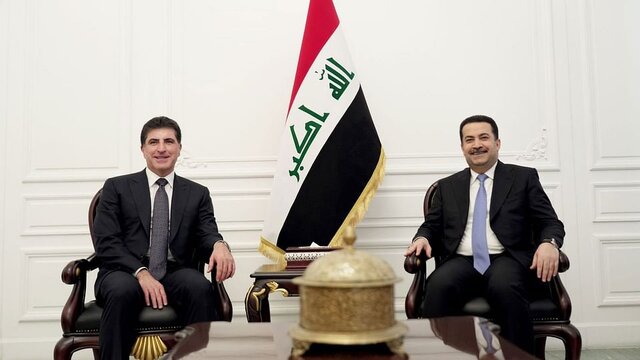
Online Strategic Council - Interview: A West Asia affairs expert stated that oil exports from the Kurdistan Region have resumed after a halt of over two years, following a tripartite agreement between Baghdad, Erbil, and oil companies. These exports had been suspended since March 2023 due to a ruling by the Paris arbitration court against Turkey. The court stated that Ankara had violated the 1973 pipeline agreement with Baghdad by allowing Erbil to export oil independently since 2014. The Iraqi Ministry of Oil announced that oil exports have commenced at full capacity and are continuing without any technical issues. The ministry described the recent move as a significant step toward strengthening the management of national wealth. Officials of the Kurdistan Regional Government (KRG) also described this event as historic and a significant achievement for the whole of Iraq. On the other hand, the Baghdad government announced that the resumption of oil exports from the Kurdistan Region could add between $ 400 million and $ 500 million monthly to the federal budget and play a significant role in boosting national revenues.

Ardeshir Pashang, in an interview with the Strategic Council on Foreign Relations’ website, analyzed the Baghdad-Erbil oil agreement from economic, political, and geopolitical perspectives. Emphasizing that “this agreement is currently only a temporary agreement and, according to its provisions, is set to be reviewed again in 2026,” he said: “Although this contract is ostensibly considered a positive step and could resolve some of the Kurdistan Region’s financial problems, experience has shown that fluctuations and deep mistrust have always accompanied the relationship between Baghdad and Erbil, and one cannot speak with certainty about its long-term success.”

He noted: “Baghdad’s objectives in this agreement, besides reducing economic pressure on the Region, were to prevent independent oil exports by Erbil and to restore the central government’s sovereign role in this sphere; such that, based on the agreement’s provisions, SOMO, as the official arm of the Iraqi Ministry of Oil, has taken responsibility for exports; however, in practice, cooperation has been defined between this company and the Region’s oil institutions. This, on one hand, is an indication of the strengthened position of the central government and, on the other hand, provides an opportunity for Erbil to recover part of its needed financial resources.”

In another part of his analysis, he addressed “Turkey’s role in this equation”. He recalled: “Ankara has had close relations with the Kurdistan Region, and particularly with the Kurdistan Democratic Party (Barzani’s party), over the past years and had connected an independent pipeline to the port of Ceyhan without Baghdad’s consent to export the Region’s oil; but the complaint by the Iraqi government and subsequent developments led to the halt of this process.” According to him: “Due to the extensive economic interests Turkey has in the export of the Region’s oil, it welcomes the revival of this pipeline, and the new agreement could also secure Turkey’s economic interests, although this time Baghdad’s role will be more prominent, and this itself changes the previous equations.”

This West Asia affairs expert believes: “The significant economic relations between the Kurdistan Region and Turkey could be strengthened if this agreement is stabilized; but experience has shown that whenever relations between Baghdad and Erbil have reached a critical point, Turkey has also hesitated in adopting a stable position and has mostly pursued its own short-term economic interests.”

Referring to the experience of past agreements between Baghdad and Erbil, he recalled: “Previously, agreements have been reached numerous times on issues such as the budget, disputed territories, and payment of salaries for the Region’s employees, but each time long-standing differences and mutual mistrust have prevented their continuity.” According to this West Asia affairs expert, “Centrifugal tendencies in the Kurdistan Region and, in contrast, Baghdad’s insistence on the central government model, have caused many agreements to halt midway.” He emphasized: “According to the Iraqi constitution, the country is a federal state, not a centralized one, but in practice, Baghdad’s leaders seek to establish a centralized model of governance, while the Region tries to establish its authority through federalist practices. This is the root of many current differences.”

Pashang, analyzing the prospects of this agreement, noted: “Iraq’s parliamentary elections in Azar (the ninth month of the Iranian calendar, corresponding to November-December) could play a key role in the fate of the oil agreement and other disputed issues between Erbil and Baghdad.” He said: “Changes in political balances after the elections could either stabilize this agreement or subject it to serious challenges.” This expert also pointed to the potential geopolitical consequences of this agreement, adding: “In the event of energy crises and oil price fluctuations, the central government of Iraq, due to controlling a major portion of oil resources and also enjoying international legitimacy, will have greater weight in regional equations.” He recalled: “After the independence referendum of the Kurdistan Region in 2017 and the recapture of Kirkuk and other disputed areas by Baghdad, the balance of power shifted in favor of the central government, and this trend continues.”

However, this West Asia affairs expert emphasized: “Internal differences within the Kurdistan Region, especially between the two main parties (Barzani’s and Talabani’s parties) after the passing of Jalal Talabani, have weakened the Region’s unified position.” He added: “The failure to form a strategic agreement among Kurdish parties on one hand, and the increase in revenues and legitimacy of the Iraqi central government on the other, have caused the balance to tip more in favor of Baghdad. Furthermore, the ruling of the French international court against the independent oil exports of the Region has also intensified this trend and ended in favor of the central government.” However, he noted: “Support from the United States and some European countries for Erbil has still allowed this region to maintain a position for itself in regional and international equations.”

Ardeshir Pashang, in another part of his remarks, emphasized: “Although the recent agreement is a sign of the increased role of the Iraqi central government in managing oil resources, it can simultaneously provide an opportunity for the economic revival of the Kurdistan Region and create a kind of balance between Baghdad and Erbil.” The West Asia affairs expert added: “It is still too early to judge the long-term success of this agreement, because internal political developments in Iraq, especially the upcoming elections, as well as the level of trust between the parties, will play a decisive role in its future.” Referring to Iraq’s structural problems, including widespread corruption, managerial inefficiency, and deep identity divides, he clarified: “This country still faces numerous challenges, and any agreement can only remain stable if these problems are resolved at the national level.”

According to this West Asia affairs expert, “The recent oil agreement should be seen as an effort to temporarily manage differences, not a definitive solution to end them.” He concluded by noting: “The future of Baghdad-Erbil relations, and consequently the fate of this agreement, depends on numerous variables, many of which are beyond the control of the parties and are also tied to regional and international developments.”


0 Comments

LATEST CONTENT

The Inseparability of the Lebanese Front from the Axis of Resistance

SCFR Online–Opinion: By providing an extensive network of social, healthcare, educational, and post-war reconstruction services, Hezbollah has established a strong social base for itself among Lebanon’s Shiites and Sunnis, and even beyond that, among other segments of Lebanese society, including Christians. Hezbollah has never been an external actor imposed upon Lebanon; rather, it is a phenomenon fundamentally born out of the occupation and crimes of the Zionist regime and itself influenced by popular resistance.

The Increasing Efforts of the Zionist Regime to Redefine Borders and the Regional Order and Its Consequences

SCFR Online– Opinion: Security and military developments in the region over recent months indicate that the ongoing crises and wars in Gaza, southern Lebanon, and parts of Syrian territory encompass broader dimensions of geopolitical and geostrategic transformations. In this context, the increased military presence and control of the Zionist regime over parts of the territories of these areas, along with proposals regarding the creation of buffer zones or even the expansion of security borders, have raised serious questions about the future of the regional order and its consequences for the countries of West Asia.

The Components of Iran’s Deterrence Power

SCFR Online – Opinion: At a time when regional security equations have reached a sensitive stage under the influence of Iran’s strategic confrontation with the United States and the Zionist regime, the question of the nature of Tehran’s defensive power has gained greater significance than ever before. While Washington and Tel Aviv rely on their technological superiority, the Islamic Republic of Iran has presented a model of deterrence that extends beyond the material calculations of the world’s classical militaries. This power, rooted in the connection between “the field” and “the people,” has not only altered the balance of power in recent conflicts but has also disrupted adversaries’ calculations when confronting Iran’s strategic depth.

The Persian Gulf; A Cold Battlefield Between Beijing and Washington

SCFR Online – Opinion: The competition in recent years between the United States and China encompasses various geographical regions—including the Indo-Pacific, West Asia, the Arctic and Antarctic, and Africa—as well as multiple domains such as economics and technology. Within this context, a strategic competition has also emerged in the Persian Gulf region across economic, technological, and military spheres.

Europe’s Enduring Dependence on Persian Gulf Energy

SCFR Online – Opinion: The dominant discourse in the field of European energy security over the past two decades has revolved around diversification of supply sources and the gradual reduction of dependence on fossil fuels. This narrative, which gained particular momentum after the Ukraine gas crisis in 2006 and its intensification in 2014 and 2022, was based on the assumption that Europe could free itself from the geopolitical vulnerabilities arising from dependence on specific suppliers through investment in renewable energy, imports of liquefied natural gas from diversified sources, and the establishment of new infrastructure. However, a closer analysis of energy trade data and the structure of the global oil and gas supply chain presents a different picture. Europe has not only failed to meaningfully reduce its dependence on the Persian Gulf, but in some sectors — particularly in liquefied natural gas imports — this dependence has deepened. This reality, which is often overlooked in public discourse, raises fundamental questions about the sustainability of Europe’s energy security strategies and their impact on regional power equations.

Loading

Últimas publicaciones

The Inseparability of the Lebanese Front from the Axis of Resistance

SCFR Online–Opinion: By providing an extensive network of social, healthcare, educational, and post-war reconstruction services, Hezbollah has established a strong social base for itself among Lebanon’s Shiites and Sunnis, and even beyond that, among other segments of Lebanese society, including Christians. Hezbollah has never been an external actor imposed upon Lebanon; rather, it is a phenomenon fundamentally born out of the occupation and crimes of the Zionist regime and itself influenced by popular resistance.

The Increasing Efforts of the Zionist Regime to Redefine Borders and the Regional Order and Its Consequences

SCFR Online– Opinion: Security and military developments in the region over recent months indicate that the ongoing crises and wars in Gaza, southern Lebanon, and parts of Syrian territory encompass broader dimensions of geopolitical and geostrategic transformations. In this context, the increased military presence and control of the Zionist regime over parts of the territories of these areas, along with proposals regarding the creation of buffer zones or even the expansion of security borders, have raised serious questions about the future of the regional order and its consequences for the countries of West Asia.

The Components of Iran’s Deterrence Power

SCFR Online – Opinion: At a time when regional security equations have reached a sensitive stage under the influence of Iran’s strategic confrontation with the United States and the Zionist regime, the question of the nature of Tehran’s defensive power has gained greater significance than ever before. While Washington and Tel Aviv rely on their technological superiority, the Islamic Republic of Iran has presented a model of deterrence that extends beyond the material calculations of the world’s classical militaries. This power, rooted in the connection between “the field” and “the people,” has not only altered the balance of power in recent conflicts but has also disrupted adversaries’ calculations when confronting Iran’s strategic depth.

The Persian Gulf; A Cold Battlefield Between Beijing and Washington

SCFR Online – Opinion: The competition in recent years between the United States and China encompasses various geographical regions—including the Indo-Pacific, West Asia, the Arctic and Antarctic, and Africa—as well as multiple domains such as economics and technology. Within this context, a strategic competition has also emerged in the Persian Gulf region across economic, technological, and military spheres.

Europe’s Enduring Dependence on Persian Gulf Energy

SCFR Online – Opinion: The dominant discourse in the field of European energy security over the past two decades has revolved around diversification of supply sources and the gradual reduction of dependence on fossil fuels. This narrative, which gained particular momentum after the Ukraine gas crisis in 2006 and its intensification in 2014 and 2022, was based on the assumption that Europe could free itself from the geopolitical vulnerabilities arising from dependence on specific suppliers through investment in renewable energy, imports of liquefied natural gas from diversified sources, and the establishment of new infrastructure. However, a closer analysis of energy trade data and the structure of the global oil and gas supply chain presents a different picture. Europe has not only failed to meaningfully reduce its dependence on the Persian Gulf, but in some sectors — particularly in liquefied natural gas imports — this dependence has deepened. This reality, which is often overlooked in public discourse, raises fundamental questions about the sustainability of Europe’s energy security strategies and their impact on regional power equations.

Loading

DERNIER CONTENU

The Inseparability of the Lebanese Front from the Axis of Resistance

SCFR Online–Opinion: By providing an extensive network of social, healthcare, educational, and post-war reconstruction services, Hezbollah has established a strong social base for itself among Lebanon’s Shiites and Sunnis, and even beyond that, among other segments of Lebanese society, including Christians. Hezbollah has never been an external actor imposed upon Lebanon; rather, it is a phenomenon fundamentally born out of the occupation and crimes of the Zionist regime and itself influenced by popular resistance.

The Increasing Efforts of the Zionist Regime to Redefine Borders and the Regional Order and Its Consequences

SCFR Online– Opinion: Security and military developments in the region over recent months indicate that the ongoing crises and wars in Gaza, southern Lebanon, and parts of Syrian territory encompass broader dimensions of geopolitical and geostrategic transformations. In this context, the increased military presence and control of the Zionist regime over parts of the territories of these areas, along with proposals regarding the creation of buffer zones or even the expansion of security borders, have raised serious questions about the future of the regional order and its consequences for the countries of West Asia.

The Components of Iran’s Deterrence Power

SCFR Online – Opinion: At a time when regional security equations have reached a sensitive stage under the influence of Iran’s strategic confrontation with the United States and the Zionist regime, the question of the nature of Tehran’s defensive power has gained greater significance than ever before. While Washington and Tel Aviv rely on their technological superiority, the Islamic Republic of Iran has presented a model of deterrence that extends beyond the material calculations of the world’s classical militaries. This power, rooted in the connection between “the field” and “the people,” has not only altered the balance of power in recent conflicts but has also disrupted adversaries’ calculations when confronting Iran’s strategic depth.

The Persian Gulf; A Cold Battlefield Between Beijing and Washington

SCFR Online – Opinion: The competition in recent years between the United States and China encompasses various geographical regions—including the Indo-Pacific, West Asia, the Arctic and Antarctic, and Africa—as well as multiple domains such as economics and technology. Within this context, a strategic competition has also emerged in the Persian Gulf region across economic, technological, and military spheres.

Europe’s Enduring Dependence on Persian Gulf Energy

SCFR Online – Opinion: The dominant discourse in the field of European energy security over the past two decades has revolved around diversification of supply sources and the gradual reduction of dependence on fossil fuels. This narrative, which gained particular momentum after the Ukraine gas crisis in 2006 and its intensification in 2014 and 2022, was based on the assumption that Europe could free itself from the geopolitical vulnerabilities arising from dependence on specific suppliers through investment in renewable energy, imports of liquefied natural gas from diversified sources, and the establishment of new infrastructure. However, a closer analysis of energy trade data and the structure of the global oil and gas supply chain presents a different picture. Europe has not only failed to meaningfully reduce its dependence on the Persian Gulf, but in some sectors — particularly in liquefied natural gas imports — this dependence has deepened. This reality, which is often overlooked in public discourse, raises fundamental questions about the sustainability of Europe’s energy security strategies and their impact on regional power equations.

Loading

DERNIER CONTENU

The Inseparability of the Lebanese Front from the Axis of Resistance

SCFR Online–Opinion: By providing an extensive network of social, healthcare, educational, and post-war reconstruction services, Hezbollah has established a strong social base for itself among Lebanon’s Shiites and Sunnis, and even beyond that, among other segments of Lebanese society, including Christians. Hezbollah has never been an external actor imposed upon Lebanon; rather, it is a phenomenon fundamentally born out of the occupation and crimes of the Zionist regime and itself influenced by popular resistance.

The Increasing Efforts of the Zionist Regime to Redefine Borders and the Regional Order and Its Consequences

SCFR Online– Opinion: Security and military developments in the region over recent months indicate that the ongoing crises and wars in Gaza, southern Lebanon, and parts of Syrian territory encompass broader dimensions of geopolitical and geostrategic transformations. In this context, the increased military presence and control of the Zionist regime over parts of the territories of these areas, along with proposals regarding the creation of buffer zones or even the expansion of security borders, have raised serious questions about the future of the regional order and its consequences for the countries of West Asia.

The Components of Iran’s Deterrence Power

SCFR Online – Opinion: At a time when regional security equations have reached a sensitive stage under the influence of Iran’s strategic confrontation with the United States and the Zionist regime, the question of the nature of Tehran’s defensive power has gained greater significance than ever before. While Washington and Tel Aviv rely on their technological superiority, the Islamic Republic of Iran has presented a model of deterrence that extends beyond the material calculations of the world’s classical militaries. This power, rooted in the connection between “the field” and “the people,” has not only altered the balance of power in recent conflicts but has also disrupted adversaries’ calculations when confronting Iran’s strategic depth.

The Persian Gulf; A Cold Battlefield Between Beijing and Washington

SCFR Online – Opinion: The competition in recent years between the United States and China encompasses various geographical regions—including the Indo-Pacific, West Asia, the Arctic and Antarctic, and Africa—as well as multiple domains such as economics and technology. Within this context, a strategic competition has also emerged in the Persian Gulf region across economic, technological, and military spheres.

Europe’s Enduring Dependence on Persian Gulf Energy

SCFR Online – Opinion: The dominant discourse in the field of European energy security over the past two decades has revolved around diversification of supply sources and the gradual reduction of dependence on fossil fuels. This narrative, which gained particular momentum after the Ukraine gas crisis in 2006 and its intensification in 2014 and 2022, was based on the assumption that Europe could free itself from the geopolitical vulnerabilities arising from dependence on specific suppliers through investment in renewable energy, imports of liquefied natural gas from diversified sources, and the establishment of new infrastructure. However, a closer analysis of energy trade data and the structure of the global oil and gas supply chain presents a different picture. Europe has not only failed to meaningfully reduce its dependence on the Persian Gulf, but in some sectors — particularly in liquefied natural gas imports — this dependence has deepened. This reality, which is often overlooked in public discourse, raises fundamental questions about the sustainability of Europe’s energy security strategies and their impact on regional power equations.

Loading

DERNIER CONTENU

The Inseparability of the Lebanese Front from the Axis of Resistance

SCFR Online–Opinion: By providing an extensive network of social, healthcare, educational, and post-war reconstruction services, Hezbollah has established a strong social base for itself among Lebanon’s Shiites and Sunnis, and even beyond that, among other segments of Lebanese society, including Christians. Hezbollah has never been an external actor imposed upon Lebanon; rather, it is a phenomenon fundamentally born out of the occupation and crimes of the Zionist regime and itself influenced by popular resistance.

The Increasing Efforts of the Zionist Regime to Redefine Borders and the Regional Order and Its Consequences

SCFR Online– Opinion: Security and military developments in the region over recent months indicate that the ongoing crises and wars in Gaza, southern Lebanon, and parts of Syrian territory encompass broader dimensions of geopolitical and geostrategic transformations. In this context, the increased military presence and control of the Zionist regime over parts of the territories of these areas, along with proposals regarding the creation of buffer zones or even the expansion of security borders, have raised serious questions about the future of the regional order and its consequences for the countries of West Asia.

The Components of Iran’s Deterrence Power

SCFR Online – Opinion: At a time when regional security equations have reached a sensitive stage under the influence of Iran’s strategic confrontation with the United States and the Zionist regime, the question of the nature of Tehran’s defensive power has gained greater significance than ever before. While Washington and Tel Aviv rely on their technological superiority, the Islamic Republic of Iran has presented a model of deterrence that extends beyond the material calculations of the world’s classical militaries. This power, rooted in the connection between “the field” and “the people,” has not only altered the balance of power in recent conflicts but has also disrupted adversaries’ calculations when confronting Iran’s strategic depth.

The Persian Gulf; A Cold Battlefield Between Beijing and Washington

SCFR Online – Opinion: The competition in recent years between the United States and China encompasses various geographical regions—including the Indo-Pacific, West Asia, the Arctic and Antarctic, and Africa—as well as multiple domains such as economics and technology. Within this context, a strategic competition has also emerged in the Persian Gulf region across economic, technological, and military spheres.

Europe’s Enduring Dependence on Persian Gulf Energy

SCFR Online – Opinion: The dominant discourse in the field of European energy security over the past two decades has revolved around diversification of supply sources and the gradual reduction of dependence on fossil fuels. This narrative, which gained particular momentum after the Ukraine gas crisis in 2006 and its intensification in 2014 and 2022, was based on the assumption that Europe could free itself from the geopolitical vulnerabilities arising from dependence on specific suppliers through investment in renewable energy, imports of liquefied natural gas from diversified sources, and the establishment of new infrastructure. However, a closer analysis of energy trade data and the structure of the global oil and gas supply chain presents a different picture. Europe has not only failed to meaningfully reduce its dependence on the Persian Gulf, but in some sectors — particularly in liquefied natural gas imports — this dependence has deepened. This reality, which is often overlooked in public discourse, raises fundamental questions about the sustainability of Europe’s energy security strategies and their impact on regional power equations.

Loading



