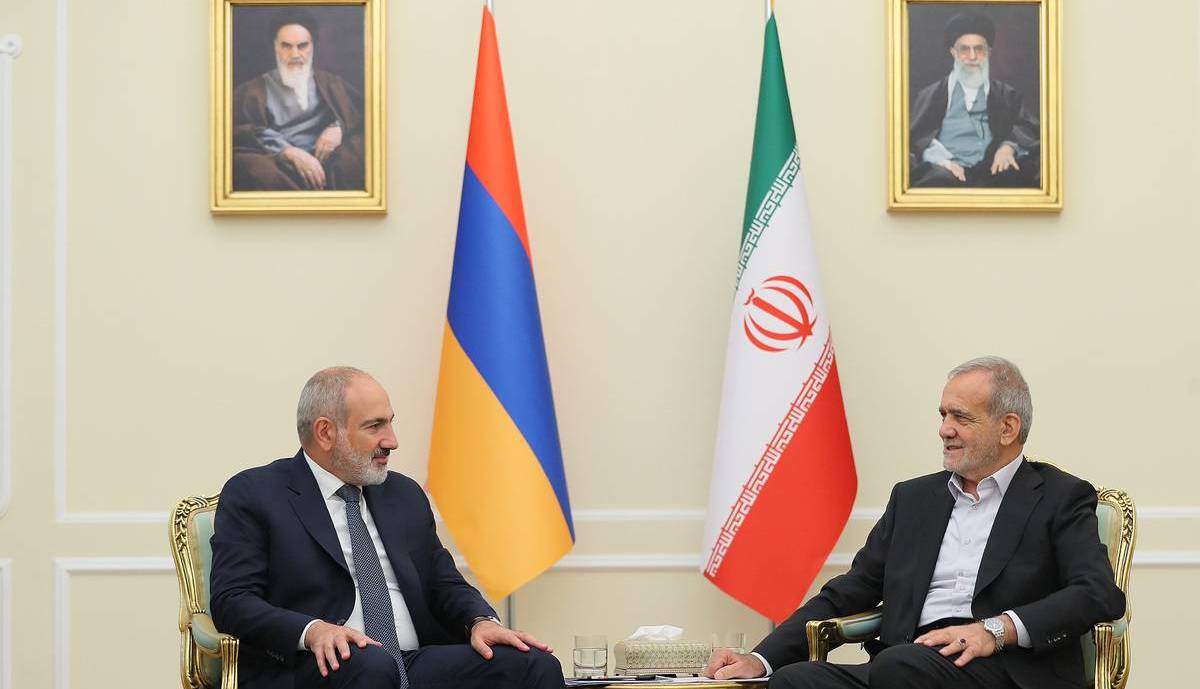
An Analysis of Iran’s Strategy in Central Asia and the Caucasus

2025/10/15 | interview, Politics, Top News

Online Strategic Council - Interview: An international affairs expert stated that Iran, by relying on its geo-economic capacities across various fields, should strive to solidify its position as a bridge connecting the Persian Gulf to Eurasia. However, regional and extra-regional competition for influence in Azerbaijan and Armenia has reached a critical point, where Iran's security considerations and geopolitical red lines could turn the advancement of a multi-faceted strategy into a real test for the diplomatic apparatus.

Eslam Zolqadrpour, in an interview with the website of the Strategic Council on Foreign Relations, stated: “In recent years, through the ‘Belt and Road’ initiative, China has expanded its economic presence in Central Asia and the Caucasus, altering the traditional balance of power previously held by Russia. China’s economic influence is likely to extend to political and security influence as well.”
He added: “The ‘Belt’ component of this initiative, based on reviving the Silk Road, encompasses all rail, road, and energy transmission routes, transforming China’s economic superiority in Asia into political and security dominance. Russia, which has suffered from economic inefficiency in recent decades, has ceded regional trade to China. The countries of Central Asia and the Caucasus, with their rich resources and proximity to China, have become an inexhaustible source of raw materials for Beijing’s economy.”
According to this analyst, China has solidified its position in this region through bilateral and multilateral economic agreements. The decline of American and Russian military influence in Central Asia has paved the way for China’s economic and political supremacy; a supremacy now also evident in China’s relations with Afghanistan and even Russia.

The Decline of Russian Influence in the Caucasus Due to the Ukraine War
Zolqadrpour continued: “Russia is engaged in the war in Ukraine, but it still strives to maintain its historical influence in Central Asia and the Caucasus. This war has reduced Moscow’s ability to manage developments in the South Caucasus.”
He explained: “Central Asia and the Caucasus have always been the scene of geopolitical tensions and competition among regional and extra-regional powers, and now Turkey and France are also active in this region. The war in Ukraine, becoming a war of attrition, has drained Russia’s resources and reduced its influence over its southern neighbors. However, Moscow acts in line with its interests while preserving its influence as much as possible.”
He added: “The reduced role of Russia in the developments of Armenia and Azerbaijan is a direct result of the Ukraine war. The balance of power in Central Asia and the Caucasus depends on the outcome of the Ukraine war, and the role-playing of other powers is only possible with the Kremlin’s consent. Despite economic weakness, Russia’s traditional position vis-à-vis Turkey and China has been maintained. Moscow even prefers that China play a greater role in the region, as it is aligned with it within the framework of the Shanghai Cooperation Organization and BRICS.”

Ankara’s Maneuvering on Pan-Turkism
Zolqadrpour said about Turkey: “Ankara, relying on Pan-Turkism and the Organization of Turkic States, is expanding its influence in the Turkic-speaking republics of Central Asia. After Azerbaijan’s victory in the Karabakh war, Turkey seeks to turn the Caucasus into its strategic depth.”
He continued: “Turkey’s strategic depth model is based on ethnic tendencies and Ottoman nationalism and is being implemented under the management of Recep Tayyip Erdogan according to the theory of Ahmet Davutoğlu. In fact, Pan-Turkism is Turkey’s tool for influence in Central Asia and the Caucasus.”
He added: “Within the framework of the ‘Century of Turkey’ vision, Erdogan has made the Turkic world a tool for expanding territorial influence. Turkey has been seeking to change the region’s geopolitics over the past two decades and may replicate the Syrian model in Central Asia. Russia and China are concerned about Turkey’s actions and consider this policy a threat to their security. Central Asia cannot be a desirable strategic depth for Turkey because the Turkic-speaking governments fear Ankara’s domination, and Russia and China also counter it.”

Iran’s Multi-faceted Strategy
Zolqadrpour said: “In a situation where three powers—China, Russia, and Turkey—are competing for influence in Central Asia and the Caucasus, Iran must adopt a multi-faceted strategy to maintain its independent position.”
He explained: “Taking a realistic look at the developments in Central Asia and the Caucasus, it can be said that Turkey’s approach towards Iran is not one of full competition. Although Turkey enjoys a relative advantage by relying on close relations with the United States and the Israeli regime, Iran benefits from extensive cultural and civilizational assets in the region. It must activate these capacities within the framework of civilizational and cultural commonalities with these countries.”
The international affairs researcher emphasized: “Tehran must consider three practical measures: First, maintaining calm and intelligent alignment with current geopolitical changes, including measured participation in the Zangezur project; second, active engagement with China, India, and Russia to form a strategic economic and civilizational pact; and third, cooperation with regional countries in the framework of confronting common threats, especially countering terrorism and color revolutions.”
He concluded by stating: “Iran must, through timely diagnosis and intelligent alignment with developments, redefine the regional economy and trade within the framework of civilizational commonalities and turn itself into the strategic corridor connecting Central Asia to the open seas. Effective presence in the Shanghai Cooperation Organization and the BRICS, and the strengthening of active diplomacy with China and Russia, can solidify Iran’s position. Iran should never be marginalized in the developments of Central Asia, because this would mean the vulnerability of the assets and strategic position of Iranian civilization in the new world order.”

0 Comments

LATEST CONTENT

Consequences of Declining Trust in the Judiciary in Europe

SCFRonline – Opinion: The increase in public distrust of the French judicial system, which in recent surveys has reached approximately two-thirds of citizens, should be analyzed within a framework broader than temporary dissatisfaction or an emotional reaction to a particular criminal case.

Iran’s Potential Levers of Power

SCFRonline– Opinion: Iran’s geopolitical power is not limited solely to oil and the Strait of Hormuz; the unintended emergence of disruptions in the future global food and energy security chains can also demonstrate Iran’s strategic importance.

The Inseparability of the Lebanese Front from the Axis of Resistance

SCFR Online–Opinion: By providing an extensive network of social, healthcare, educational, and post-war reconstruction services, Hezbollah has established a strong social base for itself among Lebanon’s Shiites and Sunnis, and even beyond that, among other segments of Lebanese society, including Christians. Hezbollah has never been an external actor imposed upon Lebanon; rather, it is a phenomenon fundamentally born out of the occupation and crimes of the Zionist regime and itself influenced by popular resistance.

The Increasing Efforts of the Zionist Regime to Redefine Borders and the Regional Order and Its Consequences

SCFR Online– Opinion: Security and military developments in the region over recent months indicate that the ongoing crises and wars in Gaza, southern Lebanon, and parts of Syrian territory encompass broader dimensions of geopolitical and geostrategic transformations. In this context, the increased military presence and control of the Zionist regime over parts of the territories of these areas, along with proposals regarding the creation of buffer zones or even the expansion of security borders, have raised serious questions about the future of the regional order and its consequences for the countries of West Asia.

Loading

Últimas publicaciones

Consequences of Declining Trust in the Judiciary in Europe

SCFRonline – Opinion: The increase in public distrust of the French judicial system, which in recent surveys has reached approximately two-thirds of citizens, should be analyzed within a framework broader than temporary dissatisfaction or an emotional reaction to a particular criminal case.

Iran’s Potential Levers of Power

SCFRonline– Opinion: Iran’s geopolitical power is not limited solely to oil and the Strait of Hormuz; the unintended emergence of disruptions in the future global food and energy security chains can also demonstrate Iran’s strategic importance.

The Inseparability of the Lebanese Front from the Axis of Resistance

SCFR Online–Opinion: By providing an extensive network of social, healthcare, educational, and post-war reconstruction services, Hezbollah has established a strong social base for itself among Lebanon’s Shiites and Sunnis, and even beyond that, among other segments of Lebanese society, including Christians. Hezbollah has never been an external actor imposed upon Lebanon; rather, it is a phenomenon fundamentally born out of the occupation and crimes of the Zionist regime and itself influenced by popular resistance.

The Increasing Efforts of the Zionist Regime to Redefine Borders and the Regional Order and Its Consequences

SCFR Online– Opinion: Security and military developments in the region over recent months indicate that the ongoing crises and wars in Gaza, southern Lebanon, and parts of Syrian territory encompass broader dimensions of geopolitical and geostrategic transformations. In this context, the increased military presence and control of the Zionist regime over parts of the territories of these areas, along with proposals regarding the creation of buffer zones or even the expansion of security borders, have raised serious questions about the future of the regional order and its consequences for the countries of West Asia.

Loading

DERNIER CONTENU

Consequences of Declining Trust in the Judiciary in Europe

SCFRonline – Opinion: The increase in public distrust of the French judicial system, which in recent surveys has reached approximately two-thirds of citizens, should be analyzed within a framework broader than temporary dissatisfaction or an emotional reaction to a particular criminal case.

Iran’s Potential Levers of Power

SCFRonline– Opinion: Iran’s geopolitical power is not limited solely to oil and the Strait of Hormuz; the unintended emergence of disruptions in the future global food and energy security chains can also demonstrate Iran’s strategic importance.

The Inseparability of the Lebanese Front from the Axis of Resistance

SCFR Online–Opinion: By providing an extensive network of social, healthcare, educational, and post-war reconstruction services, Hezbollah has established a strong social base for itself among Lebanon’s Shiites and Sunnis, and even beyond that, among other segments of Lebanese society, including Christians. Hezbollah has never been an external actor imposed upon Lebanon; rather, it is a phenomenon fundamentally born out of the occupation and crimes of the Zionist regime and itself influenced by popular resistance.

The Increasing Efforts of the Zionist Regime to Redefine Borders and the Regional Order and Its Consequences

SCFR Online– Opinion: Security and military developments in the region over recent months indicate that the ongoing crises and wars in Gaza, southern Lebanon, and parts of Syrian territory encompass broader dimensions of geopolitical and geostrategic transformations. In this context, the increased military presence and control of the Zionist regime over parts of the territories of these areas, along with proposals regarding the creation of buffer zones or even the expansion of security borders, have raised serious questions about the future of the regional order and its consequences for the countries of West Asia.

Loading

DERNIER CONTENU

Consequences of Declining Trust in the Judiciary in Europe

SCFRonline – Opinion: The increase in public distrust of the French judicial system, which in recent surveys has reached approximately two-thirds of citizens, should be analyzed within a framework broader than temporary dissatisfaction or an emotional reaction to a particular criminal case.

Iran’s Potential Levers of Power

SCFRonline– Opinion: Iran’s geopolitical power is not limited solely to oil and the Strait of Hormuz; the unintended emergence of disruptions in the future global food and energy security chains can also demonstrate Iran’s strategic importance.

The Inseparability of the Lebanese Front from the Axis of Resistance

SCFR Online–Opinion: By providing an extensive network of social, healthcare, educational, and post-war reconstruction services, Hezbollah has established a strong social base for itself among Lebanon’s Shiites and Sunnis, and even beyond that, among other segments of Lebanese society, including Christians. Hezbollah has never been an external actor imposed upon Lebanon; rather, it is a phenomenon fundamentally born out of the occupation and crimes of the Zionist regime and itself influenced by popular resistance.

The Increasing Efforts of the Zionist Regime to Redefine Borders and the Regional Order and Its Consequences

SCFR Online– Opinion: Security and military developments in the region over recent months indicate that the ongoing crises and wars in Gaza, southern Lebanon, and parts of Syrian territory encompass broader dimensions of geopolitical and geostrategic transformations. In this context, the increased military presence and control of the Zionist regime over parts of the territories of these areas, along with proposals regarding the creation of buffer zones or even the expansion of security borders, have raised serious questions about the future of the regional order and its consequences for the countries of West Asia.

Loading

DERNIER CONTENU

Consequences of Declining Trust in the Judiciary in Europe

SCFRonline – Opinion: The increase in public distrust of the French judicial system, which in recent surveys has reached approximately two-thirds of citizens, should be analyzed within a framework broader than temporary dissatisfaction or an emotional reaction to a particular criminal case.

Iran’s Potential Levers of Power

SCFRonline– Opinion: Iran’s geopolitical power is not limited solely to oil and the Strait of Hormuz; the unintended emergence of disruptions in the future global food and energy security chains can also demonstrate Iran’s strategic importance.

The Inseparability of the Lebanese Front from the Axis of Resistance

SCFR Online–Opinion: By providing an extensive network of social, healthcare, educational, and post-war reconstruction services, Hezbollah has established a strong social base for itself among Lebanon’s Shiites and Sunnis, and even beyond that, among other segments of Lebanese society, including Christians. Hezbollah has never been an external actor imposed upon Lebanon; rather, it is a phenomenon fundamentally born out of the occupation and crimes of the Zionist regime and itself influenced by popular resistance.

The Increasing Efforts of the Zionist Regime to Redefine Borders and the Regional Order and Its Consequences

SCFR Online– Opinion: Security and military developments in the region over recent months indicate that the ongoing crises and wars in Gaza, southern Lebanon, and parts of Syrian territory encompass broader dimensions of geopolitical and geostrategic transformations. In this context, the increased military presence and control of the Zionist regime over parts of the territories of these areas, along with proposals regarding the creation of buffer zones or even the expansion of security borders, have raised serious questions about the future of the regional order and its consequences for the countries of West Asia.

Loading





