New wave of confrontation between Moscow and West in the East of Ukraine and the Black Sea

Strategic Council Online—Editorial: In recent weeks and parallel with an increase in military movements along the Black Sea and Russia-Ukraine border, this region has been once again brought into the global focus. Seyyed Nader Noorbakhsh-European affairs analyst

Present circumstances are generally rooted in a crisis which erupted since 2014 in the relations between Russia and Ukraine. After that, Russia annexed Crimea to its soil in a referendum—something reciprocated by Western countries with measures such as sanctions on Russia and evicting it from the G8 group of countries.

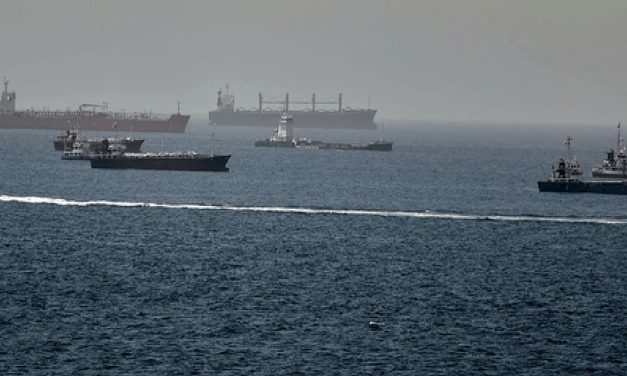
Remarkable to mention that Ukraine is home to a remarkable population with Russian descent who are mostly residing in the east of the country and are seeking autonomy from Kiev. This is while in recent years, and concurrent with the escalation of tension, the Russian-sympathizer separatist militias in Donbas, east of Ukraine, have resorted to direct military confrontation against the central government in Kiev. At the present time, two self-ruled republics in this region namely Donetsk and Luhansk are out of the control of the federal government. Moreover, during the conflicts of the past seven years, more than 13,000 people have been killed. Russia has denied any interference in the conflicts. Yet it accuses Ukraine of trying to commit genocide of Russian Ukrainians in this region in case it continues with its advancement.  Many of the Russian Ukrainians have received Russian passports since 2019. Ukraine has recently moved a huge number of its military forces to these regions and Russia has reciprocated by sending its military forces and vehicles to its border with Ukraine.  This may change current policy of Russia to support separatists in their direct military confrontation with Ukraine. Ukraine considers confrontations in this region not a domestic conflict but a war between Russia and Ukraine. Kiev has renewed its request to become a NATO member and join the military alliance to seek its support. In the meantime, Ukraine has threatened to move towards the production of nuclear weapons should it not receive sufficient support and action by NATO. Furthermore, Turkey, another important country in the strategic region of the Black Sea, has recently sold military equipment including drones to Ukraine. On one hand, Belarus that is now more inclined towards Russia after last year’s disturbances in the country has stationed military forces to its border with Ukraine and has participated in many wargames with Russia in the region. On the other, the issue of Ukraine has turned into the scene of the presence of foreign forces. During the past several days, various reports have indicated that NATO is deciding to send its marine forces to the Black Sea. According to the Russian minister of defense, NATO has stationed more than 40,000 military troops in Russia’s proximity—a measure which has been harshly criticized by Moscow. Even Kremlin has threatened to stop the movement of warships of foreign third parties to the Black Sea for at least six months. Moreover, Russia has moved some of its warships from the Caspian Sea to the Black Sea.

Foreign fighters from other countries have been also involved in both fronts; recently, reports were released indicating that Serbian volunteers from the Balkans have been moved to this region to fight for Russia. In the opposite front, groups from Chechnya, Georgia and some Belarusians opposed to Lukashenko are supporting Ukraine. Moreover, neo-Nazi rightist extremist groups such as the Azov Movement are fighting against Russians. In fact, as against many populist rightist extremist groups that have good relations with Russia, neo-Nazi groups have been able to establish a network in the Scandinavian countries, France, Germany and Austria in support of Ukraine. On such a basis, the involvement of neo-Nazi groups have provided Russia with the chance to introduce, in its media propaganda, its movements as a Russian fight against fascism as in the Second World War.

A glance at the performance of Russia in issues related to Georgia, Crimea, Syria and Belarus suggest that Moscow benefits from its geopolitical advantages properly and is highly unlikely to back down on its positions. After the annexation of Crimea, Ukraine lost some of marine territory in the east of the country. Russia has a upper hand now in the Azov Sea. At the present time, Russia, relying on various leverages, tries to maintain its position. For example, a strategic position for Russia is the Kaliningrad region located in the north of Poland. Russia has turned this region into a base for the stationing of missile platforms capable of targeting many spots in Europe. Moreover, Russia can use tools and leverages against the West and NATO such as energy, cyber-attacks, public opinion manipulation through cyberspace and media and support for Eurosceptic population opposition and anti-NATO groups. Of course, with Joe Biden in the White House, the US would heighten its anti-Russian policies and may impose more sanctions under the excuse of the detention of Navalny and protests in Russia as leverages of pressure for the West.

0 Comments

Submit a Comment

Your email address will not be published. Required fields are marked *

LATEST CONTENT

Consequences of Declining Trust in the Judiciary in Europe

SCFRonline – Opinion: The increase in public distrust of the French judicial system, which in recent surveys has reached approximately two-thirds of citizens, should be analyzed within a framework broader than temporary dissatisfaction or an emotional reaction to a particular criminal case.

Iran’s Potential Levers of Power

SCFRonline– Opinion: Iran’s geopolitical power is not limited solely to oil and the Strait of Hormuz; the unintended emergence of disruptions in the future global food and energy security chains can also demonstrate Iran’s strategic importance.

The Inseparability of the Lebanese Front from the Axis of Resistance

SCFR Online–Opinion: By providing an extensive network of social, healthcare, educational, and post-war reconstruction services, Hezbollah has established a strong social base for itself among Lebanon’s Shiites and Sunnis, and even beyond that, among other segments of Lebanese society, including Christians. Hezbollah has never been an external actor imposed upon Lebanon; rather, it is a phenomenon fundamentally born out of the occupation and crimes of the Zionist regime and itself influenced by popular resistance.

The Increasing Efforts of the Zionist Regime to Redefine Borders and the Regional Order and Its Consequences

SCFR Online– Opinion: Security and military developments in the region over recent months indicate that the ongoing crises and wars in Gaza, southern Lebanon, and parts of Syrian territory encompass broader dimensions of geopolitical and geostrategic transformations. In this context, the increased military presence and control of the Zionist regime over parts of the territories of these areas, along with proposals regarding the creation of buffer zones or even the expansion of security borders, have raised serious questions about the future of the regional order and its consequences for the countries of West Asia.

Loading

Últimas publicaciones

Consequences of Declining Trust in the Judiciary in Europe

SCFRonline – Opinion: The increase in public distrust of the French judicial system, which in recent surveys has reached approximately two-thirds of citizens, should be analyzed within a framework broader than temporary dissatisfaction or an emotional reaction to a particular criminal case.

Iran’s Potential Levers of Power

SCFRonline– Opinion: Iran’s geopolitical power is not limited solely to oil and the Strait of Hormuz; the unintended emergence of disruptions in the future global food and energy security chains can also demonstrate Iran’s strategic importance.

The Inseparability of the Lebanese Front from the Axis of Resistance

SCFR Online–Opinion: By providing an extensive network of social, healthcare, educational, and post-war reconstruction services, Hezbollah has established a strong social base for itself among Lebanon’s Shiites and Sunnis, and even beyond that, among other segments of Lebanese society, including Christians. Hezbollah has never been an external actor imposed upon Lebanon; rather, it is a phenomenon fundamentally born out of the occupation and crimes of the Zionist regime and itself influenced by popular resistance.

The Increasing Efforts of the Zionist Regime to Redefine Borders and the Regional Order and Its Consequences

SCFR Online– Opinion: Security and military developments in the region over recent months indicate that the ongoing crises and wars in Gaza, southern Lebanon, and parts of Syrian territory encompass broader dimensions of geopolitical and geostrategic transformations. In this context, the increased military presence and control of the Zionist regime over parts of the territories of these areas, along with proposals regarding the creation of buffer zones or even the expansion of security borders, have raised serious questions about the future of the regional order and its consequences for the countries of West Asia.

Loading

DERNIER CONTENU

Consequences of Declining Trust in the Judiciary in Europe

SCFRonline – Opinion: The increase in public distrust of the French judicial system, which in recent surveys has reached approximately two-thirds of citizens, should be analyzed within a framework broader than temporary dissatisfaction or an emotional reaction to a particular criminal case.

Iran’s Potential Levers of Power

SCFRonline– Opinion: Iran’s geopolitical power is not limited solely to oil and the Strait of Hormuz; the unintended emergence of disruptions in the future global food and energy security chains can also demonstrate Iran’s strategic importance.

The Inseparability of the Lebanese Front from the Axis of Resistance

SCFR Online–Opinion: By providing an extensive network of social, healthcare, educational, and post-war reconstruction services, Hezbollah has established a strong social base for itself among Lebanon’s Shiites and Sunnis, and even beyond that, among other segments of Lebanese society, including Christians. Hezbollah has never been an external actor imposed upon Lebanon; rather, it is a phenomenon fundamentally born out of the occupation and crimes of the Zionist regime and itself influenced by popular resistance.

The Increasing Efforts of the Zionist Regime to Redefine Borders and the Regional Order and Its Consequences

SCFR Online– Opinion: Security and military developments in the region over recent months indicate that the ongoing crises and wars in Gaza, southern Lebanon, and parts of Syrian territory encompass broader dimensions of geopolitical and geostrategic transformations. In this context, the increased military presence and control of the Zionist regime over parts of the territories of these areas, along with proposals regarding the creation of buffer zones or even the expansion of security borders, have raised serious questions about the future of the regional order and its consequences for the countries of West Asia.

Loading

DERNIER CONTENU

Consequences of Declining Trust in the Judiciary in Europe

SCFRonline – Opinion: The increase in public distrust of the French judicial system, which in recent surveys has reached approximately two-thirds of citizens, should be analyzed within a framework broader than temporary dissatisfaction or an emotional reaction to a particular criminal case.

Iran’s Potential Levers of Power

SCFRonline– Opinion: Iran’s geopolitical power is not limited solely to oil and the Strait of Hormuz; the unintended emergence of disruptions in the future global food and energy security chains can also demonstrate Iran’s strategic importance.

The Inseparability of the Lebanese Front from the Axis of Resistance

SCFR Online–Opinion: By providing an extensive network of social, healthcare, educational, and post-war reconstruction services, Hezbollah has established a strong social base for itself among Lebanon’s Shiites and Sunnis, and even beyond that, among other segments of Lebanese society, including Christians. Hezbollah has never been an external actor imposed upon Lebanon; rather, it is a phenomenon fundamentally born out of the occupation and crimes of the Zionist regime and itself influenced by popular resistance.

The Increasing Efforts of the Zionist Regime to Redefine Borders and the Regional Order and Its Consequences

SCFR Online– Opinion: Security and military developments in the region over recent months indicate that the ongoing crises and wars in Gaza, southern Lebanon, and parts of Syrian territory encompass broader dimensions of geopolitical and geostrategic transformations. In this context, the increased military presence and control of the Zionist regime over parts of the territories of these areas, along with proposals regarding the creation of buffer zones or even the expansion of security borders, have raised serious questions about the future of the regional order and its consequences for the countries of West Asia.

Loading

DERNIER CONTENU

Consequences of Declining Trust in the Judiciary in Europe

SCFRonline – Opinion: The increase in public distrust of the French judicial system, which in recent surveys has reached approximately two-thirds of citizens, should be analyzed within a framework broader than temporary dissatisfaction or an emotional reaction to a particular criminal case.

Iran’s Potential Levers of Power

SCFRonline– Opinion: Iran’s geopolitical power is not limited solely to oil and the Strait of Hormuz; the unintended emergence of disruptions in the future global food and energy security chains can also demonstrate Iran’s strategic importance.

The Inseparability of the Lebanese Front from the Axis of Resistance

SCFR Online–Opinion: By providing an extensive network of social, healthcare, educational, and post-war reconstruction services, Hezbollah has established a strong social base for itself among Lebanon’s Shiites and Sunnis, and even beyond that, among other segments of Lebanese society, including Christians. Hezbollah has never been an external actor imposed upon Lebanon; rather, it is a phenomenon fundamentally born out of the occupation and crimes of the Zionist regime and itself influenced by popular resistance.

The Increasing Efforts of the Zionist Regime to Redefine Borders and the Regional Order and Its Consequences

SCFR Online– Opinion: Security and military developments in the region over recent months indicate that the ongoing crises and wars in Gaza, southern Lebanon, and parts of Syrian territory encompass broader dimensions of geopolitical and geostrategic transformations. In this context, the increased military presence and control of the Zionist regime over parts of the territories of these areas, along with proposals regarding the creation of buffer zones or even the expansion of security borders, have raised serious questions about the future of the regional order and its consequences for the countries of West Asia.

Loading