جدیدترین مطالب

Consequences of Declining Trust in the Judiciary in Europe

SCFRonline – Opinion: The increase in public distrust of the French judicial system, which in recent surveys has reached approximately two-thirds of citizens, should be analyzed within a framework broader than temporary dissatisfaction or an emotional reaction to a particular criminal case.

Iran’s Potential Levers of Power

SCFRonline– Opinion: Iran’s geopolitical power is not limited solely to oil and the Strait of Hormuz; the unintended emergence of disruptions in the future global food and energy security chains can also demonstrate Iran’s strategic importance.

The Inseparability of the Lebanese Front from the Axis of Resistance

SCFR Online–Opinion: By providing an extensive network of social, healthcare, educational, and post-war reconstruction services, Hezbollah has established a strong social base for itself among Lebanon’s Shiites and Sunnis, and even beyond that, among other segments of Lebanese society, including Christians. Hezbollah has never been an external actor imposed upon Lebanon; rather, it is a phenomenon fundamentally born out of the occupation and crimes of the Zionist regime and itself influenced by popular resistance.

The Increasing Efforts of the Zionist Regime to Redefine Borders and the Regional Order and Its Consequences

SCFR Online– Opinion: Security and military developments in the region over recent months indicate that the ongoing crises and wars in Gaza, southern Lebanon, and parts of Syrian territory encompass broader dimensions of geopolitical and geostrategic transformations. In this context, the increased military presence and control of the Zionist regime over parts of the territories of these areas, along with proposals regarding the creation of buffer zones or even the expansion of security borders, have raised serious questions about the future of the regional order and its consequences for the countries of West Asia.

Loading

Top News

The Contradiction Between U.S. Policies and the Inevitability of Investment in Clean Energy

The Contradiction Between U.S. Policies and the Inevitability of Investment in Clean Energy

Online Strategic Council – Dialogue: An American affairs expert stated that despite the U.S. withdrawal from global climate commitments, the trend of American companies investing in clean energy has not stopped. Independent analysts believe that this contradiction between the government’s official policy and private sector behavior indicates a complex economic reality: companies know that in the short term, profits might be higher through continued use of fossil fuels and the plundering of natural resources, but in the long term, participation in renewable energy is inevitable.

The Prospect of Global Recognition of the State of Palestine

The Prospect of Global Recognition of the State of Palestine

Online Strategic Council – Note: The process of recognizing Palestine by countries around the world, which has been met with opposition and anger from the Israeli regime, is noteworthy. The unprecedented move by various world countries to recognize the independent State of Palestine is entirely linked to the crimes of the Zionist regime in Gaza and its genocidal and racist policies.

The Prospect of Regional Order: Scenarios of Deterrence, Cooperation, and Crisis

The Prospect of Regional Order: Scenarios of Deterrence, Cooperation, and Crisis

Online Strategic Council – Dialogue: After October 7, 2023, and the start of the cycle of killing and aggression by the Israeli regime, the equations of the Middle East entered a new and more complex stage. This development not only altered the security and diplomatic balances but also impacted the region’s geopolitical structure, and over the past two years, has led to the emergence of a new regional architecture. Today, the Middle East has become a multi-layered arena with changing conflicts and alliances.
The Gaza crisis and the reaction of public opinion in the region’s countries have also altered the internal calculations of governments and put their foreign policies under pressure from public opinion. The wave of official recognition of the state of Palestine, along with the experience of the Israeli regime’s aggression against Iran and Tehran’s decisive response, has made the current situation completely different from the past. It appears that in the near future, the new regional architecture will require multilateral interactions and a redefinition of power relations beyond traditional equations.

The Plan to Recognize the State of Palestine: From Words to Action

The Plan to Recognize the State of Palestine: From Words to Action

Online Strategic Council – Interview: An international affairs analyst stated that the recent United Nations meeting, which centered on recognizing the state of Palestine and the two-state solution, has sparked a wave of international reactions. Supporters of this plan see it as a step towards peace. Still, critics view it with skepticism and believe that this move is more of a tool to deceive public opinion and solidify the existence of the Zionist regime than to resolve the crisis. The initiative by France and some European countries is being proposed while the genocide in Gaza continues, and the West has so far taken no effective action to stop it. Some analysts say the primary goal of this plan is not the establishment of an independent Palestinian state, but rather the disarmament of resistance groups and the isolation of Hamas—an action that, through superficial negotiations and apparent peace, paves the way for realizing the interests of the Israeli regime. Iran, by rejecting the two-state solution, presents a different narrative for the future of Palestine, based on a referendum involving all indigenous inhabitants of the land.

An Analysis of Iraq’s Vision 2050 Plan: Challenges and Opportunities Ahead

An Analysis of Iraq’s Vision 2050 Plan: Challenges and Opportunities Ahead

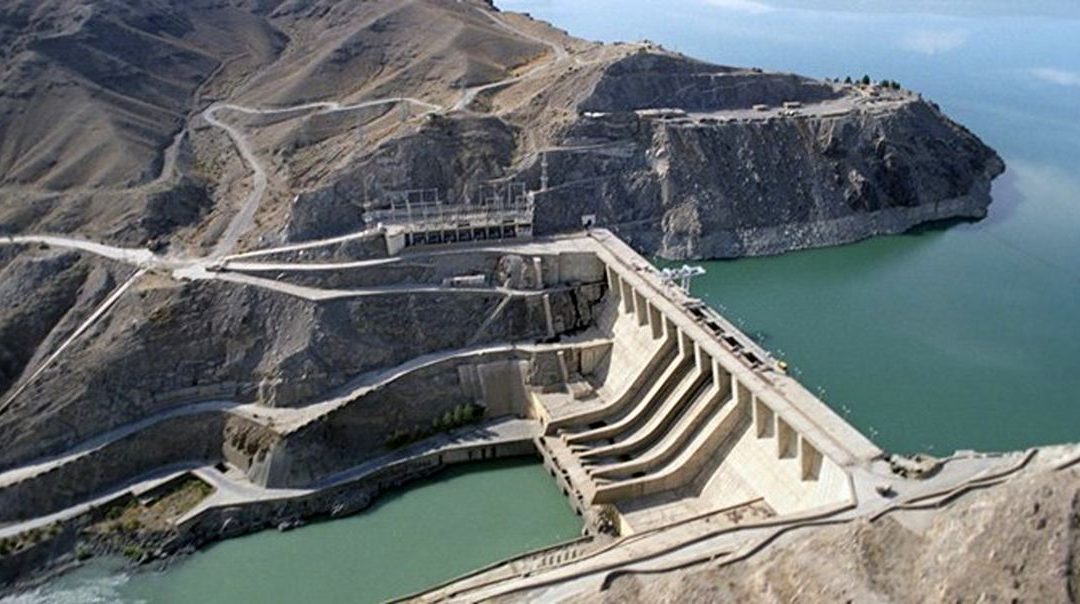
Online Strategic Council – Interview: A West Asia affairs expert stated that the unveiling of Iraq’s Vision 2050 plan by its Prime Minister, Mohammed Shia’ Al-Sudani, is assessed as a turning point on the path of economic development and reducing the country’s dependence on oil revenues. This plan is designed to create a diversified economy, develop infrastructure, and position Iraq at the heart of Asia-Europe trade corridors. If realized, it could alter the region’s geopolitical equations. In this plan, Al-Sudani has emphasized diverting 20 percent of the Asia-Europe trade through Iraq, which, if successful, will make the country a key player in global trade. On the other hand, environmental crises, security challenges, and the necessity of reforming governance structures in Iraq have made this plan a multidimensional and complex issue. For Iran, the implementation of Vision 2050 not only creates economic opportunities in the fields of energy and transit but also provides the possibility of enhancing political and security cooperation. However, the success of this plan is contingent upon resolving internal obstacles and Baghdad’s smart management of foreign relations, an issue that could improve the future of Iran-Iraq interactions and the regional standing of both countries in the coming decades.

Consequences of Global Sanctions Against the Israeli Regime

Consequences of Global Sanctions Against the Israeli Regime

Strategic Council Online – Interview: An international affairs expert stated that in recent months, a multitude of political, economic, cultural, and scientific sanctions have been imposed against the Israeli regime, which, in the interpretation of many analysts, constitutes an “unprecedented set” of multi-layered global pressures. This wave, from the European Union to academic circles, from music festivals to world cinema, has targeted Tel Aviv’s international legitimacy and placed it in an increasingly tight spot. The message of these sanctions is also clear; the Israeli regime can no longer rely on its traditional immunity in the West to escape the moral and political consequences of its crimes in Gaza. Diplomatic isolation, economic restrictions, civil pressures, and damage to cultural prestige are all shaping an environment that can not only limit the Israeli regime’s freedom of action on the international stage but also challenges the credibility and legitimacy of this regime in global public opinion; a challenge that, in principle, should lead to a change in behavior or even internal political equations of the Israeli regime.

Inefficiency of the West’s Economic Lever for Ending the Ukraine War

Inefficiency of the West’s Economic Lever for Ending the Ukraine War

Strategic Council Online – Interview: An international economics expert stated that sanctions, as discussed in political and economic literature, are tools used to force countries to change their behavior in foreign or domestic policies. However, the fundamental question is whether these tools consistently achieve the expected results. The European Union, which has intensified its sanctions policy against Russia since 2014, especially after the Ukraine war in 2022, now faces the question of to what extent these sanctions have been able to halt Moscow’s economic machine. Although more than 50 sanction packages have been imposed against Russia since 2014, statistics and analyses show that Russia has been able to overcome the pressures in many cases and even gain more profit in some areas. Experts believe that the lack of unity in European decision-making, the conflict of economic interests among member states, and the historical dependence of some on Russian energy have all combined to cause Europe’s sanctions policy not only to fail to achieve its ultimate goal but, in some cases, to yield opposite results. Meanwhile, the debate over “secondary sanctions” and the change in the European Union’s strategies after the Ukraine war marks a turning point in the future path of Moscow-Brussels relations.

France at a Crossroads Between Meeting Domestic Public Demands and Playing an International Role

France at a Crossroads Between Meeting Domestic Public Demands and Playing an International Role

Strategic Council Online – Interview: An international affairs expert stated that the French government’s inability to meet public demands has led to a resurgence of domestic protests. The budget deficit has compelled Emmanuel Macron’s government to implement measures such as reducing public service expenditures, eliminating national holidays, cutting wages, and increasing taxes to offset the shortfall, which has further fueled the protests.

Consequences of Four Iraqi Shiite Groups Being Placed on the US Terrorist List

Consequences of Four Iraqi Shiite Groups Being Placed on the US Terrorist List

Strategic Council Online– Interview: A senior Iraqi affairs analyst stated that the recent action by the US Department of State in placing four Iraqi Shiite groups on the list of foreign terrorist organizations has not only seriously challenged Iraq’s security dimension but has also broadly overshadowed Baghdad’s political and diplomatic equations. This decision, interpreted as a continuation of Washington’s policy of maximum pressure in the region, could have multi-layered consequences for Iraq’s internal security, foreign relations, and even the balance of power. The groups affected by this decision are part of the official structure of the Popular Mobilization Forces (PMF) and were key players in the defeat of ISIS; therefore, their placement on the terrorist list is not only considered a threat against US interests but also calls into question the legitimacy and cohesion of Iraq’s security forces. This move could cast a shadow over the process of withdrawing US forces from Iraq and provide a pretext for the continuation of Washington’s military presence. Similarly, at the regional level, it further frees the hands of the Israeli regime for aggressive actions.

An Analysis of Elon Musk’s Right-Wing Political Interventions in Britain and Europe

An Analysis of Elon Musk’s Right-Wing Political Interventions in Britain and Europe

Strategic Council Online – A senior US affairs analyst stated that the overt intervention of billionaire and media mogul Elon Musk in the UK’s internal developments has once again brought the discussion about the role of non-state actors in international politics to the forefront of attention. With his provocative speech at the extreme right-wing rally in London, Musk not only called for the dissolution of parliament and early elections but also effectively sowed the seeds of political violence in the country’s fragile social fabric by promoting a rhetoric of “resistance or destruction.” UK Prime Minister Keir Starmer condemned these remarks, but the matter goes beyond a war of words. The emergence of figures like Musk, who simultaneously possess capital, media influence, and social popularity, has blurred the line between official politics and protest movements. This trend could become a serious challenge to the principle of non-interference in the internal affairs of countries, one of the fundamental principles of the UN Charter. International institutions have been designed primarily to control the actions of states, rather than billionaires who own global platforms. Today, however, developments show that technology and media giants can influence the political developments of countries as independent actors; a reality that could pose new questions to the international order regarding national sovereignty and political security.

أحدث الوظائف

Consequences of Declining Trust in the Judiciary in Europe

SCFRonline – Opinion: The increase in public distrust of the French judicial system, which in recent surveys has reached approximately two-thirds of citizens, should be analyzed within a framework broader than temporary dissatisfaction or an emotional reaction to a particular criminal case.

Iran’s Potential Levers of Power

SCFRonline– Opinion: Iran’s geopolitical power is not limited solely to oil and the Strait of Hormuz; the unintended emergence of disruptions in the future global food and energy security chains can also demonstrate Iran’s strategic importance.

The Inseparability of the Lebanese Front from the Axis of Resistance

SCFR Online–Opinion: By providing an extensive network of social, healthcare, educational, and post-war reconstruction services, Hezbollah has established a strong social base for itself among Lebanon’s Shiites and Sunnis, and even beyond that, among other segments of Lebanese society, including Christians. Hezbollah has never been an external actor imposed upon Lebanon; rather, it is a phenomenon fundamentally born out of the occupation and crimes of the Zionist regime and itself influenced by popular resistance.

The Increasing Efforts of the Zionist Regime to Redefine Borders and the Regional Order and Its Consequences

SCFR Online– Opinion: Security and military developments in the region over recent months indicate that the ongoing crises and wars in Gaza, southern Lebanon, and parts of Syrian territory encompass broader dimensions of geopolitical and geostrategic transformations. In this context, the increased military presence and control of the Zionist regime over parts of the territories of these areas, along with proposals regarding the creation of buffer zones or even the expansion of security borders, have raised serious questions about the future of the regional order and its consequences for the countries of West Asia.

Loading

Top News

The Contradiction Between U.S. Policies and the Inevitability of Investment in Clean Energy

The Contradiction Between U.S. Policies and the Inevitability of Investment in Clean Energy

Online Strategic Council – Dialogue: An American affairs expert stated that despite the U.S. withdrawal from global climate commitments, the trend of American companies investing in clean energy has not stopped. Independent analysts believe that this contradiction between the government’s official policy and private sector behavior indicates a complex economic reality: companies know that in the short term, profits might be higher through continued use of fossil fuels and the plundering of natural resources, but in the long term, participation in renewable energy is inevitable.

The Prospect of Global Recognition of the State of Palestine

The Prospect of Global Recognition of the State of Palestine

Online Strategic Council – Note: The process of recognizing Palestine by countries around the world, which has been met with opposition and anger from the Israeli regime, is noteworthy. The unprecedented move by various world countries to recognize the independent State of Palestine is entirely linked to the crimes of the Zionist regime in Gaza and its genocidal and racist policies.

The Prospect of Regional Order: Scenarios of Deterrence, Cooperation, and Crisis

The Prospect of Regional Order: Scenarios of Deterrence, Cooperation, and Crisis

Online Strategic Council – Dialogue: After October 7, 2023, and the start of the cycle of killing and aggression by the Israeli regime, the equations of the Middle East entered a new and more complex stage. This development not only altered the security and diplomatic balances but also impacted the region’s geopolitical structure, and over the past two years, has led to the emergence of a new regional architecture. Today, the Middle East has become a multi-layered arena with changing conflicts and alliances.
The Gaza crisis and the reaction of public opinion in the region’s countries have also altered the internal calculations of governments and put their foreign policies under pressure from public opinion. The wave of official recognition of the state of Palestine, along with the experience of the Israeli regime’s aggression against Iran and Tehran’s decisive response, has made the current situation completely different from the past. It appears that in the near future, the new regional architecture will require multilateral interactions and a redefinition of power relations beyond traditional equations.

The Plan to Recognize the State of Palestine: From Words to Action

The Plan to Recognize the State of Palestine: From Words to Action

Online Strategic Council – Interview: An international affairs analyst stated that the recent United Nations meeting, which centered on recognizing the state of Palestine and the two-state solution, has sparked a wave of international reactions. Supporters of this plan see it as a step towards peace. Still, critics view it with skepticism and believe that this move is more of a tool to deceive public opinion and solidify the existence of the Zionist regime than to resolve the crisis. The initiative by France and some European countries is being proposed while the genocide in Gaza continues, and the West has so far taken no effective action to stop it. Some analysts say the primary goal of this plan is not the establishment of an independent Palestinian state, but rather the disarmament of resistance groups and the isolation of Hamas—an action that, through superficial negotiations and apparent peace, paves the way for realizing the interests of the Israeli regime. Iran, by rejecting the two-state solution, presents a different narrative for the future of Palestine, based on a referendum involving all indigenous inhabitants of the land.

An Analysis of Iraq’s Vision 2050 Plan: Challenges and Opportunities Ahead

An Analysis of Iraq’s Vision 2050 Plan: Challenges and Opportunities Ahead

Online Strategic Council – Interview: A West Asia affairs expert stated that the unveiling of Iraq’s Vision 2050 plan by its Prime Minister, Mohammed Shia’ Al-Sudani, is assessed as a turning point on the path of economic development and reducing the country’s dependence on oil revenues. This plan is designed to create a diversified economy, develop infrastructure, and position Iraq at the heart of Asia-Europe trade corridors. If realized, it could alter the region’s geopolitical equations. In this plan, Al-Sudani has emphasized diverting 20 percent of the Asia-Europe trade through Iraq, which, if successful, will make the country a key player in global trade. On the other hand, environmental crises, security challenges, and the necessity of reforming governance structures in Iraq have made this plan a multidimensional and complex issue. For Iran, the implementation of Vision 2050 not only creates economic opportunities in the fields of energy and transit but also provides the possibility of enhancing political and security cooperation. However, the success of this plan is contingent upon resolving internal obstacles and Baghdad’s smart management of foreign relations, an issue that could improve the future of Iran-Iraq interactions and the regional standing of both countries in the coming decades.

Consequences of Global Sanctions Against the Israeli Regime

Consequences of Global Sanctions Against the Israeli Regime

Strategic Council Online – Interview: An international affairs expert stated that in recent months, a multitude of political, economic, cultural, and scientific sanctions have been imposed against the Israeli regime, which, in the interpretation of many analysts, constitutes an “unprecedented set” of multi-layered global pressures. This wave, from the European Union to academic circles, from music festivals to world cinema, has targeted Tel Aviv’s international legitimacy and placed it in an increasingly tight spot. The message of these sanctions is also clear; the Israeli regime can no longer rely on its traditional immunity in the West to escape the moral and political consequences of its crimes in Gaza. Diplomatic isolation, economic restrictions, civil pressures, and damage to cultural prestige are all shaping an environment that can not only limit the Israeli regime’s freedom of action on the international stage but also challenges the credibility and legitimacy of this regime in global public opinion; a challenge that, in principle, should lead to a change in behavior or even internal political equations of the Israeli regime.

Inefficiency of the West’s Economic Lever for Ending the Ukraine War

Inefficiency of the West’s Economic Lever for Ending the Ukraine War

Strategic Council Online – Interview: An international economics expert stated that sanctions, as discussed in political and economic literature, are tools used to force countries to change their behavior in foreign or domestic policies. However, the fundamental question is whether these tools consistently achieve the expected results. The European Union, which has intensified its sanctions policy against Russia since 2014, especially after the Ukraine war in 2022, now faces the question of to what extent these sanctions have been able to halt Moscow’s economic machine. Although more than 50 sanction packages have been imposed against Russia since 2014, statistics and analyses show that Russia has been able to overcome the pressures in many cases and even gain more profit in some areas. Experts believe that the lack of unity in European decision-making, the conflict of economic interests among member states, and the historical dependence of some on Russian energy have all combined to cause Europe’s sanctions policy not only to fail to achieve its ultimate goal but, in some cases, to yield opposite results. Meanwhile, the debate over “secondary sanctions” and the change in the European Union’s strategies after the Ukraine war marks a turning point in the future path of Moscow-Brussels relations.

France at a Crossroads Between Meeting Domestic Public Demands and Playing an International Role

France at a Crossroads Between Meeting Domestic Public Demands and Playing an International Role

Strategic Council Online – Interview: An international affairs expert stated that the French government’s inability to meet public demands has led to a resurgence of domestic protests. The budget deficit has compelled Emmanuel Macron’s government to implement measures such as reducing public service expenditures, eliminating national holidays, cutting wages, and increasing taxes to offset the shortfall, which has further fueled the protests.

Consequences of Four Iraqi Shiite Groups Being Placed on the US Terrorist List

Consequences of Four Iraqi Shiite Groups Being Placed on the US Terrorist List

Strategic Council Online– Interview: A senior Iraqi affairs analyst stated that the recent action by the US Department of State in placing four Iraqi Shiite groups on the list of foreign terrorist organizations has not only seriously challenged Iraq’s security dimension but has also broadly overshadowed Baghdad’s political and diplomatic equations. This decision, interpreted as a continuation of Washington’s policy of maximum pressure in the region, could have multi-layered consequences for Iraq’s internal security, foreign relations, and even the balance of power. The groups affected by this decision are part of the official structure of the Popular Mobilization Forces (PMF) and were key players in the defeat of ISIS; therefore, their placement on the terrorist list is not only considered a threat against US interests but also calls into question the legitimacy and cohesion of Iraq’s security forces. This move could cast a shadow over the process of withdrawing US forces from Iraq and provide a pretext for the continuation of Washington’s military presence. Similarly, at the regional level, it further frees the hands of the Israeli regime for aggressive actions.

An Analysis of Elon Musk’s Right-Wing Political Interventions in Britain and Europe

An Analysis of Elon Musk’s Right-Wing Political Interventions in Britain and Europe

Strategic Council Online – A senior US affairs analyst stated that the overt intervention of billionaire and media mogul Elon Musk in the UK’s internal developments has once again brought the discussion about the role of non-state actors in international politics to the forefront of attention. With his provocative speech at the extreme right-wing rally in London, Musk not only called for the dissolution of parliament and early elections but also effectively sowed the seeds of political violence in the country’s fragile social fabric by promoting a rhetoric of “resistance or destruction.” UK Prime Minister Keir Starmer condemned these remarks, but the matter goes beyond a war of words. The emergence of figures like Musk, who simultaneously possess capital, media influence, and social popularity, has blurred the line between official politics and protest movements. This trend could become a serious challenge to the principle of non-interference in the internal affairs of countries, one of the fundamental principles of the UN Charter. International institutions have been designed primarily to control the actions of states, rather than billionaires who own global platforms. Today, however, developments show that technology and media giants can influence the political developments of countries as independent actors; a reality that could pose new questions to the international order regarding national sovereignty and political security.

Top News

The Contradiction Between U.S. Policies and the Inevitability of Investment in Clean Energy

The Contradiction Between U.S. Policies and the Inevitability of Investment in Clean Energy

Online Strategic Council – Dialogue: An American affairs expert stated that despite the U.S. withdrawal from global climate commitments, the trend of American companies investing in clean energy has not stopped. Independent analysts believe that this contradiction between the government’s official policy and private sector behavior indicates a complex economic reality: companies know that in the short term, profits might be higher through continued use of fossil fuels and the plundering of natural resources, but in the long term, participation in renewable energy is inevitable.

The Prospect of Global Recognition of the State of Palestine

The Prospect of Global Recognition of the State of Palestine

Online Strategic Council – Note: The process of recognizing Palestine by countries around the world, which has been met with opposition and anger from the Israeli regime, is noteworthy. The unprecedented move by various world countries to recognize the independent State of Palestine is entirely linked to the crimes of the Zionist regime in Gaza and its genocidal and racist policies.

The Prospect of Regional Order: Scenarios of Deterrence, Cooperation, and Crisis

The Prospect of Regional Order: Scenarios of Deterrence, Cooperation, and Crisis

Online Strategic Council – Dialogue: After October 7, 2023, and the start of the cycle of killing and aggression by the Israeli regime, the equations of the Middle East entered a new and more complex stage. This development not only altered the security and diplomatic balances but also impacted the region’s geopolitical structure, and over the past two years, has led to the emergence of a new regional architecture. Today, the Middle East has become a multi-layered arena with changing conflicts and alliances.
The Gaza crisis and the reaction of public opinion in the region’s countries have also altered the internal calculations of governments and put their foreign policies under pressure from public opinion. The wave of official recognition of the state of Palestine, along with the experience of the Israeli regime’s aggression against Iran and Tehran’s decisive response, has made the current situation completely different from the past. It appears that in the near future, the new regional architecture will require multilateral interactions and a redefinition of power relations beyond traditional equations.

The Plan to Recognize the State of Palestine: From Words to Action

The Plan to Recognize the State of Palestine: From Words to Action

Online Strategic Council – Interview: An international affairs analyst stated that the recent United Nations meeting, which centered on recognizing the state of Palestine and the two-state solution, has sparked a wave of international reactions. Supporters of this plan see it as a step towards peace. Still, critics view it with skepticism and believe that this move is more of a tool to deceive public opinion and solidify the existence of the Zionist regime than to resolve the crisis. The initiative by France and some European countries is being proposed while the genocide in Gaza continues, and the West has so far taken no effective action to stop it. Some analysts say the primary goal of this plan is not the establishment of an independent Palestinian state, but rather the disarmament of resistance groups and the isolation of Hamas—an action that, through superficial negotiations and apparent peace, paves the way for realizing the interests of the Israeli regime. Iran, by rejecting the two-state solution, presents a different narrative for the future of Palestine, based on a referendum involving all indigenous inhabitants of the land.

An Analysis of Iraq’s Vision 2050 Plan: Challenges and Opportunities Ahead

An Analysis of Iraq’s Vision 2050 Plan: Challenges and Opportunities Ahead

Online Strategic Council – Interview: A West Asia affairs expert stated that the unveiling of Iraq’s Vision 2050 plan by its Prime Minister, Mohammed Shia’ Al-Sudani, is assessed as a turning point on the path of economic development and reducing the country’s dependence on oil revenues. This plan is designed to create a diversified economy, develop infrastructure, and position Iraq at the heart of Asia-Europe trade corridors. If realized, it could alter the region’s geopolitical equations. In this plan, Al-Sudani has emphasized diverting 20 percent of the Asia-Europe trade through Iraq, which, if successful, will make the country a key player in global trade. On the other hand, environmental crises, security challenges, and the necessity of reforming governance structures in Iraq have made this plan a multidimensional and complex issue. For Iran, the implementation of Vision 2050 not only creates economic opportunities in the fields of energy and transit but also provides the possibility of enhancing political and security cooperation. However, the success of this plan is contingent upon resolving internal obstacles and Baghdad’s smart management of foreign relations, an issue that could improve the future of Iran-Iraq interactions and the regional standing of both countries in the coming decades.

Consequences of Global Sanctions Against the Israeli Regime

Consequences of Global Sanctions Against the Israeli Regime

Strategic Council Online – Interview: An international affairs expert stated that in recent months, a multitude of political, economic, cultural, and scientific sanctions have been imposed against the Israeli regime, which, in the interpretation of many analysts, constitutes an “unprecedented set” of multi-layered global pressures. This wave, from the European Union to academic circles, from music festivals to world cinema, has targeted Tel Aviv’s international legitimacy and placed it in an increasingly tight spot. The message of these sanctions is also clear; the Israeli regime can no longer rely on its traditional immunity in the West to escape the moral and political consequences of its crimes in Gaza. Diplomatic isolation, economic restrictions, civil pressures, and damage to cultural prestige are all shaping an environment that can not only limit the Israeli regime’s freedom of action on the international stage but also challenges the credibility and legitimacy of this regime in global public opinion; a challenge that, in principle, should lead to a change in behavior or even internal political equations of the Israeli regime.

Inefficiency of the West’s Economic Lever for Ending the Ukraine War

Inefficiency of the West’s Economic Lever for Ending the Ukraine War

Strategic Council Online – Interview: An international economics expert stated that sanctions, as discussed in political and economic literature, are tools used to force countries to change their behavior in foreign or domestic policies. However, the fundamental question is whether these tools consistently achieve the expected results. The European Union, which has intensified its sanctions policy against Russia since 2014, especially after the Ukraine war in 2022, now faces the question of to what extent these sanctions have been able to halt Moscow’s economic machine. Although more than 50 sanction packages have been imposed against Russia since 2014, statistics and analyses show that Russia has been able to overcome the pressures in many cases and even gain more profit in some areas. Experts believe that the lack of unity in European decision-making, the conflict of economic interests among member states, and the historical dependence of some on Russian energy have all combined to cause Europe’s sanctions policy not only to fail to achieve its ultimate goal but, in some cases, to yield opposite results. Meanwhile, the debate over “secondary sanctions” and the change in the European Union’s strategies after the Ukraine war marks a turning point in the future path of Moscow-Brussels relations.

France at a Crossroads Between Meeting Domestic Public Demands and Playing an International Role

France at a Crossroads Between Meeting Domestic Public Demands and Playing an International Role

Strategic Council Online – Interview: An international affairs expert stated that the French government’s inability to meet public demands has led to a resurgence of domestic protests. The budget deficit has compelled Emmanuel Macron’s government to implement measures such as reducing public service expenditures, eliminating national holidays, cutting wages, and increasing taxes to offset the shortfall, which has further fueled the protests.

Consequences of Four Iraqi Shiite Groups Being Placed on the US Terrorist List

Consequences of Four Iraqi Shiite Groups Being Placed on the US Terrorist List

Strategic Council Online– Interview: A senior Iraqi affairs analyst stated that the recent action by the US Department of State in placing four Iraqi Shiite groups on the list of foreign terrorist organizations has not only seriously challenged Iraq’s security dimension but has also broadly overshadowed Baghdad’s political and diplomatic equations. This decision, interpreted as a continuation of Washington’s policy of maximum pressure in the region, could have multi-layered consequences for Iraq’s internal security, foreign relations, and even the balance of power. The groups affected by this decision are part of the official structure of the Popular Mobilization Forces (PMF) and were key players in the defeat of ISIS; therefore, their placement on the terrorist list is not only considered a threat against US interests but also calls into question the legitimacy and cohesion of Iraq’s security forces. This move could cast a shadow over the process of withdrawing US forces from Iraq and provide a pretext for the continuation of Washington’s military presence. Similarly, at the regional level, it further frees the hands of the Israeli regime for aggressive actions.

An Analysis of Elon Musk’s Right-Wing Political Interventions in Britain and Europe

An Analysis of Elon Musk’s Right-Wing Political Interventions in Britain and Europe

Strategic Council Online – A senior US affairs analyst stated that the overt intervention of billionaire and media mogul Elon Musk in the UK’s internal developments has once again brought the discussion about the role of non-state actors in international politics to the forefront of attention. With his provocative speech at the extreme right-wing rally in London, Musk not only called for the dissolution of parliament and early elections but also effectively sowed the seeds of political violence in the country’s fragile social fabric by promoting a rhetoric of “resistance or destruction.” UK Prime Minister Keir Starmer condemned these remarks, but the matter goes beyond a war of words. The emergence of figures like Musk, who simultaneously possess capital, media influence, and social popularity, has blurred the line between official politics and protest movements. This trend could become a serious challenge to the principle of non-interference in the internal affairs of countries, one of the fundamental principles of the UN Charter. International institutions have been designed primarily to control the actions of states, rather than billionaires who own global platforms. Today, however, developments show that technology and media giants can influence the political developments of countries as independent actors; a reality that could pose new questions to the international order regarding national sovereignty and political security.

LATEST CONTENT

Consequences of Declining Trust in the Judiciary in Europe

SCFRonline – Opinion: The increase in public distrust of the French judicial system, which in recent surveys has reached approximately two-thirds of citizens, should be analyzed within a framework broader than temporary dissatisfaction or an emotional reaction to a particular criminal case.

Iran’s Potential Levers of Power

SCFRonline– Opinion: Iran’s geopolitical power is not limited solely to oil and the Strait of Hormuz; the unintended emergence of disruptions in the future global food and energy security chains can also demonstrate Iran’s strategic importance.

The Inseparability of the Lebanese Front from the Axis of Resistance

SCFR Online–Opinion: By providing an extensive network of social, healthcare, educational, and post-war reconstruction services, Hezbollah has established a strong social base for itself among Lebanon’s Shiites and Sunnis, and even beyond that, among other segments of Lebanese society, including Christians. Hezbollah has never been an external actor imposed upon Lebanon; rather, it is a phenomenon fundamentally born out of the occupation and crimes of the Zionist regime and itself influenced by popular resistance.

The Increasing Efforts of the Zionist Regime to Redefine Borders and the Regional Order and Its Consequences

SCFR Online– Opinion: Security and military developments in the region over recent months indicate that the ongoing crises and wars in Gaza, southern Lebanon, and parts of Syrian territory encompass broader dimensions of geopolitical and geostrategic transformations. In this context, the increased military presence and control of the Zionist regime over parts of the territories of these areas, along with proposals regarding the creation of buffer zones or even the expansion of security borders, have raised serious questions about the future of the regional order and its consequences for the countries of West Asia.

Loading

Top News

The Contradiction Between U.S. Policies and the Inevitability of Investment in Clean Energy

The Contradiction Between U.S. Policies and the Inevitability of Investment in Clean Energy

Online Strategic Council – Dialogue: An American affairs expert stated that despite the U.S. withdrawal from global climate commitments, the trend of American companies investing in clean energy has not stopped. Independent analysts believe that this contradiction between the government’s official policy and private sector behavior indicates a complex economic reality: companies know that in the short term, profits might be higher through continued use of fossil fuels and the plundering of natural resources, but in the long term, participation in renewable energy is inevitable.

The Prospect of Global Recognition of the State of Palestine

The Prospect of Global Recognition of the State of Palestine

Online Strategic Council – Note: The process of recognizing Palestine by countries around the world, which has been met with opposition and anger from the Israeli regime, is noteworthy. The unprecedented move by various world countries to recognize the independent State of Palestine is entirely linked to the crimes of the Zionist regime in Gaza and its genocidal and racist policies.

The Prospect of Regional Order: Scenarios of Deterrence, Cooperation, and Crisis

The Prospect of Regional Order: Scenarios of Deterrence, Cooperation, and Crisis

Online Strategic Council – Dialogue: After October 7, 2023, and the start of the cycle of killing and aggression by the Israeli regime, the equations of the Middle East entered a new and more complex stage. This development not only altered the security and diplomatic balances but also impacted the region’s geopolitical structure, and over the past two years, has led to the emergence of a new regional architecture. Today, the Middle East has become a multi-layered arena with changing conflicts and alliances.
The Gaza crisis and the reaction of public opinion in the region’s countries have also altered the internal calculations of governments and put their foreign policies under pressure from public opinion. The wave of official recognition of the state of Palestine, along with the experience of the Israeli regime’s aggression against Iran and Tehran’s decisive response, has made the current situation completely different from the past. It appears that in the near future, the new regional architecture will require multilateral interactions and a redefinition of power relations beyond traditional equations.

The Plan to Recognize the State of Palestine: From Words to Action

The Plan to Recognize the State of Palestine: From Words to Action

Online Strategic Council – Interview: An international affairs analyst stated that the recent United Nations meeting, which centered on recognizing the state of Palestine and the two-state solution, has sparked a wave of international reactions. Supporters of this plan see it as a step towards peace. Still, critics view it with skepticism and believe that this move is more of a tool to deceive public opinion and solidify the existence of the Zionist regime than to resolve the crisis. The initiative by France and some European countries is being proposed while the genocide in Gaza continues, and the West has so far taken no effective action to stop it. Some analysts say the primary goal of this plan is not the establishment of an independent Palestinian state, but rather the disarmament of resistance groups and the isolation of Hamas—an action that, through superficial negotiations and apparent peace, paves the way for realizing the interests of the Israeli regime. Iran, by rejecting the two-state solution, presents a different narrative for the future of Palestine, based on a referendum involving all indigenous inhabitants of the land.

An Analysis of Iraq’s Vision 2050 Plan: Challenges and Opportunities Ahead

An Analysis of Iraq’s Vision 2050 Plan: Challenges and Opportunities Ahead

Online Strategic Council – Interview: A West Asia affairs expert stated that the unveiling of Iraq’s Vision 2050 plan by its Prime Minister, Mohammed Shia’ Al-Sudani, is assessed as a turning point on the path of economic development and reducing the country’s dependence on oil revenues. This plan is designed to create a diversified economy, develop infrastructure, and position Iraq at the heart of Asia-Europe trade corridors. If realized, it could alter the region’s geopolitical equations. In this plan, Al-Sudani has emphasized diverting 20 percent of the Asia-Europe trade through Iraq, which, if successful, will make the country a key player in global trade. On the other hand, environmental crises, security challenges, and the necessity of reforming governance structures in Iraq have made this plan a multidimensional and complex issue. For Iran, the implementation of Vision 2050 not only creates economic opportunities in the fields of energy and transit but also provides the possibility of enhancing political and security cooperation. However, the success of this plan is contingent upon resolving internal obstacles and Baghdad’s smart management of foreign relations, an issue that could improve the future of Iran-Iraq interactions and the regional standing of both countries in the coming decades.

Consequences of Global Sanctions Against the Israeli Regime

Consequences of Global Sanctions Against the Israeli Regime

Strategic Council Online – Interview: An international affairs expert stated that in recent months, a multitude of political, economic, cultural, and scientific sanctions have been imposed against the Israeli regime, which, in the interpretation of many analysts, constitutes an “unprecedented set” of multi-layered global pressures. This wave, from the European Union to academic circles, from music festivals to world cinema, has targeted Tel Aviv’s international legitimacy and placed it in an increasingly tight spot. The message of these sanctions is also clear; the Israeli regime can no longer rely on its traditional immunity in the West to escape the moral and political consequences of its crimes in Gaza. Diplomatic isolation, economic restrictions, civil pressures, and damage to cultural prestige are all shaping an environment that can not only limit the Israeli regime’s freedom of action on the international stage but also challenges the credibility and legitimacy of this regime in global public opinion; a challenge that, in principle, should lead to a change in behavior or even internal political equations of the Israeli regime.

Inefficiency of the West’s Economic Lever for Ending the Ukraine War

Inefficiency of the West’s Economic Lever for Ending the Ukraine War

Strategic Council Online – Interview: An international economics expert stated that sanctions, as discussed in political and economic literature, are tools used to force countries to change their behavior in foreign or domestic policies. However, the fundamental question is whether these tools consistently achieve the expected results. The European Union, which has intensified its sanctions policy against Russia since 2014, especially after the Ukraine war in 2022, now faces the question of to what extent these sanctions have been able to halt Moscow’s economic machine. Although more than 50 sanction packages have been imposed against Russia since 2014, statistics and analyses show that Russia has been able to overcome the pressures in many cases and even gain more profit in some areas. Experts believe that the lack of unity in European decision-making, the conflict of economic interests among member states, and the historical dependence of some on Russian energy have all combined to cause Europe’s sanctions policy not only to fail to achieve its ultimate goal but, in some cases, to yield opposite results. Meanwhile, the debate over “secondary sanctions” and the change in the European Union’s strategies after the Ukraine war marks a turning point in the future path of Moscow-Brussels relations.

France at a Crossroads Between Meeting Domestic Public Demands and Playing an International Role

France at a Crossroads Between Meeting Domestic Public Demands and Playing an International Role

Strategic Council Online – Interview: An international affairs expert stated that the French government’s inability to meet public demands has led to a resurgence of domestic protests. The budget deficit has compelled Emmanuel Macron’s government to implement measures such as reducing public service expenditures, eliminating national holidays, cutting wages, and increasing taxes to offset the shortfall, which has further fueled the protests.

Consequences of Four Iraqi Shiite Groups Being Placed on the US Terrorist List

Consequences of Four Iraqi Shiite Groups Being Placed on the US Terrorist List

Strategic Council Online– Interview: A senior Iraqi affairs analyst stated that the recent action by the US Department of State in placing four Iraqi Shiite groups on the list of foreign terrorist organizations has not only seriously challenged Iraq’s security dimension but has also broadly overshadowed Baghdad’s political and diplomatic equations. This decision, interpreted as a continuation of Washington’s policy of maximum pressure in the region, could have multi-layered consequences for Iraq’s internal security, foreign relations, and even the balance of power. The groups affected by this decision are part of the official structure of the Popular Mobilization Forces (PMF) and were key players in the defeat of ISIS; therefore, their placement on the terrorist list is not only considered a threat against US interests but also calls into question the legitimacy and cohesion of Iraq’s security forces. This move could cast a shadow over the process of withdrawing US forces from Iraq and provide a pretext for the continuation of Washington’s military presence. Similarly, at the regional level, it further frees the hands of the Israeli regime for aggressive actions.

An Analysis of Elon Musk’s Right-Wing Political Interventions in Britain and Europe

An Analysis of Elon Musk’s Right-Wing Political Interventions in Britain and Europe

Strategic Council Online – A senior US affairs analyst stated that the overt intervention of billionaire and media mogul Elon Musk in the UK’s internal developments has once again brought the discussion about the role of non-state actors in international politics to the forefront of attention. With his provocative speech at the extreme right-wing rally in London, Musk not only called for the dissolution of parliament and early elections but also effectively sowed the seeds of political violence in the country’s fragile social fabric by promoting a rhetoric of “resistance or destruction.” UK Prime Minister Keir Starmer condemned these remarks, but the matter goes beyond a war of words. The emergence of figures like Musk, who simultaneously possess capital, media influence, and social popularity, has blurred the line between official politics and protest movements. This trend could become a serious challenge to the principle of non-interference in the internal affairs of countries, one of the fundamental principles of the UN Charter. International institutions have been designed primarily to control the actions of states, rather than billionaires who own global platforms. Today, however, developments show that technology and media giants can influence the political developments of countries as independent actors; a reality that could pose new questions to the international order regarding national sovereignty and political security.

ÚLTIMAS PUBLICACIONES

Consequences of Declining Trust in the Judiciary in Europe

SCFRonline – Opinion: The increase in public distrust of the French judicial system, which in recent surveys has reached approximately two-thirds of citizens, should be analyzed within a framework broader than temporary dissatisfaction or an emotional reaction to a particular criminal case.

Iran’s Potential Levers of Power

SCFRonline– Opinion: Iran’s geopolitical power is not limited solely to oil and the Strait of Hormuz; the unintended emergence of disruptions in the future global food and energy security chains can also demonstrate Iran’s strategic importance.

The Inseparability of the Lebanese Front from the Axis of Resistance

SCFR Online–Opinion: By providing an extensive network of social, healthcare, educational, and post-war reconstruction services, Hezbollah has established a strong social base for itself among Lebanon’s Shiites and Sunnis, and even beyond that, among other segments of Lebanese society, including Christians. Hezbollah has never been an external actor imposed upon Lebanon; rather, it is a phenomenon fundamentally born out of the occupation and crimes of the Zionist regime and itself influenced by popular resistance.

The Increasing Efforts of the Zionist Regime to Redefine Borders and the Regional Order and Its Consequences

SCFR Online– Opinion: Security and military developments in the region over recent months indicate that the ongoing crises and wars in Gaza, southern Lebanon, and parts of Syrian territory encompass broader dimensions of geopolitical and geostrategic transformations. In this context, the increased military presence and control of the Zionist regime over parts of the territories of these areas, along with proposals regarding the creation of buffer zones or even the expansion of security borders, have raised serious questions about the future of the regional order and its consequences for the countries of West Asia.

Loading

Top News

The Contradiction Between U.S. Policies and the Inevitability of Investment in Clean Energy

The Contradiction Between U.S. Policies and the Inevitability of Investment in Clean Energy

Online Strategic Council – Dialogue: An American affairs expert stated that despite the U.S. withdrawal from global climate commitments, the trend of American companies investing in clean energy has not stopped. Independent analysts believe that this contradiction between the government’s official policy and private sector behavior indicates a complex economic reality: companies know that in the short term, profits might be higher through continued use of fossil fuels and the plundering of natural resources, but in the long term, participation in renewable energy is inevitable.

The Prospect of Global Recognition of the State of Palestine

The Prospect of Global Recognition of the State of Palestine

Online Strategic Council – Note: The process of recognizing Palestine by countries around the world, which has been met with opposition and anger from the Israeli regime, is noteworthy. The unprecedented move by various world countries to recognize the independent State of Palestine is entirely linked to the crimes of the Zionist regime in Gaza and its genocidal and racist policies.

The Prospect of Regional Order: Scenarios of Deterrence, Cooperation, and Crisis

The Prospect of Regional Order: Scenarios of Deterrence, Cooperation, and Crisis

Online Strategic Council – Dialogue: After October 7, 2023, and the start of the cycle of killing and aggression by the Israeli regime, the equations of the Middle East entered a new and more complex stage. This development not only altered the security and diplomatic balances but also impacted the region’s geopolitical structure, and over the past two years, has led to the emergence of a new regional architecture. Today, the Middle East has become a multi-layered arena with changing conflicts and alliances.
The Gaza crisis and the reaction of public opinion in the region’s countries have also altered the internal calculations of governments and put their foreign policies under pressure from public opinion. The wave of official recognition of the state of Palestine, along with the experience of the Israeli regime’s aggression against Iran and Tehran’s decisive response, has made the current situation completely different from the past. It appears that in the near future, the new regional architecture will require multilateral interactions and a redefinition of power relations beyond traditional equations.

The Plan to Recognize the State of Palestine: From Words to Action

The Plan to Recognize the State of Palestine: From Words to Action

Online Strategic Council – Interview: An international affairs analyst stated that the recent United Nations meeting, which centered on recognizing the state of Palestine and the two-state solution, has sparked a wave of international reactions. Supporters of this plan see it as a step towards peace. Still, critics view it with skepticism and believe that this move is more of a tool to deceive public opinion and solidify the existence of the Zionist regime than to resolve the crisis. The initiative by France and some European countries is being proposed while the genocide in Gaza continues, and the West has so far taken no effective action to stop it. Some analysts say the primary goal of this plan is not the establishment of an independent Palestinian state, but rather the disarmament of resistance groups and the isolation of Hamas—an action that, through superficial negotiations and apparent peace, paves the way for realizing the interests of the Israeli regime. Iran, by rejecting the two-state solution, presents a different narrative for the future of Palestine, based on a referendum involving all indigenous inhabitants of the land.

An Analysis of Iraq’s Vision 2050 Plan: Challenges and Opportunities Ahead

An Analysis of Iraq’s Vision 2050 Plan: Challenges and Opportunities Ahead

Online Strategic Council – Interview: A West Asia affairs expert stated that the unveiling of Iraq’s Vision 2050 plan by its Prime Minister, Mohammed Shia’ Al-Sudani, is assessed as a turning point on the path of economic development and reducing the country’s dependence on oil revenues. This plan is designed to create a diversified economy, develop infrastructure, and position Iraq at the heart of Asia-Europe trade corridors. If realized, it could alter the region’s geopolitical equations. In this plan, Al-Sudani has emphasized diverting 20 percent of the Asia-Europe trade through Iraq, which, if successful, will make the country a key player in global trade. On the other hand, environmental crises, security challenges, and the necessity of reforming governance structures in Iraq have made this plan a multidimensional and complex issue. For Iran, the implementation of Vision 2050 not only creates economic opportunities in the fields of energy and transit but also provides the possibility of enhancing political and security cooperation. However, the success of this plan is contingent upon resolving internal obstacles and Baghdad’s smart management of foreign relations, an issue that could improve the future of Iran-Iraq interactions and the regional standing of both countries in the coming decades.

Consequences of Global Sanctions Against the Israeli Regime

Consequences of Global Sanctions Against the Israeli Regime

Strategic Council Online – Interview: An international affairs expert stated that in recent months, a multitude of political, economic, cultural, and scientific sanctions have been imposed against the Israeli regime, which, in the interpretation of many analysts, constitutes an “unprecedented set” of multi-layered global pressures. This wave, from the European Union to academic circles, from music festivals to world cinema, has targeted Tel Aviv’s international legitimacy and placed it in an increasingly tight spot. The message of these sanctions is also clear; the Israeli regime can no longer rely on its traditional immunity in the West to escape the moral and political consequences of its crimes in Gaza. Diplomatic isolation, economic restrictions, civil pressures, and damage to cultural prestige are all shaping an environment that can not only limit the Israeli regime’s freedom of action on the international stage but also challenges the credibility and legitimacy of this regime in global public opinion; a challenge that, in principle, should lead to a change in behavior or even internal political equations of the Israeli regime.

Inefficiency of the West’s Economic Lever for Ending the Ukraine War

Inefficiency of the West’s Economic Lever for Ending the Ukraine War

Strategic Council Online – Interview: An international economics expert stated that sanctions, as discussed in political and economic literature, are tools used to force countries to change their behavior in foreign or domestic policies. However, the fundamental question is whether these tools consistently achieve the expected results. The European Union, which has intensified its sanctions policy against Russia since 2014, especially after the Ukraine war in 2022, now faces the question of to what extent these sanctions have been able to halt Moscow’s economic machine. Although more than 50 sanction packages have been imposed against Russia since 2014, statistics and analyses show that Russia has been able to overcome the pressures in many cases and even gain more profit in some areas. Experts believe that the lack of unity in European decision-making, the conflict of economic interests among member states, and the historical dependence of some on Russian energy have all combined to cause Europe’s sanctions policy not only to fail to achieve its ultimate goal but, in some cases, to yield opposite results. Meanwhile, the debate over “secondary sanctions” and the change in the European Union’s strategies after the Ukraine war marks a turning point in the future path of Moscow-Brussels relations.

France at a Crossroads Between Meeting Domestic Public Demands and Playing an International Role

France at a Crossroads Between Meeting Domestic Public Demands and Playing an International Role

Strategic Council Online – Interview: An international affairs expert stated that the French government’s inability to meet public demands has led to a resurgence of domestic protests. The budget deficit has compelled Emmanuel Macron’s government to implement measures such as reducing public service expenditures, eliminating national holidays, cutting wages, and increasing taxes to offset the shortfall, which has further fueled the protests.

Consequences of Four Iraqi Shiite Groups Being Placed on the US Terrorist List

Consequences of Four Iraqi Shiite Groups Being Placed on the US Terrorist List

Strategic Council Online– Interview: A senior Iraqi affairs analyst stated that the recent action by the US Department of State in placing four Iraqi Shiite groups on the list of foreign terrorist organizations has not only seriously challenged Iraq’s security dimension but has also broadly overshadowed Baghdad’s political and diplomatic equations. This decision, interpreted as a continuation of Washington’s policy of maximum pressure in the region, could have multi-layered consequences for Iraq’s internal security, foreign relations, and even the balance of power. The groups affected by this decision are part of the official structure of the Popular Mobilization Forces (PMF) and were key players in the defeat of ISIS; therefore, their placement on the terrorist list is not only considered a threat against US interests but also calls into question the legitimacy and cohesion of Iraq’s security forces. This move could cast a shadow over the process of withdrawing US forces from Iraq and provide a pretext for the continuation of Washington’s military presence. Similarly, at the regional level, it further frees the hands of the Israeli regime for aggressive actions.

An Analysis of Elon Musk’s Right-Wing Political Interventions in Britain and Europe

An Analysis of Elon Musk’s Right-Wing Political Interventions in Britain and Europe

Strategic Council Online – A senior US affairs analyst stated that the overt intervention of billionaire and media mogul Elon Musk in the UK’s internal developments has once again brought the discussion about the role of non-state actors in international politics to the forefront of attention. With his provocative speech at the extreme right-wing rally in London, Musk not only called for the dissolution of parliament and early elections but also effectively sowed the seeds of political violence in the country’s fragile social fabric by promoting a rhetoric of “resistance or destruction.” UK Prime Minister Keir Starmer condemned these remarks, but the matter goes beyond a war of words. The emergence of figures like Musk, who simultaneously possess capital, media influence, and social popularity, has blurred the line between official politics and protest movements. This trend could become a serious challenge to the principle of non-interference in the internal affairs of countries, one of the fundamental principles of the UN Charter. International institutions have been designed primarily to control the actions of states, rather than billionaires who own global platforms. Today, however, developments show that technology and media giants can influence the political developments of countries as independent actors; a reality that could pose new questions to the international order regarding national sovereignty and political security.

ÚLTIMAS PUBLICACIONES

Consequences of Declining Trust in the Judiciary in Europe

SCFRonline – Opinion: The increase in public distrust of the French judicial system, which in recent surveys has reached approximately two-thirds of citizens, should be analyzed within a framework broader than temporary dissatisfaction or an emotional reaction to a particular criminal case.

Iran’s Potential Levers of Power

SCFRonline– Opinion: Iran’s geopolitical power is not limited solely to oil and the Strait of Hormuz; the unintended emergence of disruptions in the future global food and energy security chains can also demonstrate Iran’s strategic importance.

The Inseparability of the Lebanese Front from the Axis of Resistance

SCFR Online–Opinion: By providing an extensive network of social, healthcare, educational, and post-war reconstruction services, Hezbollah has established a strong social base for itself among Lebanon’s Shiites and Sunnis, and even beyond that, among other segments of Lebanese society, including Christians. Hezbollah has never been an external actor imposed upon Lebanon; rather, it is a phenomenon fundamentally born out of the occupation and crimes of the Zionist regime and itself influenced by popular resistance.

The Increasing Efforts of the Zionist Regime to Redefine Borders and the Regional Order and Its Consequences

SCFR Online– Opinion: Security and military developments in the region over recent months indicate that the ongoing crises and wars in Gaza, southern Lebanon, and parts of Syrian territory encompass broader dimensions of geopolitical and geostrategic transformations. In this context, the increased military presence and control of the Zionist regime over parts of the territories of these areas, along with proposals regarding the creation of buffer zones or even the expansion of security borders, have raised serious questions about the future of the regional order and its consequences for the countries of West Asia.

Loading

Top News

The Contradiction Between U.S. Policies and the Inevitability of Investment in Clean Energy

The Contradiction Between U.S. Policies and the Inevitability of Investment in Clean Energy

Online Strategic Council – Dialogue: An American affairs expert stated that despite the U.S. withdrawal from global climate commitments, the trend of American companies investing in clean energy has not stopped. Independent analysts believe that this contradiction between the government’s official policy and private sector behavior indicates a complex economic reality: companies know that in the short term, profits might be higher through continued use of fossil fuels and the plundering of natural resources, but in the long term, participation in renewable energy is inevitable.

The Prospect of Global Recognition of the State of Palestine

The Prospect of Global Recognition of the State of Palestine

Online Strategic Council – Note: The process of recognizing Palestine by countries around the world, which has been met with opposition and anger from the Israeli regime, is noteworthy. The unprecedented move by various world countries to recognize the independent State of Palestine is entirely linked to the crimes of the Zionist regime in Gaza and its genocidal and racist policies.

The Prospect of Regional Order: Scenarios of Deterrence, Cooperation, and Crisis

The Prospect of Regional Order: Scenarios of Deterrence, Cooperation, and Crisis

Online Strategic Council – Dialogue: After October 7, 2023, and the start of the cycle of killing and aggression by the Israeli regime, the equations of the Middle East entered a new and more complex stage. This development not only altered the security and diplomatic balances but also impacted the region’s geopolitical structure, and over the past two years, has led to the emergence of a new regional architecture. Today, the Middle East has become a multi-layered arena with changing conflicts and alliances.
The Gaza crisis and the reaction of public opinion in the region’s countries have also altered the internal calculations of governments and put their foreign policies under pressure from public opinion. The wave of official recognition of the state of Palestine, along with the experience of the Israeli regime’s aggression against Iran and Tehran’s decisive response, has made the current situation completely different from the past. It appears that in the near future, the new regional architecture will require multilateral interactions and a redefinition of power relations beyond traditional equations.

The Plan to Recognize the State of Palestine: From Words to Action

The Plan to Recognize the State of Palestine: From Words to Action

Online Strategic Council – Interview: An international affairs analyst stated that the recent United Nations meeting, which centered on recognizing the state of Palestine and the two-state solution, has sparked a wave of international reactions. Supporters of this plan see it as a step towards peace. Still, critics view it with skepticism and believe that this move is more of a tool to deceive public opinion and solidify the existence of the Zionist regime than to resolve the crisis. The initiative by France and some European countries is being proposed while the genocide in Gaza continues, and the West has so far taken no effective action to stop it. Some analysts say the primary goal of this plan is not the establishment of an independent Palestinian state, but rather the disarmament of resistance groups and the isolation of Hamas—an action that, through superficial negotiations and apparent peace, paves the way for realizing the interests of the Israeli regime. Iran, by rejecting the two-state solution, presents a different narrative for the future of Palestine, based on a referendum involving all indigenous inhabitants of the land.

An Analysis of Iraq’s Vision 2050 Plan: Challenges and Opportunities Ahead

An Analysis of Iraq’s Vision 2050 Plan: Challenges and Opportunities Ahead

Online Strategic Council – Interview: A West Asia affairs expert stated that the unveiling of Iraq’s Vision 2050 plan by its Prime Minister, Mohammed Shia’ Al-Sudani, is assessed as a turning point on the path of economic development and reducing the country’s dependence on oil revenues. This plan is designed to create a diversified economy, develop infrastructure, and position Iraq at the heart of Asia-Europe trade corridors. If realized, it could alter the region’s geopolitical equations. In this plan, Al-Sudani has emphasized diverting 20 percent of the Asia-Europe trade through Iraq, which, if successful, will make the country a key player in global trade. On the other hand, environmental crises, security challenges, and the necessity of reforming governance structures in Iraq have made this plan a multidimensional and complex issue. For Iran, the implementation of Vision 2050 not only creates economic opportunities in the fields of energy and transit but also provides the possibility of enhancing political and security cooperation. However, the success of this plan is contingent upon resolving internal obstacles and Baghdad’s smart management of foreign relations, an issue that could improve the future of Iran-Iraq interactions and the regional standing of both countries in the coming decades.

Consequences of Global Sanctions Against the Israeli Regime

Consequences of Global Sanctions Against the Israeli Regime

Strategic Council Online – Interview: An international affairs expert stated that in recent months, a multitude of political, economic, cultural, and scientific sanctions have been imposed against the Israeli regime, which, in the interpretation of many analysts, constitutes an “unprecedented set” of multi-layered global pressures. This wave, from the European Union to academic circles, from music festivals to world cinema, has targeted Tel Aviv’s international legitimacy and placed it in an increasingly tight spot. The message of these sanctions is also clear; the Israeli regime can no longer rely on its traditional immunity in the West to escape the moral and political consequences of its crimes in Gaza. Diplomatic isolation, economic restrictions, civil pressures, and damage to cultural prestige are all shaping an environment that can not only limit the Israeli regime’s freedom of action on the international stage but also challenges the credibility and legitimacy of this regime in global public opinion; a challenge that, in principle, should lead to a change in behavior or even internal political equations of the Israeli regime.

Inefficiency of the West’s Economic Lever for Ending the Ukraine War

Inefficiency of the West’s Economic Lever for Ending the Ukraine War

Strategic Council Online – Interview: An international economics expert stated that sanctions, as discussed in political and economic literature, are tools used to force countries to change their behavior in foreign or domestic policies. However, the fundamental question is whether these tools consistently achieve the expected results. The European Union, which has intensified its sanctions policy against Russia since 2014, especially after the Ukraine war in 2022, now faces the question of to what extent these sanctions have been able to halt Moscow’s economic machine. Although more than 50 sanction packages have been imposed against Russia since 2014, statistics and analyses show that Russia has been able to overcome the pressures in many cases and even gain more profit in some areas. Experts believe that the lack of unity in European decision-making, the conflict of economic interests among member states, and the historical dependence of some on Russian energy have all combined to cause Europe’s sanctions policy not only to fail to achieve its ultimate goal but, in some cases, to yield opposite results. Meanwhile, the debate over “secondary sanctions” and the change in the European Union’s strategies after the Ukraine war marks a turning point in the future path of Moscow-Brussels relations.

France at a Crossroads Between Meeting Domestic Public Demands and Playing an International Role

France at a Crossroads Between Meeting Domestic Public Demands and Playing an International Role

Strategic Council Online – Interview: An international affairs expert stated that the French government’s inability to meet public demands has led to a resurgence of domestic protests. The budget deficit has compelled Emmanuel Macron’s government to implement measures such as reducing public service expenditures, eliminating national holidays, cutting wages, and increasing taxes to offset the shortfall, which has further fueled the protests.

Consequences of Four Iraqi Shiite Groups Being Placed on the US Terrorist List

Consequences of Four Iraqi Shiite Groups Being Placed on the US Terrorist List

Strategic Council Online– Interview: A senior Iraqi affairs analyst stated that the recent action by the US Department of State in placing four Iraqi Shiite groups on the list of foreign terrorist organizations has not only seriously challenged Iraq’s security dimension but has also broadly overshadowed Baghdad’s political and diplomatic equations. This decision, interpreted as a continuation of Washington’s policy of maximum pressure in the region, could have multi-layered consequences for Iraq’s internal security, foreign relations, and even the balance of power. The groups affected by this decision are part of the official structure of the Popular Mobilization Forces (PMF) and were key players in the defeat of ISIS; therefore, their placement on the terrorist list is not only considered a threat against US interests but also calls into question the legitimacy and cohesion of Iraq’s security forces. This move could cast a shadow over the process of withdrawing US forces from Iraq and provide a pretext for the continuation of Washington’s military presence. Similarly, at the regional level, it further frees the hands of the Israeli regime for aggressive actions.

An Analysis of Elon Musk’s Right-Wing Political Interventions in Britain and Europe

An Analysis of Elon Musk’s Right-Wing Political Interventions in Britain and Europe

Strategic Council Online – A senior US affairs analyst stated that the overt intervention of billionaire and media mogul Elon Musk in the UK’s internal developments has once again brought the discussion about the role of non-state actors in international politics to the forefront of attention. With his provocative speech at the extreme right-wing rally in London, Musk not only called for the dissolution of parliament and early elections but also effectively sowed the seeds of political violence in the country’s fragile social fabric by promoting a rhetoric of “resistance or destruction.” UK Prime Minister Keir Starmer condemned these remarks, but the matter goes beyond a war of words. The emergence of figures like Musk, who simultaneously possess capital, media influence, and social popularity, has blurred the line between official politics and protest movements. This trend could become a serious challenge to the principle of non-interference in the internal affairs of countries, one of the fundamental principles of the UN Charter. International institutions have been designed primarily to control the actions of states, rather than billionaires who own global platforms. Today, however, developments show that technology and media giants can influence the political developments of countries as independent actors; a reality that could pose new questions to the international order regarding national sovereignty and political security.

ÚLTIMAS PUBLICACIONES

Consequences of Declining Trust in the Judiciary in Europe

SCFRonline – Opinion: The increase in public distrust of the French judicial system, which in recent surveys has reached approximately two-thirds of citizens, should be analyzed within a framework broader than temporary dissatisfaction or an emotional reaction to a particular criminal case.

Iran’s Potential Levers of Power

SCFRonline– Opinion: Iran’s geopolitical power is not limited solely to oil and the Strait of Hormuz; the unintended emergence of disruptions in the future global food and energy security chains can also demonstrate Iran’s strategic importance.

The Inseparability of the Lebanese Front from the Axis of Resistance

SCFR Online–Opinion: By providing an extensive network of social, healthcare, educational, and post-war reconstruction services, Hezbollah has established a strong social base for itself among Lebanon’s Shiites and Sunnis, and even beyond that, among other segments of Lebanese society, including Christians. Hezbollah has never been an external actor imposed upon Lebanon; rather, it is a phenomenon fundamentally born out of the occupation and crimes of the Zionist regime and itself influenced by popular resistance.

The Increasing Efforts of the Zionist Regime to Redefine Borders and the Regional Order and Its Consequences

SCFR Online– Opinion: Security and military developments in the region over recent months indicate that the ongoing crises and wars in Gaza, southern Lebanon, and parts of Syrian territory encompass broader dimensions of geopolitical and geostrategic transformations. In this context, the increased military presence and control of the Zionist regime over parts of the territories of these areas, along with proposals regarding the creation of buffer zones or even the expansion of security borders, have raised serious questions about the future of the regional order and its consequences for the countries of West Asia.

Loading

Top News

The Contradiction Between U.S. Policies and the Inevitability of Investment in Clean Energy

The Contradiction Between U.S. Policies and the Inevitability of Investment in Clean Energy

Online Strategic Council – Dialogue: An American affairs expert stated that despite the U.S. withdrawal from global climate commitments, the trend of American companies investing in clean energy has not stopped. Independent analysts believe that this contradiction between the government’s official policy and private sector behavior indicates a complex economic reality: companies know that in the short term, profits might be higher through continued use of fossil fuels and the plundering of natural resources, but in the long term, participation in renewable energy is inevitable.

The Prospect of Global Recognition of the State of Palestine

The Prospect of Global Recognition of the State of Palestine

Online Strategic Council – Note: The process of recognizing Palestine by countries around the world, which has been met with opposition and anger from the Israeli regime, is noteworthy. The unprecedented move by various world countries to recognize the independent State of Palestine is entirely linked to the crimes of the Zionist regime in Gaza and its genocidal and racist policies.

The Prospect of Regional Order: Scenarios of Deterrence, Cooperation, and Crisis

The Prospect of Regional Order: Scenarios of Deterrence, Cooperation, and Crisis

Online Strategic Council – Dialogue: After October 7, 2023, and the start of the cycle of killing and aggression by the Israeli regime, the equations of the Middle East entered a new and more complex stage. This development not only altered the security and diplomatic balances but also impacted the region’s geopolitical structure, and over the past two years, has led to the emergence of a new regional architecture. Today, the Middle East has become a multi-layered arena with changing conflicts and alliances.
The Gaza crisis and the reaction of public opinion in the region’s countries have also altered the internal calculations of governments and put their foreign policies under pressure from public opinion. The wave of official recognition of the state of Palestine, along with the experience of the Israeli regime’s aggression against Iran and Tehran’s decisive response, has made the current situation completely different from the past. It appears that in the near future, the new regional architecture will require multilateral interactions and a redefinition of power relations beyond traditional equations.

The Plan to Recognize the State of Palestine: From Words to Action

The Plan to Recognize the State of Palestine: From Words to Action

Online Strategic Council – Interview: An international affairs analyst stated that the recent United Nations meeting, which centered on recognizing the state of Palestine and the two-state solution, has sparked a wave of international reactions. Supporters of this plan see it as a step towards peace. Still, critics view it with skepticism and believe that this move is more of a tool to deceive public opinion and solidify the existence of the Zionist regime than to resolve the crisis. The initiative by France and some European countries is being proposed while the genocide in Gaza continues, and the West has so far taken no effective action to stop it. Some analysts say the primary goal of this plan is not the establishment of an independent Palestinian state, but rather the disarmament of resistance groups and the isolation of Hamas—an action that, through superficial negotiations and apparent peace, paves the way for realizing the interests of the Israeli regime. Iran, by rejecting the two-state solution, presents a different narrative for the future of Palestine, based on a referendum involving all indigenous inhabitants of the land.

An Analysis of Iraq’s Vision 2050 Plan: Challenges and Opportunities Ahead

An Analysis of Iraq’s Vision 2050 Plan: Challenges and Opportunities Ahead

Online Strategic Council – Interview: A West Asia affairs expert stated that the unveiling of Iraq’s Vision 2050 plan by its Prime Minister, Mohammed Shia’ Al-Sudani, is assessed as a turning point on the path of economic development and reducing the country’s dependence on oil revenues. This plan is designed to create a diversified economy, develop infrastructure, and position Iraq at the heart of Asia-Europe trade corridors. If realized, it could alter the region’s geopolitical equations. In this plan, Al-Sudani has emphasized diverting 20 percent of the Asia-Europe trade through Iraq, which, if successful, will make the country a key player in global trade. On the other hand, environmental crises, security challenges, and the necessity of reforming governance structures in Iraq have made this plan a multidimensional and complex issue. For Iran, the implementation of Vision 2050 not only creates economic opportunities in the fields of energy and transit but also provides the possibility of enhancing political and security cooperation. However, the success of this plan is contingent upon resolving internal obstacles and Baghdad’s smart management of foreign relations, an issue that could improve the future of Iran-Iraq interactions and the regional standing of both countries in the coming decades.

Consequences of Global Sanctions Against the Israeli Regime

Consequences of Global Sanctions Against the Israeli Regime

Strategic Council Online – Interview: An international affairs expert stated that in recent months, a multitude of political, economic, cultural, and scientific sanctions have been imposed against the Israeli regime, which, in the interpretation of many analysts, constitutes an “unprecedented set” of multi-layered global pressures. This wave, from the European Union to academic circles, from music festivals to world cinema, has targeted Tel Aviv’s international legitimacy and placed it in an increasingly tight spot. The message of these sanctions is also clear; the Israeli regime can no longer rely on its traditional immunity in the West to escape the moral and political consequences of its crimes in Gaza. Diplomatic isolation, economic restrictions, civil pressures, and damage to cultural prestige are all shaping an environment that can not only limit the Israeli regime’s freedom of action on the international stage but also challenges the credibility and legitimacy of this regime in global public opinion; a challenge that, in principle, should lead to a change in behavior or even internal political equations of the Israeli regime.

Inefficiency of the West’s Economic Lever for Ending the Ukraine War

Inefficiency of the West’s Economic Lever for Ending the Ukraine War

Strategic Council Online – Interview: An international economics expert stated that sanctions, as discussed in political and economic literature, are tools used to force countries to change their behavior in foreign or domestic policies. However, the fundamental question is whether these tools consistently achieve the expected results. The European Union, which has intensified its sanctions policy against Russia since 2014, especially after the Ukraine war in 2022, now faces the question of to what extent these sanctions have been able to halt Moscow’s economic machine. Although more than 50 sanction packages have been imposed against Russia since 2014, statistics and analyses show that Russia has been able to overcome the pressures in many cases and even gain more profit in some areas. Experts believe that the lack of unity in European decision-making, the conflict of economic interests among member states, and the historical dependence of some on Russian energy have all combined to cause Europe’s sanctions policy not only to fail to achieve its ultimate goal but, in some cases, to yield opposite results. Meanwhile, the debate over “secondary sanctions” and the change in the European Union’s strategies after the Ukraine war marks a turning point in the future path of Moscow-Brussels relations.

France at a Crossroads Between Meeting Domestic Public Demands and Playing an International Role

France at a Crossroads Between Meeting Domestic Public Demands and Playing an International Role

Strategic Council Online – Interview: An international affairs expert stated that the French government’s inability to meet public demands has led to a resurgence of domestic protests. The budget deficit has compelled Emmanuel Macron’s government to implement measures such as reducing public service expenditures, eliminating national holidays, cutting wages, and increasing taxes to offset the shortfall, which has further fueled the protests.

Consequences of Four Iraqi Shiite Groups Being Placed on the US Terrorist List

Consequences of Four Iraqi Shiite Groups Being Placed on the US Terrorist List

Strategic Council Online– Interview: A senior Iraqi affairs analyst stated that the recent action by the US Department of State in placing four Iraqi Shiite groups on the list of foreign terrorist organizations has not only seriously challenged Iraq’s security dimension but has also broadly overshadowed Baghdad’s political and diplomatic equations. This decision, interpreted as a continuation of Washington’s policy of maximum pressure in the region, could have multi-layered consequences for Iraq’s internal security, foreign relations, and even the balance of power. The groups affected by this decision are part of the official structure of the Popular Mobilization Forces (PMF) and were key players in the defeat of ISIS; therefore, their placement on the terrorist list is not only considered a threat against US interests but also calls into question the legitimacy and cohesion of Iraq’s security forces. This move could cast a shadow over the process of withdrawing US forces from Iraq and provide a pretext for the continuation of Washington’s military presence. Similarly, at the regional level, it further frees the hands of the Israeli regime for aggressive actions.

An Analysis of Elon Musk’s Right-Wing Political Interventions in Britain and Europe

An Analysis of Elon Musk’s Right-Wing Political Interventions in Britain and Europe

Strategic Council Online – A senior US affairs analyst stated that the overt intervention of billionaire and media mogul Elon Musk in the UK’s internal developments has once again brought the discussion about the role of non-state actors in international politics to the forefront of attention. With his provocative speech at the extreme right-wing rally in London, Musk not only called for the dissolution of parliament and early elections but also effectively sowed the seeds of political violence in the country’s fragile social fabric by promoting a rhetoric of “resistance or destruction.” UK Prime Minister Keir Starmer condemned these remarks, but the matter goes beyond a war of words. The emergence of figures like Musk, who simultaneously possess capital, media influence, and social popularity, has blurred the line between official politics and protest movements. This trend could become a serious challenge to the principle of non-interference in the internal affairs of countries, one of the fundamental principles of the UN Charter. International institutions have been designed primarily to control the actions of states, rather than billionaires who own global platforms. Today, however, developments show that technology and media giants can influence the political developments of countries as independent actors; a reality that could pose new questions to the international order regarding national sovereignty and political security.

ÚLTIMAS PUBLICACIONES

Consequences of Declining Trust in the Judiciary in Europe

SCFRonline – Opinion: The increase in public distrust of the French judicial system, which in recent surveys has reached approximately two-thirds of citizens, should be analyzed within a framework broader than temporary dissatisfaction or an emotional reaction to a particular criminal case.

Iran’s Potential Levers of Power

SCFRonline– Opinion: Iran’s geopolitical power is not limited solely to oil and the Strait of Hormuz; the unintended emergence of disruptions in the future global food and energy security chains can also demonstrate Iran’s strategic importance.

The Inseparability of the Lebanese Front from the Axis of Resistance

SCFR Online–Opinion: By providing an extensive network of social, healthcare, educational, and post-war reconstruction services, Hezbollah has established a strong social base for itself among Lebanon’s Shiites and Sunnis, and even beyond that, among other segments of Lebanese society, including Christians. Hezbollah has never been an external actor imposed upon Lebanon; rather, it is a phenomenon fundamentally born out of the occupation and crimes of the Zionist regime and itself influenced by popular resistance.

The Increasing Efforts of the Zionist Regime to Redefine Borders and the Regional Order and Its Consequences

SCFR Online– Opinion: Security and military developments in the region over recent months indicate that the ongoing crises and wars in Gaza, southern Lebanon, and parts of Syrian territory encompass broader dimensions of geopolitical and geostrategic transformations. In this context, the increased military presence and control of the Zionist regime over parts of the territories of these areas, along with proposals regarding the creation of buffer zones or even the expansion of security borders, have raised serious questions about the future of the regional order and its consequences for the countries of West Asia.

Loading