Intra-Afghan Talks & Obstacles Ahead

2020/08/21 | interview, Politics, top news

Strategic Council Online - The former chief of staff of the Afghan ministry of foreign affairs, while welcoming the efforts to start Intra-Afghan talks, said: "The most important issue in this direction is the actions of the United States, because it may be seeking its shares sabotage in the future to seek a share of this event."

Speaking in an interview with the website of the Strategic Council on Foreign Relations, Mohsen Pakaeen, referring to the decision of the Afghan Consultative Assembly to release 400 dangerous members of the Taliban from government prisons, said: “There is no doubt that this action is a step towards peace in the country.”  It is also a positive sign that the Taliban have announced that they are ready to start Intra-Afghan talks within a week if they are released.

Beginning of Establishment of Peace

He added: “These developments promise a reduction in the differences between the government and its supporters with the Taliban and if this continues without creating obstacles, it could be a positive start for peace in Afghanistan.”

The Afghan affairs analyst also stressed that the government’s decision may face obstacles: “The Afghan parliament and some Afghan officials believe that the loya jirga is not a legal body and that its decisions cannot be considered law, and that the council is not in a position to decide to free 400 dangerous members of the Taliban.

Pakaeen said that critics believe the move of the loya jirga is tantamount to weakening of the Afghan parliament and bypassing the decision of the legislature. “The Taliban have also ridden on this wave and have announced their readiness to participate in Intra-Afghan talks,” he said. They have said they will attend the Intra-Afghan talks although they consider the decision of the jirga not legitimate.

Regarding other challenges in the way of launching Intra-Afghan talks, he said: “it is possible that these dangerous members of the Taliban will carry out terrorist acts again after their release an issue that may hinder the advancement of Intra-Afghan talks.”

The former chief of staff of the ministry of foreign affairs of Afghanistan, referring to the concern of some international human rights organizations on the release of dangerous Taliban prisoners, stated: In international dimensions human rights institutions consider the release of prisoners a positive move in the peace trend in Afghanistan but they believe that terrorism must finally be fought, terrorists must be punished, and that the loya jirga is actually encouraging terrorists. In particular, Amnesty International has expressed concern.

US Sabotage in Negotiations Possible

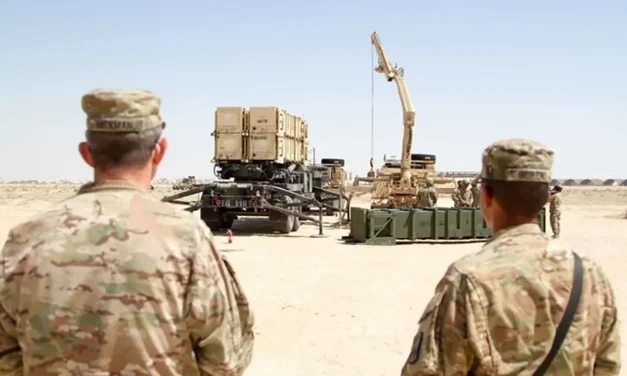
He continued: “Although the United States is pleased with this event, it may sabotage it in the future. Given that the main purpose of the US presence in Afghanistan is to destabilize the country, stability in Afghanistan leads Afghan officials to conclude that there is no need for foreign forces, including the Americans, so the US is unlikely to sabotage peace in Afghanistan.”

Referring to the Americans’ contacts with the Afghan government as well as the Taliban, Pakaeen added: “They are helping ISIS as a dangerous terrorist group, to establish itself in Afghanistan and increase its power and ISIS activities in different parts of the country.” This is not naturally to the liking of the government and various groups, including the Taliban, but it is an excuse for the US to continue its presence in Afghanistan in pursuit of its goals in that country.

The Afghan affairs expert cited the threat against China, and the harassment of Iran and Russia, as US goals in Afghanistan, adding: “In general, leaving Afghanistan, and in particular closing down four military bases in the country, has no place in the US government’s strategy; although at times they pretend to want to withdraw some troops, make transfers and even pull out some troops, but this does not mean that the US military presence in Afghanistan has ended.

He stressed: “Reciprocally, one of the main conditions for the Taliban to hold Intra-Afghan talks is that these talks will be concluded if foreign troops withdraw from Afghanistan, and possibly if talks are held in Qatar as Intra-Afghan, the Taliban will insist on this condition.”

Pakaeen considered the contradiction of the Taliban’s urge for withdrawing American troops from Afghanistan and at the same time the US insistence on staying in Afghanistan as other obstacles of these talks and said: All in all the trend ahead is a positive development and the regional states, including Iran should maintain diplomatic activities and contacts with the government of Afghanistan and relevant groups, in coordination with the government, work to contribute to the path to peace and stability in Afghanistan and to pave the way for the establishment of security which is closely related to security in the region.

0 Comments

Submit a Comment

Your email address will not be published. Required fields are marked *

LATEST CONTENT

The Impact of West Asian Developments on the Ukraine War

SCFR Online – Note: Vladimir Putin, President of Russia, recently announced—more than four years after the commencement of military aggression against Ukraine—that he believes the conflict between Russia and Ukraine is drawing to a close.

Temporary China–U.S. Trade Truce in the Shadow of Fundamental Distrust

SCFR Online – Opinion: The recent visit of the President of the United States to China is significant from various aspects; because China is recognized as the world’s second-largest economic power and a growing economy. The Chinese are also advancing in various fields, including the space sector, artificial intelligence, and military industries; to the extent that in the military sector, whereas they previously lacked an aircraft carrier, they now possess their third aircraft carrier. On the other hand, the United States, as a superpower, has always regarded China as its rival and continues to view it as such today.

Iran’s Success in the Narrative Battle in Cyberspace

SCFR Online – Opinion: In the war between Iran and the United States, the main battlefield was not defined solely in the military domain; rather, the battle of narratives in cyberspace—particularly through memes—reached a decisive level.

The Global Energy Shock Situation and Future Scenarios

SCFR Online – Opinion: Only one month after the beginning of the Ramadan War, maritime traffic in the Strait of Hormuz decreased dramatically, with Bloomberg announcing a reduction of 103 vessels; Brent oil prices rose by more than 50 percent, and gasoline prices in the United States increased by 31.4 percent. Additionally, benchmark gas prices in Europe showed a 73.4 percent increase.

Loading

Últimas publicaciones

The Impact of West Asian Developments on the Ukraine War

SCFR Online – Note: Vladimir Putin, President of Russia, recently announced—more than four years after the commencement of military aggression against Ukraine—that he believes the conflict between Russia and Ukraine is drawing to a close.

Temporary China–U.S. Trade Truce in the Shadow of Fundamental Distrust

SCFR Online – Opinion: The recent visit of the President of the United States to China is significant from various aspects; because China is recognized as the world’s second-largest economic power and a growing economy. The Chinese are also advancing in various fields, including the space sector, artificial intelligence, and military industries; to the extent that in the military sector, whereas they previously lacked an aircraft carrier, they now possess their third aircraft carrier. On the other hand, the United States, as a superpower, has always regarded China as its rival and continues to view it as such today.

Iran’s Success in the Narrative Battle in Cyberspace

SCFR Online – Opinion: In the war between Iran and the United States, the main battlefield was not defined solely in the military domain; rather, the battle of narratives in cyberspace—particularly through memes—reached a decisive level.

The Global Energy Shock Situation and Future Scenarios

SCFR Online – Opinion: Only one month after the beginning of the Ramadan War, maritime traffic in the Strait of Hormuz decreased dramatically, with Bloomberg announcing a reduction of 103 vessels; Brent oil prices rose by more than 50 percent, and gasoline prices in the United States increased by 31.4 percent. Additionally, benchmark gas prices in Europe showed a 73.4 percent increase.

Loading

DERNIER CONTENU

The Impact of West Asian Developments on the Ukraine War

SCFR Online – Note: Vladimir Putin, President of Russia, recently announced—more than four years after the commencement of military aggression against Ukraine—that he believes the conflict between Russia and Ukraine is drawing to a close.

Temporary China–U.S. Trade Truce in the Shadow of Fundamental Distrust

SCFR Online – Opinion: The recent visit of the President of the United States to China is significant from various aspects; because China is recognized as the world’s second-largest economic power and a growing economy. The Chinese are also advancing in various fields, including the space sector, artificial intelligence, and military industries; to the extent that in the military sector, whereas they previously lacked an aircraft carrier, they now possess their third aircraft carrier. On the other hand, the United States, as a superpower, has always regarded China as its rival and continues to view it as such today.

Iran’s Success in the Narrative Battle in Cyberspace

SCFR Online – Opinion: In the war between Iran and the United States, the main battlefield was not defined solely in the military domain; rather, the battle of narratives in cyberspace—particularly through memes—reached a decisive level.

The Global Energy Shock Situation and Future Scenarios

SCFR Online – Opinion: Only one month after the beginning of the Ramadan War, maritime traffic in the Strait of Hormuz decreased dramatically, with Bloomberg announcing a reduction of 103 vessels; Brent oil prices rose by more than 50 percent, and gasoline prices in the United States increased by 31.4 percent. Additionally, benchmark gas prices in Europe showed a 73.4 percent increase.

Loading

DERNIER CONTENU

The Impact of West Asian Developments on the Ukraine War

SCFR Online – Note: Vladimir Putin, President of Russia, recently announced—more than four years after the commencement of military aggression against Ukraine—that he believes the conflict between Russia and Ukraine is drawing to a close.

Temporary China–U.S. Trade Truce in the Shadow of Fundamental Distrust

SCFR Online – Opinion: The recent visit of the President of the United States to China is significant from various aspects; because China is recognized as the world’s second-largest economic power and a growing economy. The Chinese are also advancing in various fields, including the space sector, artificial intelligence, and military industries; to the extent that in the military sector, whereas they previously lacked an aircraft carrier, they now possess their third aircraft carrier. On the other hand, the United States, as a superpower, has always regarded China as its rival and continues to view it as such today.

Iran’s Success in the Narrative Battle in Cyberspace

SCFR Online – Opinion: In the war between Iran and the United States, the main battlefield was not defined solely in the military domain; rather, the battle of narratives in cyberspace—particularly through memes—reached a decisive level.

The Global Energy Shock Situation and Future Scenarios

SCFR Online – Opinion: Only one month after the beginning of the Ramadan War, maritime traffic in the Strait of Hormuz decreased dramatically, with Bloomberg announcing a reduction of 103 vessels; Brent oil prices rose by more than 50 percent, and gasoline prices in the United States increased by 31.4 percent. Additionally, benchmark gas prices in Europe showed a 73.4 percent increase.

Loading

DERNIER CONTENU

The Impact of West Asian Developments on the Ukraine War

SCFR Online – Note: Vladimir Putin, President of Russia, recently announced—more than four years after the commencement of military aggression against Ukraine—that he believes the conflict between Russia and Ukraine is drawing to a close.

Temporary China–U.S. Trade Truce in the Shadow of Fundamental Distrust

SCFR Online – Opinion: The recent visit of the President of the United States to China is significant from various aspects; because China is recognized as the world’s second-largest economic power and a growing economy. The Chinese are also advancing in various fields, including the space sector, artificial intelligence, and military industries; to the extent that in the military sector, whereas they previously lacked an aircraft carrier, they now possess their third aircraft carrier. On the other hand, the United States, as a superpower, has always regarded China as its rival and continues to view it as such today.

Iran’s Success in the Narrative Battle in Cyberspace

SCFR Online – Opinion: In the war between Iran and the United States, the main battlefield was not defined solely in the military domain; rather, the battle of narratives in cyberspace—particularly through memes—reached a decisive level.

The Global Energy Shock Situation and Future Scenarios

SCFR Online – Opinion: Only one month after the beginning of the Ramadan War, maritime traffic in the Strait of Hormuz decreased dramatically, with Bloomberg announcing a reduction of 103 vessels; Brent oil prices rose by more than 50 percent, and gasoline prices in the United States increased by 31.4 percent. Additionally, benchmark gas prices in Europe showed a 73.4 percent increase.

Loading



