UK, France Abuse to Replace US in Persian Gulf

2020/11/17 | interview, Politics, Top News

Strategic Council Online: An Iranian diplomat said that with regard to the attempts of Britain and France to boost their possible presence in the Persian Gulf and the consequences of the disclosure of the relations of Bahrain and the UAE with the Zionist regime, the necessity for Iran to pay attention to the strengthening of relations with its neighbours becomes more important. Perhaps Trump’s defeat would be an opportunity for Iran to quickly improve its relations with its neighbours while paying attention to the regional developments.

In an interview with the website of the Strategic Council on Foreign Relations, Javad Kachoueian referred to the remarks of the British Secretary of State for Defence regarding the strengthening of his country’s military presence in the Persian Gulf and said: The United States is on the verge of changing its 75-year strategy toward Riyadh and the Middle East region, and since the US priority is East Asia and containment of China, presumably presence of this country in the Persian Gulf will likely be reduced and this will further provide for the possible presence and role-playing of the Europeans in this region.

He called the victory of Joe Biden, the Democratic nominee, as the president-elect of the US important in changing some of the US policies in the Persian Gulf, and added: With Biden in the US presidency, the concomitance of the US with Europe would be furthered once again and their competition in the Persian Gulf would be lessened. However, it should be noted that in any case, the attempt to form a European coalition in the Persian Gulf and not joining the US military coalition indicates that the EU does not intend to be under the US umbrella.

Europe’s Attempt to Replace US in the Persian Gulf

The former Iranian ambassador to Ireland, referring to Trump’s order for the withdrawal of hundreds of US troops and navy from the Persian Gulf, said: If the US intends to reduce its presence in the region, other countries, such as Russia and China, intend to be present in the Persian Gulf. Therefore, other countries will do the same, but the Europeans, with regard to their colonial background, are trying to replace the US and have a greater presence in the region in line with their own interests.

Explaining the policies of some countries on the southern shores of the Persian Gulf in support of the US presence in the region and the purchase of weapons from that country, Kachoueian continued: Certainly, the priority of the southern Persian Gulf states is to cooperate with the US rather than countries such as Britain and France. In any case, they must realize that collective security cooperation will benefit all in the region.

Reduced US Presence in the Persian Gulf after Biden Victory

According to the Iranian diplomat, with the presence of Biden as President, the Americans will reduce their presence in the Persian Gulf region, and this provides an opportunity for the possible abuse of the Europeans to restore their presence in the region once again. This opportunity is especially important for Britain, which has left the European Union, to regain its regional and global power and strengthen its influence and presence in various parts of the world, especially in the geopolitical regions. Of course, countries that have a sound understanding of the developments would not let them enter the region.

With regard to the consequences of the possible strengthening of the British-French presence in the Persian Gulf, Kachoueian pointed to the disclosure of Bahrain and the UAE relations with the Zionist regime and its consequences and stressed the need for Iran to pay attention to the strengthening of relations with the neighbours, adding that perhaps Trump’s quitting would be an opportunity for Iran to quickly improve its relations with its neighbours while paying attention to the regional developments.

He added: Iran, after China, has the largest number of neighbours in the world. We should have a special and strategic relationship with each of our neighbours and form a 15 + 1 alliance with our neighbours so that we can take a fundamental and serious measure with them. Therefore, under this situation, one of the basic and strategic priorities of our foreign relations should be to improve and develop relations with our neighbours.
0 Comments

Submit a Comment

Your email address will not be published. Required fields are marked *

LATEST CONTENT

Realities of the Tripartite Makkah Pact

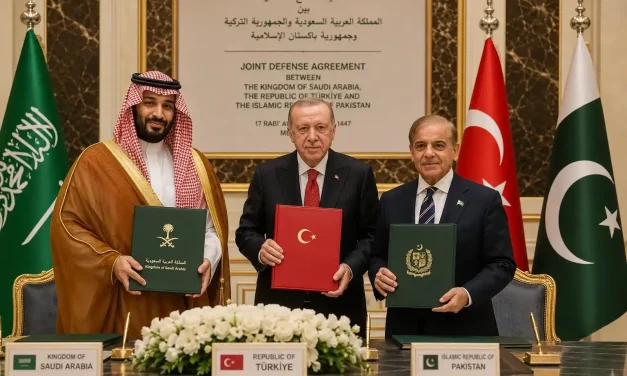
SCFR Online – Interview: The signing of the Makkah agreement between Saudi Arabia, Pakistan, and Turkey has raised questions about the future of the region’s security structure and the position of these countries in West Asian equations. Can this agreement become a genuine collective defense mechanism, or does it have more of a political and deterrent function than creating new military capacity?

Strategic Implications of the Reduction of US Weapons Stockpiles

SCFR Online – Opinion: The continuation of the US war against Iran, in addition to increasing operational costs, has called into question the actual capacity of the American arsenal to simultaneously fulfill security commitments on multiple fronts; an issue that affects deterrence, defense production capacity, and Washington’s resource prioritization.

The Formation of a New Order in Relations Between Powers

SCFR Online – Opinion: The Russia-Ukraine war and the war of the United States and the Israeli regime against Iran have been formed with different objectives and actors, but field and political developments indicate that they are not entirely separate from one another.

An Analysis of the Makkah Defense Pact

SCFR Online – Opinion: On Friday, August 7, the heads of state of three countries – Saudi Arabia, Turkey, and Pakistan – signed a text under the title “Makkah Joint Defense Agreement.”

Dimensions and challenges of the initiative to revive the Hejaz Railway

Strategic Council Online – Note: The initiative to revive the Hejaz Railway, beyond being a transportation project, constitutes an attempt to redefine geopolitics, the economy, and Turkey’s regional position; however, its realization appears to face significant financial, security, and institutional challenges.

Loading

Últimas publicaciones

Realities of the Tripartite Makkah Pact

SCFR Online – Interview: The signing of the Makkah agreement between Saudi Arabia, Pakistan, and Turkey has raised questions about the future of the region’s security structure and the position of these countries in West Asian equations. Can this agreement become a genuine collective defense mechanism, or does it have more of a political and deterrent function than creating new military capacity?

Strategic Implications of the Reduction of US Weapons Stockpiles

SCFR Online – Opinion: The continuation of the US war against Iran, in addition to increasing operational costs, has called into question the actual capacity of the American arsenal to simultaneously fulfill security commitments on multiple fronts; an issue that affects deterrence, defense production capacity, and Washington’s resource prioritization.

The Formation of a New Order in Relations Between Powers

SCFR Online – Opinion: The Russia-Ukraine war and the war of the United States and the Israeli regime against Iran have been formed with different objectives and actors, but field and political developments indicate that they are not entirely separate from one another.

An Analysis of the Makkah Defense Pact

SCFR Online – Opinion: On Friday, August 7, the heads of state of three countries – Saudi Arabia, Turkey, and Pakistan – signed a text under the title “Makkah Joint Defense Agreement.”

Dimensions and challenges of the initiative to revive the Hejaz Railway

Strategic Council Online – Note: The initiative to revive the Hejaz Railway, beyond being a transportation project, constitutes an attempt to redefine geopolitics, the economy, and Turkey’s regional position; however, its realization appears to face significant financial, security, and institutional challenges.

Loading

DERNIER CONTENU

Realities of the Tripartite Makkah Pact

SCFR Online – Interview: The signing of the Makkah agreement between Saudi Arabia, Pakistan, and Turkey has raised questions about the future of the region’s security structure and the position of these countries in West Asian equations. Can this agreement become a genuine collective defense mechanism, or does it have more of a political and deterrent function than creating new military capacity?

Strategic Implications of the Reduction of US Weapons Stockpiles

SCFR Online – Opinion: The continuation of the US war against Iran, in addition to increasing operational costs, has called into question the actual capacity of the American arsenal to simultaneously fulfill security commitments on multiple fronts; an issue that affects deterrence, defense production capacity, and Washington’s resource prioritization.

The Formation of a New Order in Relations Between Powers

SCFR Online – Opinion: The Russia-Ukraine war and the war of the United States and the Israeli regime against Iran have been formed with different objectives and actors, but field and political developments indicate that they are not entirely separate from one another.

An Analysis of the Makkah Defense Pact

SCFR Online – Opinion: On Friday, August 7, the heads of state of three countries – Saudi Arabia, Turkey, and Pakistan – signed a text under the title “Makkah Joint Defense Agreement.”

Dimensions and challenges of the initiative to revive the Hejaz Railway

Strategic Council Online – Note: The initiative to revive the Hejaz Railway, beyond being a transportation project, constitutes an attempt to redefine geopolitics, the economy, and Turkey’s regional position; however, its realization appears to face significant financial, security, and institutional challenges.

Loading

DERNIER CONTENU

Realities of the Tripartite Makkah Pact

SCFR Online – Interview: The signing of the Makkah agreement between Saudi Arabia, Pakistan, and Turkey has raised questions about the future of the region’s security structure and the position of these countries in West Asian equations. Can this agreement become a genuine collective defense mechanism, or does it have more of a political and deterrent function than creating new military capacity?

Strategic Implications of the Reduction of US Weapons Stockpiles

SCFR Online – Opinion: The continuation of the US war against Iran, in addition to increasing operational costs, has called into question the actual capacity of the American arsenal to simultaneously fulfill security commitments on multiple fronts; an issue that affects deterrence, defense production capacity, and Washington’s resource prioritization.

The Formation of a New Order in Relations Between Powers

SCFR Online – Opinion: The Russia-Ukraine war and the war of the United States and the Israeli regime against Iran have been formed with different objectives and actors, but field and political developments indicate that they are not entirely separate from one another.

An Analysis of the Makkah Defense Pact

SCFR Online – Opinion: On Friday, August 7, the heads of state of three countries – Saudi Arabia, Turkey, and Pakistan – signed a text under the title “Makkah Joint Defense Agreement.”

Dimensions and challenges of the initiative to revive the Hejaz Railway

Strategic Council Online – Note: The initiative to revive the Hejaz Railway, beyond being a transportation project, constitutes an attempt to redefine geopolitics, the economy, and Turkey’s regional position; however, its realization appears to face significant financial, security, and institutional challenges.

Loading

DERNIER CONTENU

Realities of the Tripartite Makkah Pact

SCFR Online – Interview: The signing of the Makkah agreement between Saudi Arabia, Pakistan, and Turkey has raised questions about the future of the region’s security structure and the position of these countries in West Asian equations. Can this agreement become a genuine collective defense mechanism, or does it have more of a political and deterrent function than creating new military capacity?

Strategic Implications of the Reduction of US Weapons Stockpiles

SCFR Online – Opinion: The continuation of the US war against Iran, in addition to increasing operational costs, has called into question the actual capacity of the American arsenal to simultaneously fulfill security commitments on multiple fronts; an issue that affects deterrence, defense production capacity, and Washington’s resource prioritization.

The Formation of a New Order in Relations Between Powers

SCFR Online – Opinion: The Russia-Ukraine war and the war of the United States and the Israeli regime against Iran have been formed with different objectives and actors, but field and political developments indicate that they are not entirely separate from one another.

An Analysis of the Makkah Defense Pact

SCFR Online – Opinion: On Friday, August 7, the heads of state of three countries – Saudi Arabia, Turkey, and Pakistan – signed a text under the title “Makkah Joint Defense Agreement.”

Dimensions and challenges of the initiative to revive the Hejaz Railway

Strategic Council Online – Note: The initiative to revive the Hejaz Railway, beyond being a transportation project, constitutes an attempt to redefine geopolitics, the economy, and Turkey’s regional position; however, its realization appears to face significant financial, security, and institutional challenges.

Loading